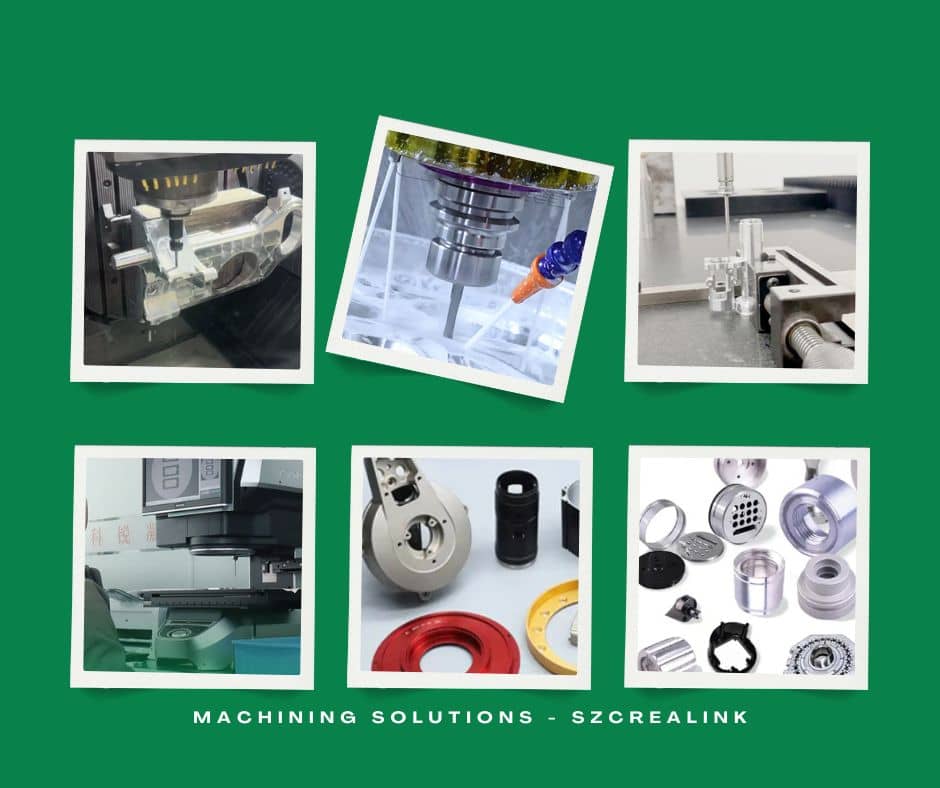
Types of CNC Machining
CNC machining covers a wide range of manufacturing processes, each designed to shape materials with precision and consistency. Understanding the main process types helps you choose the best method for your part’s geometry, surface finish, and tolerance needs.
This guide introduces the four most common CNC machining processes – milling, turning, drilling & tapping, and grinding—and explains when and why each method is used.
Table of Contents
1. CNC Milling – Versatile Multi-Axis Cutting for Complex Shapes
CNC milling is one of the most flexible machining processes. A rotating cutting tool removes material while the workpiece is held stationary or moved along different axes.
What makes milling useful:
Supports 3-axis, 4-axis, and 5-axis configurations
Ideal for components with pockets, channels, contours, and detailed surfaces
Excellent dimensional accuracy
Works well for prototypes and production runs
Common applications:
Mechanical housings
Brackets and fixtures
Complex aluminum or steel parts
Surface features like grooves and slots
When your design includes intricate geometry or multiple faces that must be machined in a single setup, CNC milling is usually the best choice.
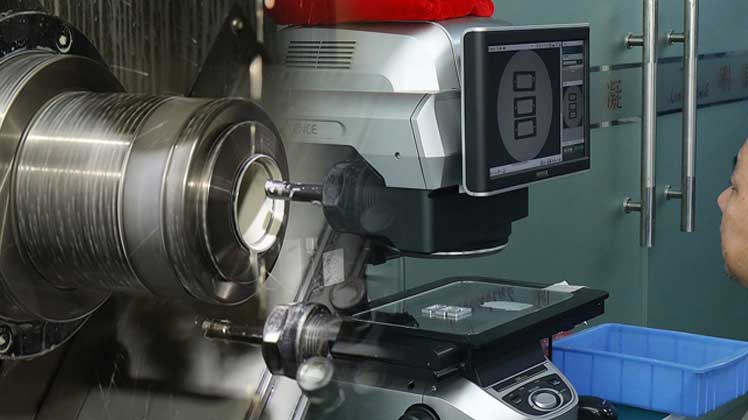
2. CNC Turning – The Best Method for Shafts and Round Components
CNC turning rotates the material while a cutting tool shapes it into a cylindrical form. This makes it highly efficient for producing round or symmetrical parts.
Why turning is valuable:
Extremely precise for concentric features
Fast and cost-effective for volume production
Smooth surface finishes with minimal post-processing
Ideal for long or slender parts
Typical components:
Shafts and pins
Bushings
Threaded parts
Rings and sleeves
For any part where the primary geometry is round, turning delivers the fastest and most economical solution.
3. Drilling & Tapping – Creating Accurate Holes and Threads
Nearly every machined part requires holes – and drilling and tapping are essential processes for making them accurately and consistently.
What drilling & tapping provide:
Clean, accurately sized holes
Internal threads (tapping) and external threads (thread milling)
Support for standard and custom thread sizes
Compatible with both metals and plastics
Where these processes are used:
Mounting holes
Fastener threads
Deep bores
Precision pilot holes
Because incorrect hole position or thread quality can affect assembly, drilling and tapping require strict process control.
4. Grinding – High Accuracy and Ultra-Smooth Finishing
Grinding is used when a part requires extremely tight tolerances or a flawless surface finish. Instead of cutting with a blade, grinding removes material using an abrasive wheel.
Advantages of grinding:
Achieves exceptional precision
Produces mirror-like surface finishes
Ideal for hardened steels and wear-resistant components
Enhances part longevity and performance
Typical uses:
Precision shafts
Molds and tooling
Bearing surfaces
Components requiring micron-level accuracy
Grinding is often the final step to achieve the highest quality in critical surfaces.
Final Thoughts
Each CNC machining process has a specific purpose—milling for complex shapes, turning for round parts, drilling and tapping for holes and threads, and grinding for ultra-high precision.
Choosing the right method ensures:
Better performance
Higher accuracy
Lower production cost
Consistent quality from part to part
Assembling the right mix of processes is key to producing reliable CNC-machined components.