Precision CNC Machining for Automotive Components and Engineering Projects
Automotive manufacturing is moving rapidly toward electrification, lightweight structures, advanced driver-assistance systems (ADAS), autonomous technologies, and increasingly complex vehicle architectures. These changes place greater demands on the components behind every system. Parts must not only fit together accurately but also withstand vibration, heat, mechanical loads, corrosion, repeated movement, and demanding operating environments.
At SzCrealink, we provide automotive CNC machining services for OEMs, Tier 1 suppliers, engineering companies, and mobility startups. We manufacture precision metal and plastic components from prototypes through low- and mid-volume production, combining CNC milling, CNC turning, multi-axis machining, secondary processing, and quality inspection.
Whether you are validating a new automotive design or manufacturing production-ready components, we help transform your CAD drawings into reliable physical parts with controlled dimensions, suitable materials, and practical manufacturing processes.
Why CNC Machining Is Important in Automotive Manufacturing
Automotive components rarely work as isolated parts. Their performance depends on how accurately they interface with bearings, shafts, fasteners, sensors, housings, electrical systems, and surrounding structures.
A small dimensional error in a mounting hole, shaft diameter, sealing surface, or locating feature can affect assembly performance. For this reason, automotive CNC machining is often selected when designers need a combination of dimensional accuracy, repeatability, material flexibility, and design freedom.
CNC machining is particularly valuable during product development because it allows engineers to manufacture functional parts directly from CAD data without investing in dedicated production tooling.
This makes CNC machining suitable for:
Functional automotive prototypes
Engineering validation and testing
Design verification
Low-volume production
Pilot production
Replacement and service components
Custom fixtures and assembly tooling
Specialized vehicle components
Electrification and EV components
Unlike purely visual prototypes, CNC-machined automotive parts can be manufactured from engineering materials that closely represent the final application. Engineers can therefore evaluate mechanical fit, strength, thermal behavior, vibration resistance, and assembly performance before committing to larger-scale production methods.
Automotive Components We Manufacture
Automotive CNC machining covers a wide range of components because the process can accommodate different geometries, materials, dimensions, and production quantities.
Engine and Powertrain Components
Traditional powertrain systems contain numerous precision-machined components that require controlled dimensions and reliable interfaces.
Depending on the application and production requirements, CNC machining can be used for components such as:
Engine brackets and mounting components
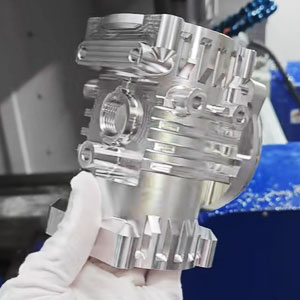
Housings and covers
Shafts and pins
Bushings
Connecting components
Prototype cylinder-head components
Oil and fluid-system components
Custom test components
For rotating components, concentricity, roundness, surface finish, and dimensional stability can be particularly important. CNC turning is often used for cylindrical features, while CNC milling can produce keyways, mounting holes, pockets, flats, and other complex features.
Transmission and Drivetrain Components
Transmission and drivetrain systems contain components that must maintain accurate relationships between multiple mechanical features.
We machine parts such as:
Shafts
Housings
Brackets
Bushings
Coupling components
Mounting plates
Gear-related components and prototypes
The manufacturing process is selected according to the component’s geometry and functional requirements. A turned shaft, for example, may require precise diameters and concentric features, while a transmission housing may require multi-axis milling to produce pockets, bores, mounting surfaces, and complex internal geometry.
Chassis and Suspension Components
Chassis and suspension components are exposed to mechanical loads, vibration, shock, and repeated operating cycles. Their designs therefore often combine lightweight structures with high-strength materials.
CNC machining is suitable for prototypes and selected low-volume components such as:
Suspension brackets
Mounting brackets
Control-arm prototypes
Steering-related components
Structural adapters
Chassis fixtures
Sensor mounting components
For these applications, material selection and machining strategy need to be considered together. Removing excessive material may reduce weight, but insufficient wall thickness or poorly positioned machining features can compromise structural performance.
EV and New Energy Vehicle Components
The growth of electric vehicles has created new requirements for precision-machined components.
Automotive CNC machining can support EV development with components such as:
Motor housings and covers
Battery-system brackets
Cooling-system components
Mounting plates
Sensor brackets
Connector housings
Structural prototypes
Thermal-management components
Many EV components require lightweight construction and effective thermal management. Aluminum is therefore frequently selected for prototypes and production components where low weight, machinability, and thermal conductivity are important.
Automotive Fixtures and Assembly Tooling
Not every automotive CNC-machined part becomes part of the vehicle.
Automotive factories also require tooling and fixtures for assembly, inspection, positioning, and automation. CNC machining can produce:
Assembly fixtures
Inspection fixtures
Clamping components
Positioning blocks
Robotic end-effector components
Conveyor guides
Machine mounting plates
Custom jigs
These parts often require fast turnaround because production equipment cannot remain idle while waiting for replacement or customized tooling.
CNC Machining Processes for Automotive Applications
Different automotive components require different machining strategies. At SzCrealink, we select the process according to geometry, material, tolerance requirements, quantity, and intended application.
CNC Milling
Our CNC milling services are suitable for components with pockets, slots, holes, curved surfaces, mounting interfaces, and complex three-dimensional geometries.
3-axis machining is effective for many conventional components, while 4-axis and 5-axis machining can reduce setups and improve access to multiple surfaces.
5-axis machining is especially useful when a component contains:
Complex curved surfaces
Angled holes
Deep or difficult-to-reach features
Multiple intersecting surfaces
Tight positional relationships
Reducing the number of setups can also reduce accumulated positioning errors and improve consistency between related features.
CNC Turning
CNC turning is primarily used for cylindrical components.
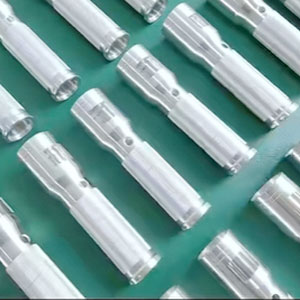
Typical automotive applications include shafts, pins, bushings, spacers, sleeves, threaded components, and rotational housings.
Turning can efficiently produce controlled external and internal diameters, grooves, threads, chamfers, and other rotational features. When a component combines turning and milling requirements, mill-turn machining can reduce handling and setup operations.
Multi-Axis and Mill-Turn Machining
Some automotive components cannot be efficiently manufactured using a single conventional process.
Multi-axis and mill-turn machining can combine multiple operations and access difficult features from different directions. This can be advantageous for compact components with complex geometry and multiple functional surfaces.
The goal is not simply to use the most advanced machine available. The better approach is to select the simplest process that can consistently achieve the required result.
Material Selection for Automotive CNC Parts
Material selection should begin with the function of the component rather than machining convenience alone.
Different automotive applications may prioritize weight, strength, stiffness, thermal conductivity, corrosion resistance, wear resistance, temperature stability, electrical properties, or cost.
Aluminum
Aluminum alloys such as 6061 and 7075 are widely used for CNC-machined automotive components.
6061 aluminum offers a practical balance of strength, machinability, corrosion resistance, and cost. It is suitable for many brackets, housings, mounting components, fixtures, and prototypes.
7075 aluminum provides higher strength and is useful when weight reduction and mechanical performance are more important than material cost.
Stainless Steel
304 and 316 stainless steel provide good corrosion resistance and mechanical performance.
Stainless steel is suitable for components exposed to moisture, chemicals, or demanding environments. However, its machining characteristics differ from aluminum, so tooling, cutting parameters, workholding, and chip control need to be considered during production planning.
Carbon and Alloy Steel
Steel is appropriate when high strength, stiffness, wear resistance, or durability is required.
Depending on the application, steel components may require additional heat treatment or surface treatment to achieve the required mechanical properties and wear resistance.
Brass and Copper
Brass can be useful for electrical and mechanical components requiring good machinability and corrosion resistance.
Copper provides excellent electrical and thermal conductivity, making it relevant to selected electrical, thermal-management, and prototype applications. However, copper requires appropriate tooling and machining strategies because of its material characteristics.
Titanium
Titanium offers an attractive combination of high strength-to-weight ratio and corrosion resistance. It can be useful for specialized automotive applications where weight and mechanical performance justify its higher material and machining cost.
Engineering Plastics
CNC machining is not limited to metals.
Materials such as POM, nylon, PEEK, ABS, and polycarbonate can be used for automotive prototypes, electrical insulation components, covers, guides, bushings, fixtures, and other applications.
For engineering plastics, designers should consider thermal expansion, moisture absorption, creep, impact resistance, chemical exposure, and dimensional stability—not simply tensile strength.
Design Considerations for Automotive CNC Machining
A component can be technically machinable but still expensive or unnecessarily difficult to manufacture.
Early design decisions have a major influence on machining cost and production reliability.
Tolerances
Not every dimension needs the same tolerance.
Applying extremely tight tolerances to non-critical dimensions can increase machining time, inspection requirements, tooling costs, and rejection risk without improving actual product performance.
A better approach is to identify functional dimensions and assign tighter tolerances only where they are necessary.
Wall Thickness
Thin walls can deform because of cutting forces and heat generated during machining. Designers should avoid unnecessarily thin sections when structural requirements allow.
For lightweight automotive components, material can often be removed strategically while retaining adequate structural support.
Internal Corners
Standard cutting tools are generally round, so internal corners naturally have a radius.
Designing internal corners with realistic radii can improve tool accessibility and reduce machining time. Extremely sharp internal corners may require smaller tools, additional operations, or specialized machining strategies.
Hole and Thread Design
Hole diameter, depth, thread type, and accessibility all affect tooling and machining time.
Where possible, standardized hole sizes and thread specifications make production easier and reduce unnecessary tooling requirements.
Datums and Functional Features
Critical mounting and alignment features should be referenced from logical datums.
Clear datum structures help both machining and inspection teams understand which surfaces control the final assembly relationship.
For automotive components with multiple interfaces, this is especially important because dimensional accuracy is not meaningful unless it is measured relative to the correct functional reference.
From CAD Drawing to Finished Automotive Component
A reliable automotive CNC machining project involves more than simply loading a STEP file into a machine.
1. Drawing and Requirement Review
We review the supplied CAD files, drawings, materials, tolerances, quantities, surface finishes, and special requirements.
If a specification appears unnecessarily difficult or inconsistent with the component’s function, our engineering team can provide DFM feedback before production.
2. Manufacturing Process Planning
The geometry and material determine the appropriate machining method.
We evaluate:
Machine selection
Number of setups
Cutting tools
Workholding
Machining sequence
Critical dimensions
Inspection requirements
Surface treatment
The objective is to achieve the required quality while maintaining a practical production cost.
3. CNC Machining
After process planning, the component is manufactured using the selected CNC milling, turning, or multi-axis process.
Production parameters are adjusted according to the material, geometry, tooling, and required finish.
4. Secondary Processing
Depending on the application, parts may require additional operations such as:
Deburring
Tapping
Threading
Polishing
Anodizing
Plating
Powder coating
Passivation
Other specified surface treatments
Surface treatment can improve corrosion resistance, wear resistance, appearance, or functional performance.
5. Inspection
Quality control is integrated into the manufacturing process rather than treated as an afterthought.
Depending on the requirements, inspection may include dimensional measurement, CMM inspection, optical measurement, thread inspection, and surface roughness testing.
Inspection documentation can also be provided when required by the project.
Prototype to Production: Choosing the Right Manufacturing Approach
One of the major advantages of CNC machining is its ability to support different stages of automotive development.
Prototype Stage
At the prototype stage, the priority is often speed and functional validation.
CNC machining allows engineers to produce realistic metal or plastic components directly from CAD data without waiting for dedicated molds or production tooling.
Pilot Production
Once the design has been validated, pilot quantities can be manufactured to evaluate assembly processes, manufacturing consistency, and real-world performance.
At this stage, process optimization becomes increasingly important because the goal is not only to make one good part but to establish a repeatable production method.
Low- and Mid-Volume Production
For specialized vehicles, aftermarket products, engineering equipment, performance applications, and selected automotive programs, CNC machining can remain commercially practical at low and medium volumes.
For very high production volumes, however, processes such as stamping, die casting, forging, or injection molding may provide a lower unit cost. The best manufacturing method depends on quantity, geometry, tooling investment, material, and product lifecycle.
How to Evaluate an Automotive CNC Machining Supplier
Price should not be the only factor when selecting a machining supplier.
A low initial quotation can become expensive if the supplier cannot maintain tolerances, communicate effectively, or deliver consistently.
When evaluating an automotive CNC machining partner, consider:
Engineering capability: Can the supplier understand drawings, tolerances, materials, and functional requirements?
Manufacturing capability: Does the supplier have suitable CNC equipment for the component geometry and quantity?
Quality control: Are critical dimensions inspected using appropriate equipment and documented when required?
Material control: Can the supplier provide the specified material and supporting documentation?
Communication: Can engineering and production questions be resolved quickly?
Production scalability: Can the supplier support the transition from prototype quantities to repeat production?
Delivery reliability: Does the supplier have a realistic production and shipping process rather than simply promising the shortest possible lead time?
For international automotive projects, communication and engineering responsiveness can be just as important as machining capability.
Why Choose SzCrealink for Automotive CNC Machining?
SzCrealink combines CNC manufacturing experience with engineering-focused project support.
Our approach is based on matching the manufacturing process to the actual requirements of each component rather than applying the same process to every project.
We support customers with:
CNC milling and CNC turning
3-, 4-, and 5-axis machining
Metal and engineering plastic machining
Prototype and low-volume production
DFM feedback
Secondary surface treatments
Dimensional inspection
Material and quality documentation when required
International shipping support
We work with customers across North America, Europe, Asia, and other global markets, helping engineering teams move from drawings to functional parts and repeatable production.
Get Your Automotive CNC Machining Project Started
Whether you are developing an EV component, validating a new automotive mechanism, building an assembly fixture, or sourcing a repeat production component, the manufacturing strategy should be established before production begins.
Send us your 2D drawings, 3D CAD files, material specifications, tolerances, surface-finish requirements, and estimated quantities. Our team can review the design, identify manufacturing considerations, and recommend an appropriate machining approach.
From the first prototype to repeat production, SzCrealink focuses on the details that determine whether a CNC-machined automotive component performs correctly in the real world.