Medical devices demand a different approach to precision manufacturing. A component may need to fit a surgical assembly, maintain dimensional stability after repeated sterilization, resist corrosion inside a demanding environment, or meet strict documentation and traceability requirements. For these applications, CNC machining is not simply a method for removing material—it is a controlled manufacturing process that connects design intent, material properties, dimensional accuracy, surface quality, and quality assurance.
SzCrealink provides precision medical CNC machining services for medical device companies, OEMs, startups, and engineering teams developing components for surgical, orthopedic, dental, diagnostic, and other healthcare applications. With more than 20 years of manufacturing experience, we support projects from prototype development and design validation to low-volume production and scalable manufacturing.
Our approach combines multi-axis CNC machining, engineering support, material traceability, dimensional inspection, and documented quality control to produce reliable medical components according to customer drawings and specifications.
Why CNC Machining Matters in Medical Device Manufacturing
Medical components often have functional requirements that cannot be separated from their geometry.
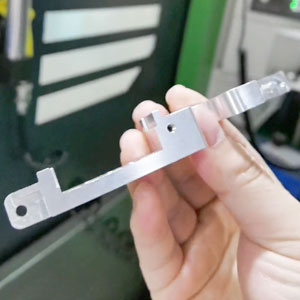
A surgical instrument, for example, may require precisely positioned holes, smooth contact surfaces, controlled edges, and accurate mating features. An orthopedic component may need complex anatomical geometry while maintaining dimensional consistency and biocompatibility requirements. A diagnostic device housing may prioritize tight tolerances, stable mounting interfaces, electrical insulation, and a clean cosmetic appearance.
CNC machining is particularly suitable because the manufacturing process can translate detailed CAD geometry into repeatable physical components while maintaining control over critical dimensions.
For medical applications, the objective is not simply to achieve a nominal dimension. The machining strategy must consider:
Functional tolerances and datum relationships
Material behavior during machining
Surface roughness and finishing requirements
Tool access and fixture design
Thermal deformation
Burr and edge control
Sterilization and environmental requirements
Inspection and documentation requirements
Production volume and repeatability
These factors should be considered during manufacturing planning rather than after machining has already begun.
Medical CNC Machining from Design to Production
A successful medical machining project starts with understanding how the component functions inside the final device.
1. Design and DFM Review
Before production, our engineering team reviews drawings, 3D models, tolerances, materials, surface finishes, and critical functional features.
Design-for-manufacturing analysis can identify areas such as:
Deep or difficult-to-machine cavities
Excessively tight tolerances
Thin walls prone to deformation
Small internal radii
Difficult tool-access angles
Unnecessary machining operations
Challenging datum structures
Where appropriate, we provide DFM feedback before production. The objective is not to change the customer’s design unnecessarily, but to identify manufacturing risks and potential opportunities to improve manufacturability, consistency, and cost.
2. Process Planning and Fixturing
Medical components frequently contain complex surfaces and multiple precision features. Selecting the correct machining sequence is therefore critical.
Depending on the component, production may involve CNC milling, CNC turning, 4-axis or 5-axis machining, Swiss-type turning, drilling, tapping, boring, reaming, and secondary finishing operations.
The machining sequence is planned around the most important functional datums. This helps reduce accumulated positioning errors between operations.
For complex components, 5-axis machining can reduce the number of setups required. Fewer setups can mean fewer opportunities for fixture-related errors and better positional consistency between different features.
3. CNC Machining
Once the process is established, components are manufactured using appropriate CNC equipment and cutting tools.
Machining parameters are selected according to the material, geometry, tool configuration, tolerance requirements, and production volume.
For high-precision applications, process stability is particularly important. Tool wear, workholding, cutting forces, thermal conditions, and machine positioning accuracy can all influence the final result.
Our goal is to establish a repeatable machining process rather than rely on excessive manual correction from one part to the next.
4. Inspection and Documentation
Inspection is an integral part of medical CNC manufacturing.
Depending on project requirements, dimensional verification can include in-process inspection, first-article inspection, final inspection, and statistical process control.
Critical characteristics can be measured against engineering drawings and agreed specifications. Quality records and material documentation can also be maintained to support traceability throughout production.
This approach helps establish a clear connection between the material used, machining process, inspection results, and delivered components.
Materials for Medical CNC Machining
Material selection directly affects machining behavior, component performance, durability, weight, corrosion resistance, sterilization compatibility, and final application suitability.
SzCrealink works with a range of engineering metals and plastics used in medical equipment and device manufacturing.
Titanium Alloys
Titanium alloys such as Ti-6Al-4V are widely considered for demanding medical applications because of their high strength-to-weight ratio, corrosion resistance, and suitability for specific implant-related applications.
Ti-6Al-4V Grade 5 and Grade 23 ELI may be selected for orthopedic, dental, and other applications when the appropriate material specification is required.
Titanium is relatively challenging to machine because of its low thermal conductivity and tendency to generate heat at the cutting interface. Tool selection, cutting parameters, coolant strategy, and workholding therefore require careful consideration.
Stainless Steel
316L stainless steel is commonly used where corrosion resistance, strength, cleanability, and sterilization compatibility are important.
17-4PH stainless steel can provide higher strength and hardness for components requiring greater mechanical performance.
Stainless steel medical components may include surgical instrument components, housings, fittings, mechanical interfaces, and other precision parts.
Cobalt-Chromium Alloys
Cobalt-chromium alloys such as CoCrMo combine high wear resistance, strength, and corrosion resistance.
Their hardness makes them more demanding to machine than many conventional metals, requiring appropriate cutting tools and process control.
Engineering Plastics
Medical equipment frequently uses polymers where low weight, electrical insulation, chemical resistance, transparency, or radiolucency is important.
Depending on the application, materials may include PEEK, UHMWPE, PC, ABS, and POM.
PEEK, for example, provides a useful combination of mechanical performance, chemical resistance, and temperature capability for selected medical applications. UHMWPE may be considered for applications where low friction and wear characteristics are important.
Material selection should always be based on the final application, applicable device requirements, and customer’s approved material specifications rather than machining convenience alone.
Precision and Surface Finish for Medical Components
Dimensional accuracy is only one part of medical component quality.
A component can meet its dimensional specifications and still fail to perform correctly if the surface finish, edge condition, flatness, concentricity, or geometric relationship between features is unsuitable.
SzCrealink supports precision machining with tolerances up to approximately ±0.005 mm for suitable features and processes. Actual achievable tolerance depends on component geometry, material, size, datum structure, machining process, and inspection method.
Surface requirements can also be critical.
Depending on the component, surfaces may require:
Fine CNC-machined finishes
Polishing
Anodizing
Passivation
Plating
Other specified surface treatments
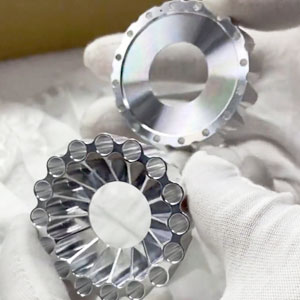
For suitable machining applications, surface roughness can be produced down to approximately Ra 0.4 μm. However, the appropriate surface requirement should be determined by the component’s function rather than selecting the lowest possible Ra value by default.
For example, a sealing surface may require a controlled finish for reliable sealing, while an external housing may require a different combination of appearance, corrosion resistance, and dimensional stability.
5-Axis CNC Machining for Complex Medical Geometries
Many modern medical components contain compound curves, angled surfaces, deep features, and difficult-to-access areas.
Traditional 3-axis machining may require multiple setups to reach these surfaces. Each additional setup introduces another opportunity for positioning variation.
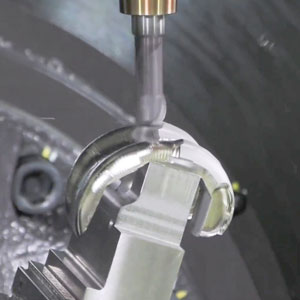
5-axis CNC machining allows the cutting tool to approach complex surfaces from different orientations while maintaining the workpiece in a controlled coordinate system.
This can be valuable for:
Complex orthopedic components
Surgical instrument components
Anatomical or ergonomic geometries
Precision housings
Components with multiple angled surfaces
Parts requiring reduced setup operations
The advantage is not simply having five axes. The real benefit comes from using the appropriate machine configuration, CAM strategy, workholding method, and inspection process together.
Swiss CNC Machining for Micro Medical Components
Medical devices increasingly incorporate smaller and more intricate components.
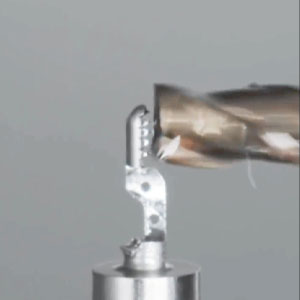
For micro components, conventional machining approaches may become inefficient or difficult to control. Swiss-type CNC machining provides an effective solution for long, small-diameter, precision components because the workpiece can be supported close to the cutting area.
Components with diameters around Ø0.5 mm and other miniature geometries may be suitable depending on material, geometry, tolerance, and production requirements.
Potential applications include:
Catheter components
Guidewire-related components
Miniature pins
Small shafts
Surgical instrument components
Precision fittings
Micro machining requires careful control of tool wear, workpiece support, chip evacuation, and inspection. At this scale, a small amount of burr formation or dimensional variation can have a significant functional impact.
Medical CNC Machining Applications
CNC machining can support a broad range of medical device development and production requirements.
Orthopedic Components
Orthopedic devices frequently require complex geometries combined with high mechanical performance and controlled surface characteristics.
Machined titanium, stainless steel, and cobalt-chromium components may be used for selected orthopedic applications, depending on the customer’s approved design and material requirements.
Dental Components
Dental equipment and components often require compact geometries, precise interfaces, and excellent surface quality.
CNC machining can produce small precision components, fixtures, instrument parts, and selected dental device components with repeatable dimensions.
Surgical Instruments
Surgical instruments require accurate mating features, controlled edges, ergonomic geometry, and reliable mechanical performance.
CNC machining can produce handles, shafts, clamps, holders, brackets, cutting-tool components, and other precision parts used in surgical equipment.
Diagnostic Equipment
Diagnostic systems often contain numerous precision mechanical components that position sensors, optical elements, fluidic systems, or electronic assemblies.
Machined aluminum, stainless steel, engineering plastics, and other materials can be selected according to the specific operating environment.
Medical Equipment Housings and Mechanical Components
Not every medical component comes into direct contact with the patient.
Medical equipment also requires structural brackets, mounting plates, enclosures, adapters, heat-management components, and precision interfaces.
These parts still require reliable dimensions because mechanical alignment and assembly accuracy can influence the performance of the complete system.
Quality Control and Traceability
Medical manufacturing places greater emphasis on documented quality than many general industrial applications.
At SzCrealink, quality control can include:
Incoming material verification
In-process dimensional inspection
Final dimensional inspection
SPC for suitable production characteristics
Material certificates
Lot and batch traceability
Documented quality records
Customer-specific inspection documentation
Material certificates help establish the identity and specification of the raw material used in production.
For projects requiring regulatory documentation, the required records should be defined before production begins. This allows the manufacturing and inspection process to be aligned with the customer’s quality system and device requirements.
SzCrealink operates with an ISO 13485-oriented medical manufacturing framework and supports customers working within regulatory environments such as FDA and CE requirements. Specific regulatory responsibilities remain dependent on the customer’s device classification, market, quality system, and applicable regulations.
How to Choose a Medical CNC Machining Supplier
Choosing a medical machining supplier should involve more than comparing unit prices.
A supplier may offer an attractive initial quotation but create additional costs through poor communication, inconsistent quality, inadequate documentation, or unstable production.
When evaluating a medical CNC machining manufacturer, consider the following factors.
Manufacturing Capability
Can the supplier actually produce the geometry, tolerance, material, and surface finish specified on the drawing?
Look beyond the machine list and evaluate whether the supplier has experience with similar components.
Material Control
Ask how materials are purchased, identified, certified, and traced.
This becomes particularly important when the component requires a specific alloy grade or controlled material specification.
Inspection Capability
Understand how critical dimensions are inspected and what documentation can be provided.
For production parts, repeatability is generally more important than achieving an exceptional result on a single sample.
Production Scalability
Your supplier should be able to support the project as it develops.
A typical medical development program may progress from:
Prototype → Design Validation → Pilot Production → Low-Volume Production → Scaled Manufacturing
Selecting a supplier capable of supporting multiple stages can reduce the need to transfer production between vendors.
Engineering Communication
Medical components often involve complex drawings and evolving designs.
A responsive engineering team can identify manufacturing risks earlier, helping reduce unnecessary iterations and development delays.
Intellectual Property Protection
Medical device designs can contain commercially sensitive information.
NDA agreements, controlled access, secure data handling, and employee confidentiality procedures should be considered when selecting a manufacturing partner.
From Prototype to Production
Medical device development rarely follows a straight line.
The first prototype may reveal dimensional, assembly, ergonomic, or functional issues. A revised design may then require another manufacturing cycle before the component is ready for validation.
This makes manufacturing flexibility important.
SzCrealink supports projects from rapid prototype machining through small-batch production and larger manufacturing programs. Typical project stages may include:
1. RFQ and Engineering Review
Submit your drawings, 3D files, materials, quantities, tolerances, and finishing requirements for evaluation.
2. DFM and Quotation
Our engineering team reviews the design and provides manufacturing feedback and a quotation.
3. Prototype Production
Approved designs are machined for functional testing, assembly evaluation, and design validation.
4. Pilot Production
Once the design is confirmed, production processes are stabilized for repeatable low-volume manufacturing.
5. Production and Quality Control
Manufacturing continues according to the approved process, inspection requirements, and documentation plan.
This workflow allows manufacturing considerations to become part of product development rather than treating machining as a separate final step.
Why Work with SzCrealink?
SzCrealink combines precision CNC machining, engineering support, quality control, and flexible production to support medical device manufacturers at different stages of development.
Our capabilities include:
3-axis, 4-axis, and 5-axis CNC machining
CNC turning and Swiss-type machining
Precision machining for complex geometries
Medical-grade metals and engineering plastics
Prototype and low-volume production
DFM engineering support
Dimensional inspection and quality documentation
Material certification and traceability
Surface finishing
NDA and IP protection
Global production and delivery
For startups, we provide manufacturing support without requiring the production volumes of a large established device manufacturer. For OEMs and established medical companies, we focus on process consistency, documentation, communication, and production scalability.
Request a Medical CNC Machining Quote
The right manufacturing process begins with understanding the component—not simply the drawing.
Whether you are developing a new surgical instrument, refining an orthopedic component, building diagnostic equipment, or requiring precision mechanical parts for an established medical device, SzCrealink can help evaluate the design, material, machining strategy, and production requirements.
Send us your 3D CAD model, 2D drawing, material specification, quantity, tolerance requirements, and surface-finish requirements. Our engineering team will review the project and recommend an appropriate manufacturing approach.
From prototype machining to production-ready medical components, SzCrealink provides the precision, process control, and manufacturing support needed to move demanding medical designs from CAD to reality.