FAQ of Machining Services
Business-Related FAQ:
1.What types of CNC equipment do you use?
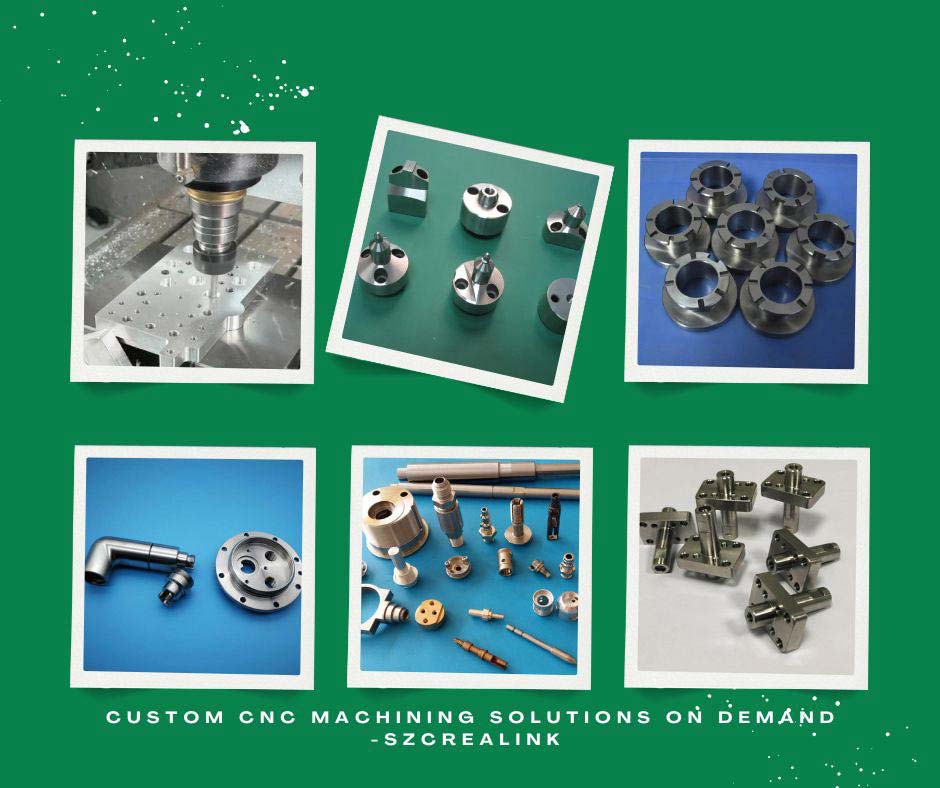
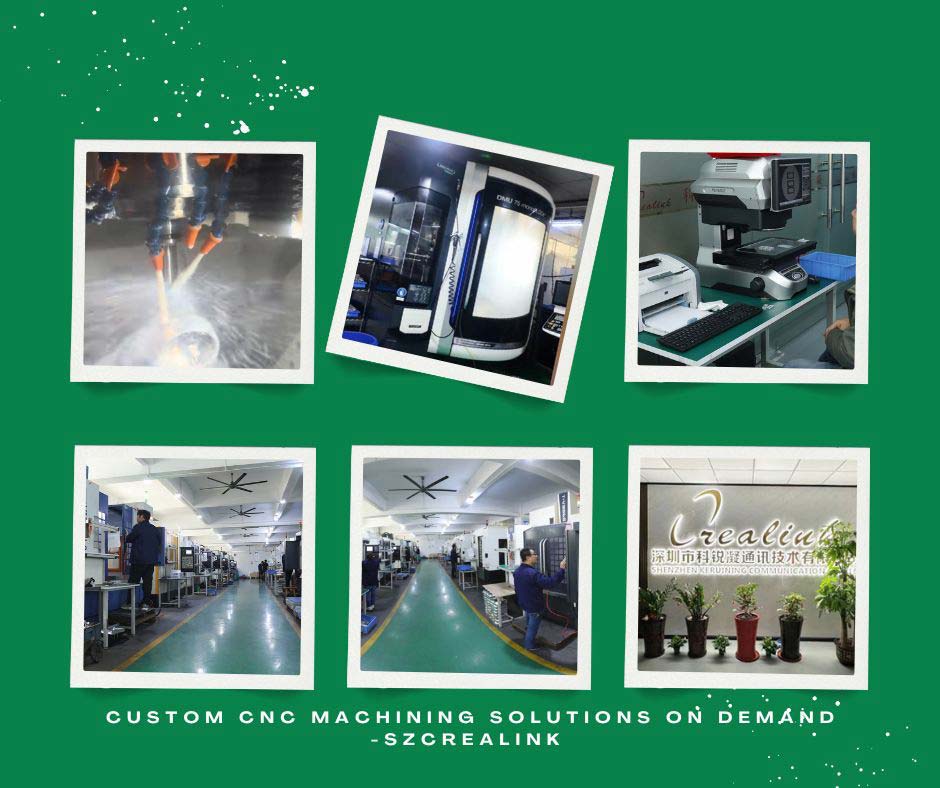
We are equipped with a variety of advanced CNC machines to flexibly handle machining requirements of varying complexity:
*Three-axis milling: Moves along the X, Y, and Z linear axes, suitable for efficient machining of most standard parts.
*Four-axis milling: Adds a rotational axis (A-axis) to the three-axis setup, enabling machining of parts with angled features or side structures.
*Five-axis milling: Enables simultaneous control across five axes, allowing single-setup machining of complex surfaces, deep cavities, undercuts, and other challenging geometries. This significantly reduces setup changes while enhancing precision and efficiency.
*CNC Turning (Lathe): Specialized for high-precision batch production of rotary parts (e.g., shafts, sleeves, threaded components).
All equipment undergoes regular calibration and maintenance to consistently meet stringent tolerance requirements. Machining programs are meticulously developed by experienced engineers and technicians using professional CAM software, balancing precision, efficiency, and cost.
2.Supported Materials for Machining?
We can machine a wide variety of engineering materials, covering metals and high-performance plastics:
Metal materials include: Carbon steel, high-strength alloy steel; Stainless steel (such as grades 304, 316, etc.); Aluminum alloys (such as 6061, 7075); Copper, brass, bronze; Titanium alloys; Tool steel (such as O1, D2, H13)
Plastics include: Polyoxymethylene (Delrin/POM); Nylon (PA); ABS, PVC; Polyetheretherketone (PEEK); Polycarbonate (PC); Polytetrafluoroethylene (PTFE, Teflon)
Different materials exhibit distinct characteristics in machinability, strength, corrosion resistance, and thermal stability. We can recommend the most suitable material solution tailored to your specific application, balancing performance and cost.
3.What are the design file requirements?
Which design file formats do we accept?
To ensure efficient collaboration, we support the following mainstream formats:
STEP (.stp / .step) — The preferred 3D model format with strong compatibility
IGES (.igs / .iges) — Universal 3D exchange format
DXF (.dxf) — Suitable for 2D contours or laser cutting drawings
SLDPRT — SolidWorks native files (if available)
PDF or engineering drawings — Accepted as supplementary files for detailing tolerances, surface finishes, thread specifications, etc.
4.Can you assist me in optimizing or creating a part design?
Yes. We offer Design for Manufacturing (DFM) consulting services. Whether you have preliminary sketches, conceptual descriptions, or require modeling from scratch, our engineering team can help optimize structures, simplify processes, reduce costs, and ensure designs possess excellent manufacturability.
5.What is your machining accuracy and tolerance capability?
What level of machining accuracy can you achieve?
Our standard machining tolerance is ±0.01 mm (±10 μm), depending on the part’s geometric complexity, material properties, and clamping method. For critical mating surfaces, sealing zones, or high-speed rotating components, we can also provide tighter tolerance control (e.g., ±0.005 mm or higher) to meet high-precision application requirements.
Through advanced equipment, a professional team, and meticulous attention to detail, we are committed to efficiently and reliably transforming your designs into high-quality physical products. Feel free to contact us anytime for customized technical advice or a free quote!
6.Why is CNC machining so popular in the production of industrial parts?
CNC (Computer Numerical Control) machining has become a popular choice for manufacturing industrial parts primarily due to its high versatility, repeatability, and reliability. This process enables precise control over the machining operation and is compatible with a wide range of materials, making it suitable for producing complex components. Additionally, specific parameters related to CNC model functionality may vary depending on the type of CNC machine tool.
7.What should I consider when selecting materials?
The choice of material directly impacts pricing. Key factors include:
Part size
Material hardness
Properties like thermal conductivity and fracture susceptibility
Whether a decorative surface finish is required
8.What precision levels are achievable?
Common tolerances include: 0.1mm, 0.05mm, and 0.025mm.
EDM (electrical discharge machining) or wire cutting can achieve higher precision, down to 0.002mm.
9.Are there size limitations for parts?
Yes, machines have physical constraints:
Maximum workpiece dimensions for milling machines: 1000x600x600 mm
Maximum workpiece dimensions for lathes: 800x250x50 mm
Larger parts require more machining time, increasing the cost.
10.Can internal corners be made square?
No. Since milling cutters are round, internal corners will have slight rounding.
When designing, it’s best to leave a fillet with a radius slightly larger than the tool radius (tool radius x 1.3).
11.What are the wall thickness requirements?
Too thin walls are prone to chatter, leading to poor precision.
Generally, wall thickness should not be less than 0.8mm for stability.
12.What considerations apply to drilling?
Hole depth should not exceed 4 times the hole diameter.
Use standard drill bit sizes whenever possible. Custom tooling for non-standard sizes increases costs.
13.How can engraved text or logos be optimized?
Engraving is more cost-effective than raised embossing due to reduced material removal.
For clarity and visual appeal, ensure engraving depth and width are ≥ 1mm.
14.When to Use CNC Machining vs. Injection Molding?
1. Situations Suitable for CNC Machining:
1.1 Prototyping or Functional Testing
Before investing heavily in injection molds, many seek a batch of parts resembling mass-produced quality for testing. CNC machining excels at meeting these small-batch, rapid prototyping needs.
1.2 Fixture or Tooling Production
Engineers frequently require testing fixtures or assembly jigs. Traditional machining shops may charge additional programming and fixture setup fees (NRE costs), making small runs uneconomical. Automated CNC machining eliminates these extra charges, enabling fast turnaround (as quick as 1 day) even for just a few parts at a more reasonable price.
2. Situations Suitable for Injection Molding:
For larger part volumes, injection molding is more suitable:
It accommodates market testing, bridge production (small-batch transitional runs), and even small-scale mass production.
If you wish to avoid high tooling costs upfront (typically 6–10 weeks lead time), we offer rapid prototyping molds to deliver parts within 1–15 days, with volumes up to 10,000+.
15.When should vacuum casting be chosen?
Vacuum casting is suitable for high-quality prototypes or small-batch production. It uses silicone molds, is cost-effective, and accurately reproduces the surface details of the original part.
16.When should I choose 3D printing?
3D printing is ideal for rapid manufacturing from single pieces to small batches, offering faster turnaround and lower costs than CNC machining.
It excels for one-off visual prototypes due to its speed, flexibility, and affordability. However, printed parts typically have lower strength and impact resistance compared to CNC-machined or cast components.
17.When should I choose CNC machining?
CNC machining delivers parts with true material properties, ready for functional testing or end-use.
We can machine 1–200 parts in 1–3 business days using plastics and metals. While CNC is pricier than plastic 3D printing, it offers a more cost-effective solution than metal 3D printing or casting for metal prototypes.
18.Can I order just one piece?
Absolutely! We have no minimum order quantity and will recommend the most suitable and economical production method based on your quantity.
19.How long does shipping take?
Europe, North America, Australia: Approx. 3–6 business days
South America, Central Asia, North Africa: Approx. 5–10 business days
Note: Delays may occur during peak seasons, pandemic-related disruptions, or other unforeseen circumstances.
20.How do I receive my parts?
Provide complete 2D/3D CAD drawings, and we can deliver as quickly as within two weeks. Complex parts may require additional time.
Most shipments are sent via air freight, typically arriving at your address within a few business days.
21.How is the delivery time calculated?
Delivery time begins only after the manufacturing review is completed and the production schedule is confirmed.
22.How does SzCrealink differ from other suppliers?
Compared to suppliers in North America and Europe, our CNC machining/turning parts are typically priced at just 40%–65% of their cost.
Compared to other Chinese suppliers, we don’t solely compete on price. Instead, we prioritize quality, service, responsiveness, and professional outcomes.
23.How do you ensure design confidentiality?
We sign and strictly adhere to Non-Disclosure Agreements (NDAs). Our factory enforces rigorous internal protocols prohibiting unauthorized use of client products. Having processed hundreds of thousands of unique designs over the years, we never disclose any information to third parties.
24.Can I provide my own master model for vacuum casting or CNC machining?
Absolutely!
Vacuum Casting: Master models can be used to create silicone molds, provided they are made of rigid materials resistant to temperatures above 100°C.
CNC Machining: Master models can be converted into CAD/CAM programs via 3D scanning for machining.
25.Can I use my own materials?
Yes, as long as the materials are compatible with our equipment and processes.
Content Guide
Fundamental Knowledge FAQ:
1.Why Choose CNC Machines?
The core advantage of CNC machines lies in the efficiency gains delivered by automation. The entire machining process is precisely controlled by computer programs, eliminating the need for continuous manual operation. This significantly reduces downtime caused by human error and operator fatigue.
This means:
Production can run continuously 24/7, pausing only briefly for equipment maintenance;
High machining consistency ensures stable product quality;
Overall output efficiency far surpasses traditional manual or semi-automated methods.
This level of stable, reliable production capability is difficult for traditional manufacturing processes to achieve.
2.What does “precision” mean in CNC machining?
Simply put, precision describes how closely the machined result aligns with the design drawing specifications. For example, if the drawing requires a part length of 50 millimeters and the actual machined dimension is precisely 50 millimeters, this indicates the equipment possesses high precision.
In practical applications, high precision ensures parts strictly conform to engineering specifications—a critical factor especially in precision assemblies or critical functional components.
3.What exactly does “repeatability” mean?
If “accuracy” focuses on “how precise” something is, then ‘repeatability’ (also known as consistency) focuses on “how stable” it is. It measures how consistent the results are when the same machine tool processes the same feature multiple times under identical conditions.
For example, if ten consecutive cuts of 50 millimeters each yield results between 49.999 and 50.001 millimeters—this indicates excellent equipment repeatability. In scenarios requiring mass production, good repeatability is more practical and critical than achieving exceptionally high precision in a single operation.
4.What role do tolerances play in CNC machining?
Tolerance refers to the permissible range of dimensional deviation, typically expressed as “±” (e.g., ±0.001 mm). It is not an error but a predefined reasonable fluctuation range established in engineering design.
For example, a part marked with a diameter of 10 mm ±0.01 mm means that any finished diameter between 9.99 mm and 10.01 mm is considered acceptable. The capability of a CNC machine is often measured by the smallest tolerance it can consistently achieve—the tighter the tolerance, the higher the machine’s performance.
In precision manufacturing, setting reasonable tolerances ensures functional requirements are met while avoiding unnecessary machining costs.
5.Why is it essential to focus on precision, repeatability, and tolerances when selecting a CNC machining solution?
Because these three metrics form the core criteria for evaluating CNC machine tool performance. Together, they determine whether machined parts meet design specifications, suitability for mass production, and overall manufacturing costs.
6.How do I select the appropriate CNC equipment or machining services for a project?
Consider the specific application scenario and comprehensively evaluate the equipment’s precision capabilities, repeatability stability, and achievable tolerance range. Choosing the right tools not only enhances product quality but also significantly optimizes the efficiency and cost of the entire production process.
7.What does “tool offset” mean in CNC milling?
Tool offset refers to the compensation value set by the system to account for the actual dimensions and mounting position of the tool. It ensures that the theoretical path in the program accurately corresponds to the actual machining location on the workpiece, preventing dimensional deviations caused by variations in tool radius or length.
8.How does CNC milling work?
CNC milling uses high-speed rotating tools to remove excess material layer by layer from metals, plastics, ceramics, and other materials. We offer three-axis, four-axis, and five-axis milling services that deliver high precision while achieving efficient machining.
9.What parts can CNC milling machines process?
Virtually any shape can be milled—whether simple structures or precision components featuring complex surfaces, internal cavities, and angled holes—as long as it can be modeled using design software.
10.What is Electrical Discharge Machining (EDM)?
Electrical Discharge Machining is a non-contact machining method that uses electrical and thermal energy to remove material. It is particularly well-suited for machining parts with extremely high hardness (such as titanium alloys and cemented carbides) or those with highly complex geometries.
11.What is a Swiss-type lathe?
A Swiss-type lathe is a high-precision automatic lathe specifically suited for mass production of slender shaft components. Its unique “guide bush + spindle” structure significantly reduces vibration, enhances machining accuracy, and minimizes downtime.
12.What is the primary function of CNC machine tools?
They precisely process raw materials—such as metal rods and plastic sheets—into components that meet drawing specifications through drilling, milling, turning, grinding, and other methods. The core principle is “material removal to achieve the desired shape.”
Content Guide
Operational FAQ:
1.How does a CNC machine tool operate?
The operator programs the machining path (such as G-code) into the control system. The machine tool then automatically executes tool movements, precisely completing cutting tasks in three-dimensional space according to the programmed specifications.
2.What are the responsibilities of a CNC lathe operator?
CNC lathe operators are responsible for operating turning equipment to produce high-precision rotary parts. Their duties include programming setups, monitoring machining processes, inspecting finished part dimensions, and participating in first-piece trial cuts and process optimization.
3.What does a CNC milling machine operator do?
They are responsible for clamping workpieces, selecting appropriate cutting tools, setting cutting parameters (such as spindle speed and feed rate), initiating programs, and continuously monitoring the machine’s operational status to ensure machining quality and equipment safety.
Content Guide
AI Quick Supplement FAQ:
1.What is CNC Machining?
CNC Machining is a manufacturing process where computer programs automatically control machine tools to perform cutting, drilling, milling, or turning operations on raw materials such as metals and plastics. Unlike traditional manual operations, CNC Machining relies on digital instructions (e.g., G-code) to precisely drive equipment movements, enabling efficient and stable production of high-precision custom parts.
2.Key Advantages of CNC Machining
High Precision and Consistency: Achieves micron-level tolerances, ensuring dimensional uniformity across batch production.
High Production Efficiency: Automated operation minimizes manual intervention and supports extended continuous operation.
Complex Geometry Capability: Processes intricate features like curved surfaces, internal cavities, and angled holes that are difficult with traditional methods.
High Material Utilization: Optimized toolpaths reduce scrap and enhance resource efficiency.
3.Common Machining Methods: Milling and Turning
CNC Milling: The workpiece remains stationary while high-speed rotating tools move along multiple axes to perform cutting. Suitable for machining diverse shapes including planes, slots, contours, and 3D surfaces.
CNC Turning: The workpiece rotates on the spindle while a stationary tool feeds axially or radially. Primarily used for machining cylindrical, conical, or rotary parts.
In short, milling involves “moving the tool while holding the workpiece stationary,” while turning involves “moving the workpiece while holding the tool stationary.”
4.Applicable Materials and Limitations
Common materials include:
Aluminum alloys, stainless steel, carbon steel, copper, engineering plastics (e.g., ABS, nylon, POM), wood, and certain composite materials.
Materials unsuitable for machining:
Highly elastic materials (e.g., silicone, rubber), brittle materials (e.g., ordinary glass, ceramics), ultra-soft metals (e.g., pure lead), and structurally porous foam materials. These materials are prone to deformation, fragmentation, or tool adhesion during cutting, making it difficult to ensure machining quality.
5.Core Terminology and Key Components
G-code: Programming instructions defining tool movement trajectories, speeds, and coordinate positions.
M-code: Controls machine auxiliary functions such as spindle start/stop, coolant activation, tool change, etc.
Spindle: The core component that mounts and drives cutting tools at high rotational speeds.
Automatic Tool Changer (ATC): Automatically replaces required tools during machining to enhance efficiency.
Control System: The computer system that reads and executes machining programs, serving as the “command center” of the entire machine.
6.Common Issues and Recommendations
Rough surfaces or chatter marks: May result from tool wear, improper cutting parameters, or machine vibration. Recommend replacing tools with sharp ones and adjusting spindle speed and feed rate appropriately.
Program errors or failure to run: Often caused by G-code syntax errors or coordinate setting deviations. Carefully verify the program and use simulation software for previewing when necessary.
Over-travel alarm: Tool or worktable has reached travel limits. Inspect workpiece clamping position, program origin setting, and ensure the work area is clear.
Tool unexpected drop: Typically caused by contaminated tool holder taper, worn tie bars, or insufficient clamping force. Clean tool holders promptly and perform regular maintenance on the tool changer mechanism.
As a key technology in modern manufacturing, CNC machining leverages automation, high precision, and strong adaptability to serve industries including aerospace, automotive, medical, electronics, and mold making. Whether for prototype development or mass production, it delivers reliable and efficient solutions.
Content Guide