Why Is Stainless Steel Difficult To Machine?
Table of Contents
1.Stainless steel material machining difficulties are mainly in the following areas:
1.1 Large cutting force and high cutting temperature
This type of material has great strength, large tangential stress and plastic deformation during cutting, and thus large cutting force. In addition, the material thermal conductivity is extremely poor, resulting in high cutting temperatures, and high temperatures are often concentrated in the narrow area near the cutting edge of the tool, thereby accelerating the wear of the tool.
1.2 Machining hardening serious
Austenitic stainless steel and some high-temperature alloys of stainless steel are austenitic organization, cutting tendency to work hardening, usually several times that of ordinary carbon steel, cutting tools in the work hardening region, so that the tool life is shortened.
1.3 Easy to stick the knife
Whether it is austenitic stainless steel or martensitic stainless steel are the existence of processing chip tough, high cutting temperature characteristics. When the tough chips flow through the front face, will produce bonding, welding and other sticky knife phenomena, affecting the surface roughness of machined parts.
1.4 Faster tool wear
The above materials generally contain high melting point elements, plasticity, high cutting temperature, so that the tool wear accelerated, grinding, tool change frequently, thus affecting the productivity and improve the cost of tool use.
The main thing is to reduce the cutting line speed, feed. The use of specialized processing of stainless steel or high temperature alloy tools, drilling and tapping the best internal cooling.

2. Stainless steel parts machining process
Through the above analysis of processing difficulties, stainless steel machining process and related tool parameter design and ordinary structural steel materials should have a large difference, the specific processing technology is as follows:
2.1 Drilling
In the drilling process, due to the poor thermal conductivity of stainless steel materials, small modulus of elasticity, hole processing is also difficult. To solve the hole processing problems of such materials, mainly the selection of suitable tool materials.
2.2 Boring processing
2.2.1 Tool material selection, due to the processing of stainless steel parts when the cutting force is large, high cutting temperature, tool material should try to choose high strength, good thermal conductivity carbide.
For the processing of such materials hardened parts, you can use CBN (cubic boron nitride) inserts, CBN hardness is second only to diamond, hardness up to 7000 ~ 8000HV, so wear resistance is very high, compared with diamond, CBN outstanding advantage is much higher heat resistance than diamond, up to 1200 ℃, can withstand very high cutting temperatures. In addition, its chemical inertia is very large, and the iron group metals in 1200 ~ 1300 ℃, also does not play a chemical role, so very suitable for processing stainless steel materials. Its tool life is tens of times that of carbide or ceramic tools.
2.2.2 Tool geometry parameters, tool geometry parameters play an important role in its cutting performance, in order to make cutting fast and smooth, carbide tools should be used larger front angle to improve tool life. In general, when roughing, the front angle is taken 10 ° ~ 20 °, when semi-finishing, 15 ° ~ 20 °; when finishing, 20 ° ~ 30 °. The selection of the main deflection angle is based on the fact that when the rigidity of the process system is good, it can be taken as 30° to 45°; if the rigidity of the process system is poor, it can be taken as 60 to 75°, and when the ratio of the length of the workpiece to the diameter is more than 10 times, it can be taken as 90°.
Boring stainless steel material with ceramic tools, the vast majority of cases, ceramic tools are using negative front angle for cutting. The size of the front angle should be generally selected -5 ° ~ -12 °. This is conducive to strengthening the cutting edge, give full play to the superiority of ceramic tools with high compressive strength. The size of the back angle directly affects the tool wear, also has an impact on the strength of the cutting edge, generally selected 5 ° ~ 12 °. The change of the main deflection angle affects the change of radial cutting force and axial cutting force, as well as the size of the cutting width and cutting thickness. Because the vibration of the process system is extremely unfavorable to the ceramic tool, so the main deflection angle selection should be conducive to reducing such vibration, generally selected 30 ° ~ 75 °. When CBN is selected as the tool material, the tool geometry parameters are 0° to 10° front angle, 12° to 20° back angle, and 45° to 90° main deflection angle.
2.2.3 The roughness value of the front face should be small, in order to avoid the phenomenon of chip sticking, the front and back face of the tool should be carefully sharpened to ensure that there is a small roughness value, thus reducing the resistance to chip flow and avoiding chip sticking.
2.2.4 The cutting edge of the tool should be kept sharp, the cutting edge of the tool should be kept sharp to reduce the hardening, the feed and back draft should not be too small to prevent the tool from cutting in the hardened layer, which will affect the service life of the tool.
2.2.5 Pay attention to the grinding of chipbreaker groove, due to the stainless steel chips have strong characteristics, the chipbreaker groove on the front face of the tool should be suitable for grinding, so that the cutting process chipbreaking, chip capacity, chip discharge convenient.
2.2.6 Cutting volume selection, according to the characteristics of stainless steel materials, processing is recommended to use low speed and larger feed for cutting.
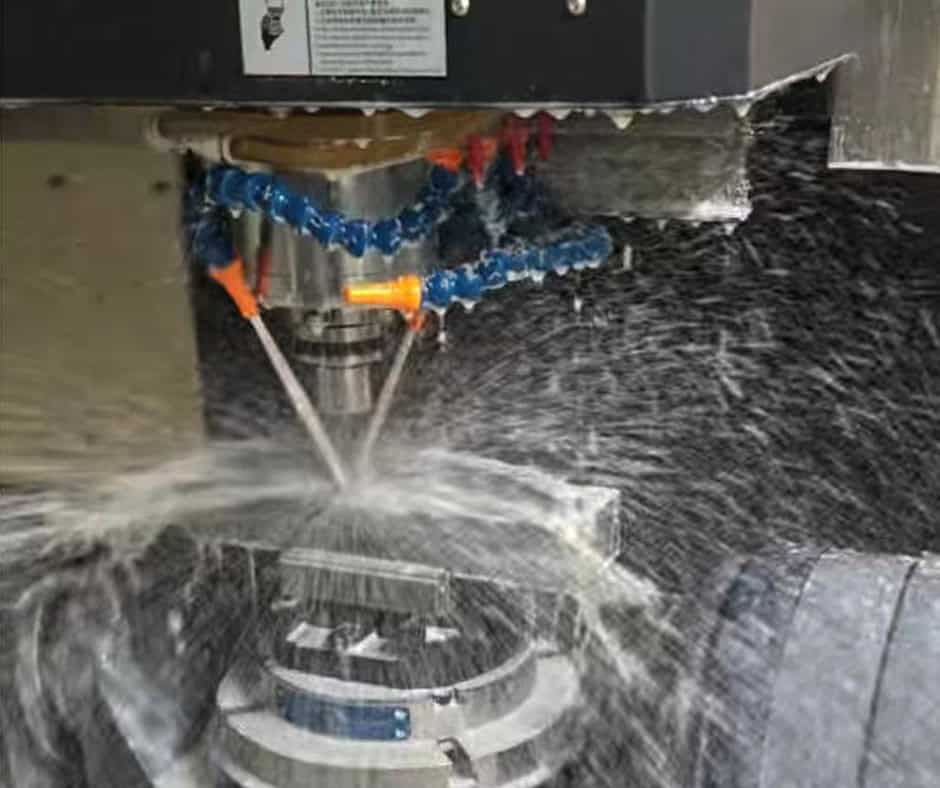
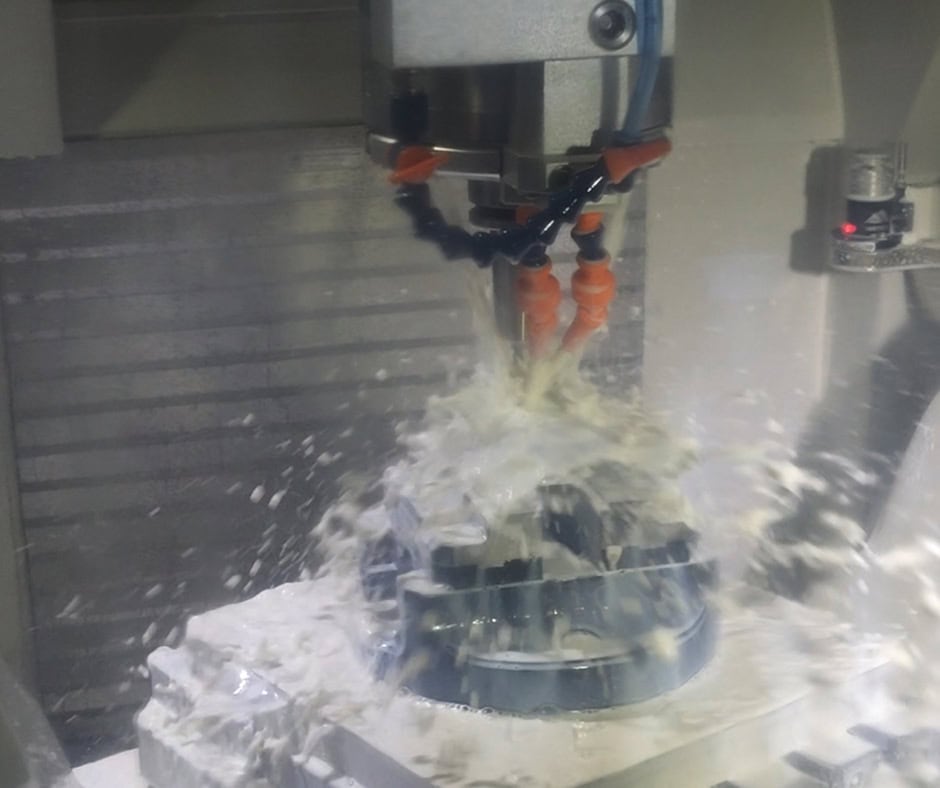
2.2.7 Cutting fluid selection should be appropriate, because stainless steel has a very easy to produce bonding and poor heat dissipation characteristics, so the choice of anti-bonding and good heat dissipation in boring cutting fluid is quite important, such as the choice of higher chlorine-containing cutting fluid, as well as has a good cooling, cleaning, rust and lubrication effect does not contain mineral oil, does not contain the water solution of the acid salts, such as H1L-2 synthetic Cutting fluid.