A Prototype Should Answer Engineering Questions
There is a big difference between making a model and making a prototype that can be tested.
A visual model can show the shape of a product. A CNC-machined prototype can help you check the things that matter before production:
Does the part fit with mating components?
Are mounting holes in the correct position?
Do threads work with the actual fasteners?
Are moving or sliding features working as expected?
Is the wall thickness sufficient for the application?
Does the selected material behave as expected?
Can the part be assembled without modification?
Are any dimensions or features creating manufacturing problems?
This is where CNC machining becomes particularly useful during product development.
The prototype is not the final goal. It is a way to find problems while they are still inexpensive to fix.
Prototype Parts Machined From Real Engineering Materials
When material properties matter, the prototype should be made from a material that is appropriate for the test.
We machine prototypes from commonly used engineering materials, including:
Metals
Aluminum 6061 / 7075
Stainless steel 303 / 304 / 316
Carbon and alloy steel
Brass
Copper
Titanium
Other metals available according to project requirements
Engineering Plastics
POM / Delrin
Nylon / PA
ABS
PC
PMMA
PP
PEEK
PTFE
Other engineering plastics
This makes CNC machining suitable for prototypes that need to be assembled, handled, measured, or functionally tested rather than simply displayed.
For applications with specific mechanical, thermal, chemical, or electrical requirements, we can discuss the material specification before production.
CNC Prototype Machining for Complex Parts
Prototype parts are often more difficult to manufacture than they look on a CAD screen.
A part may contain deep pockets, thin walls, angled features, cross holes, internal threads, tight mating dimensions, or surfaces that cannot be reached easily from one direction.
Our machining capabilities include:
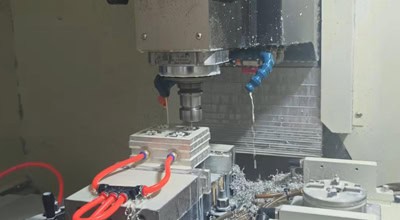
3-Axis CNC Milling
Suitable for many brackets, plates, housings, covers, blocks, fixtures, and general mechanical components.
4-Axis CNC Machining
Useful when additional positioning is required to machine multiple faces or features more efficiently.
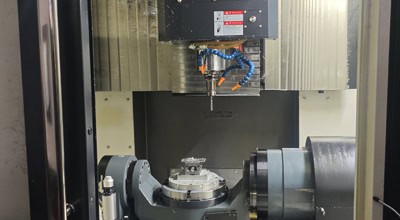
5-Axis CNC Machining
For complex surfaces, angled features, deep areas, and geometries that require access from multiple directions.
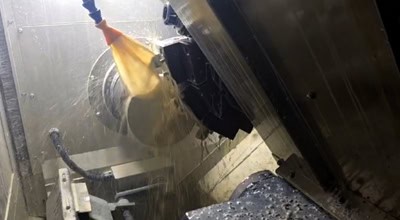
CNC Turning
For shafts, pins, bushings, sleeves, threaded components, rings, and other rotational parts.
Secondary Operations
Drilling, tapping, grinding, EDM and other operations can be incorporated when the part design requires them.
The machining method is selected according to the actual geometry rather than forcing every prototype through the same process.
DFM Review Before We Start Cutting
A CAD model may look perfect on screen but still contain features that are difficult, expensive, or impractical to machine.
Before production, our engineers review the drawing or 3D model and look for potential manufacturing issues.
Typical examples include:
Deep pockets that are difficult to reach
Very small internal corner radii
Thin walls that may deform during machining
Unnecessarily tight tolerances
Difficult-to-machine hole locations
Threads with limited tool access
Features requiring multiple setups
Material choices that affect machining cost
Dimensions that could be relaxed without affecting function
We don’t change your design without approval.
Instead, we point out the issue, explain why it matters, and let you decide whether a modification makes sense.
For prototype work, this conversation can be more valuable than simply receiving a cheaper quote.
Prototype Machining Without Mold Investment
For a one-off or small number of parts, making a mold is often difficult to justify.
CNC machining allows us to manufacture the part directly from solid material without first building an injection mold or other dedicated tooling.
This is particularly useful when:
The design is still changing
You need only a few parts for testing
The product has not yet been approved for mass production
You need functional samples before investing in tooling
You want to test several design versions
You need a small pilot run before committing to larger production
There is no fixed MOQ for prototype machining.
If you need one part, we can discuss making one part. If you need several versions for testing, we can quote them together.
Surface Finishing for Functional and Presentation Prototypes
Machining is not always the last step.
Depending on your application, the prototype may need a specific surface condition for testing, assembly, corrosion resistance, appearance, or customer presentation.
Available finishing options include:
As-machined finish
Bead blasting / sandblasting
Anodizing
Polishing
Brushing
Plating
Powder coating
Painting
Passivation
Laser engraving
For example, an aluminum prototype may be machined first, inspected, and then anodized if the final application requires a protective or colored surface.
We can coordinate machining and finishing as part of the same project so you do not have to manage every process separately.
Inspection That Helps You Validate the Design
Getting a prototype on time is useful. Knowing whether it actually meets the drawing is more useful.
Our inspection process can include:
Critical dimensional inspection
Caliper and micrometer measurement
Height gauge measurement
Thread and hole inspection
Surface-finish inspection
CMM measurement for suitable precision components
Material certification when required
Inspection reports based on project requirements
Critical dimensions should be identified on your drawing whenever possible.
This helps our production and quality teams understand which features are essential to your design and where tighter process control is required.
For prototype projects, inspection results can also provide useful information before you make the next design revision.
From Prototype to Small-Batch Production
A good prototype should make the next manufacturing step easier.
Once the design has been validated, we can continue producing the same component in small batches without starting the sourcing process from zero.
The transition can include:
Prototype → Design Revision → Final Validation → Pilot Batch → Repeat Production
During this process, your drawings, material requirements, tolerances, surface finish, inspection requirements, and packaging specifications can be carried forward into production.
This is especially useful for engineering teams that expect to move from a few prototype parts to regular small-batch orders.
What We Need From You
You don’t need to prepare a complicated RFQ.
Send us what you already have.
Ideally:
3D CAD file
2D drawing, if available
Material
Quantity
Surface finish
Critical tolerances
Any special inspection requirements
We commonly work with STEP, STP, IGES, IGS, SolidWorks, DXF, DWG and PDF drawings.
If you only have a 3D CAD file, send it anyway.
If something important is missing, our engineering team can tell you what information is needed before production.
How Prototype Machining Works
01-Send Your Design
Upload your CAD file and drawings together with the required quantity and material.
02-Engineering Review
We review the geometry, tolerances, material, machining requirements, and potential DFM issues.
03-Quote & Lead Time
You receive a quotation based on the actual part requirements rather than a generic prototype price.
04-CNC Machining
After confirmation, the part is programmed, set up, machined, and inspected according to the approved requirements.
05-Finishing & Final Inspection
Surface treatment and additional inspection are completed when specified.
06-Shipment
The finished prototypes are packed for international delivery and shipped to your specified address.
Prototype Machining for Product Development Teams
Our prototype machining service supports projects at different stages of development.
Product Design
Turn a CAD concept into a physical component that can be handled and evaluated.
Engineering Validation
Check dimensions, interfaces, materials, assembly, and mechanical function.
Pilot Production
Produce a small quantity before moving into a larger manufacturing program.
Design Iteration
Make changes based on real test results and manufacture the next version without a long tooling cycle.
Production Preparation
Use the prototype stage to identify manufacturing issues before regular production begins.
We work with customers across areas such as industrial equipment, automation, robotics, electronics, automotive components, medical equipment, and mechanical systems.
Why Work With SzCrealink for Prototype Machining?
We are a Shenzhen-based CNC manufacturer, not simply a quotation platform.
Founded in 2007, SzCrealink operates its own manufacturing facility with more than 50 CNC machine tools and supports CNC milling, turning, multi-axis machining, inspection, surface finishing, and related manufacturing processes.
For prototype projects, this means you can communicate directly with the manufacturing team about:
Part geometry
Material selection
Tolerances
Machining methods
DFM concerns
Surface treatment
Inspection requirements
Production planning
The goal is straightforward:
Make the prototype correctly, learn from it, and make the next manufacturing step easier.
Frequently Asked Questions
Can you make just one prototype?
Yes. There is no fixed MOQ for prototype machining. A single part can be produced when that is what your development project requires.
Do you need a 2D drawing?
Not necessarily. We can review many projects from 3D CAD files. However, a 2D drawing is strongly recommended when your design includes critical tolerances, threads, surface finishes, or specific inspection requirements.
How quickly can you make a prototype?
Many straightforward prototypes can be completed within 3 – 7 days. Actual lead time depends on the material, geometry, quantity, machining process, finishing, and inspection requirements.
If you have a specific deadline, tell us when submitting the RFQ so we can check the production schedule.
Can you machine prototypes from aluminum?
Yes. Aluminum is one of the most commonly requested prototype materials. We regularly work with grades such as 6061 and 7075, depending on the application.
Can you make plastic prototypes?
Yes. We CNC machine engineering plastics including POM, nylon, ABS, PC, PMMA, PEEK, PTFE, and other materials according to project requirements.
Can you provide a DFM review?
Yes. Our engineers can review your CAD files and drawings for common machining issues and point out features that may affect cost, lead time, or manufacturability.
Can you provide inspection reports?
Yes. Dimensional inspection and additional documentation can be arranged according to the project requirements. CMM inspection is also available for suitable precision components.
Can prototype parts be surface treated?
Yes. Depending on the material, we can arrange anodizing, bead blasting, polishing, plating, painting, powder coating, passivation, laser engraving, and other finishing processes.