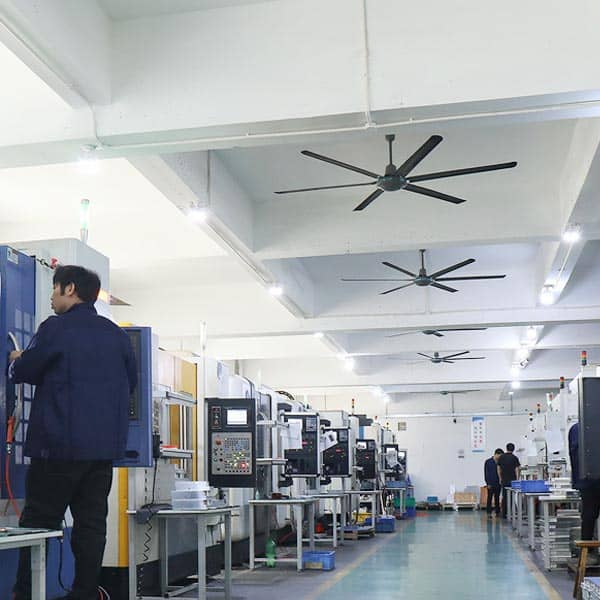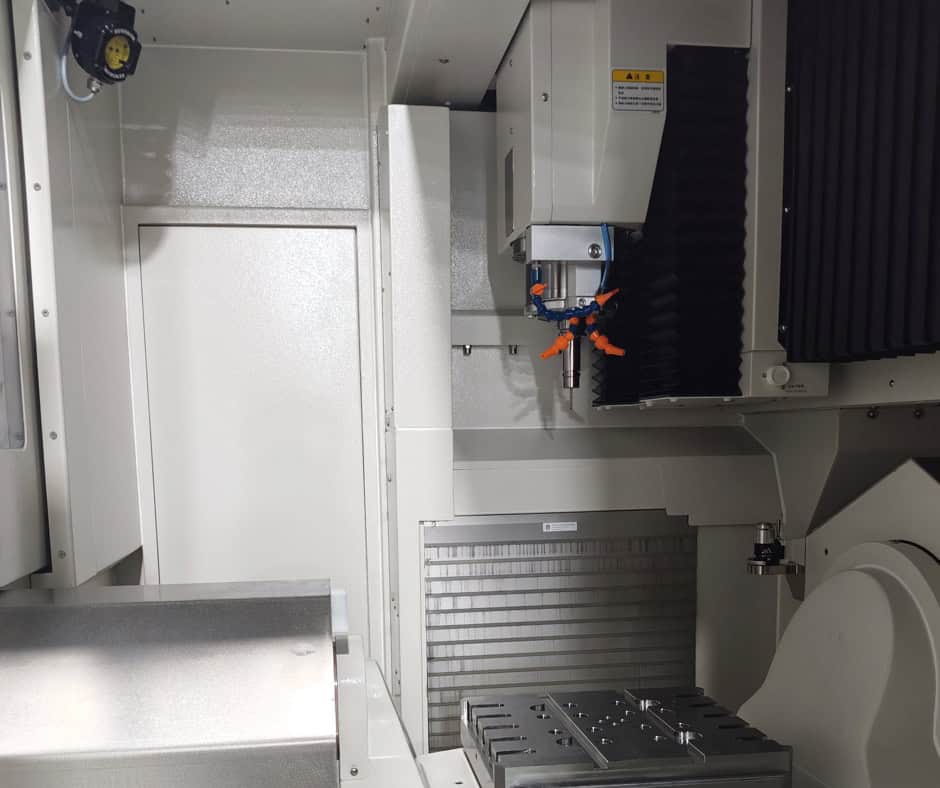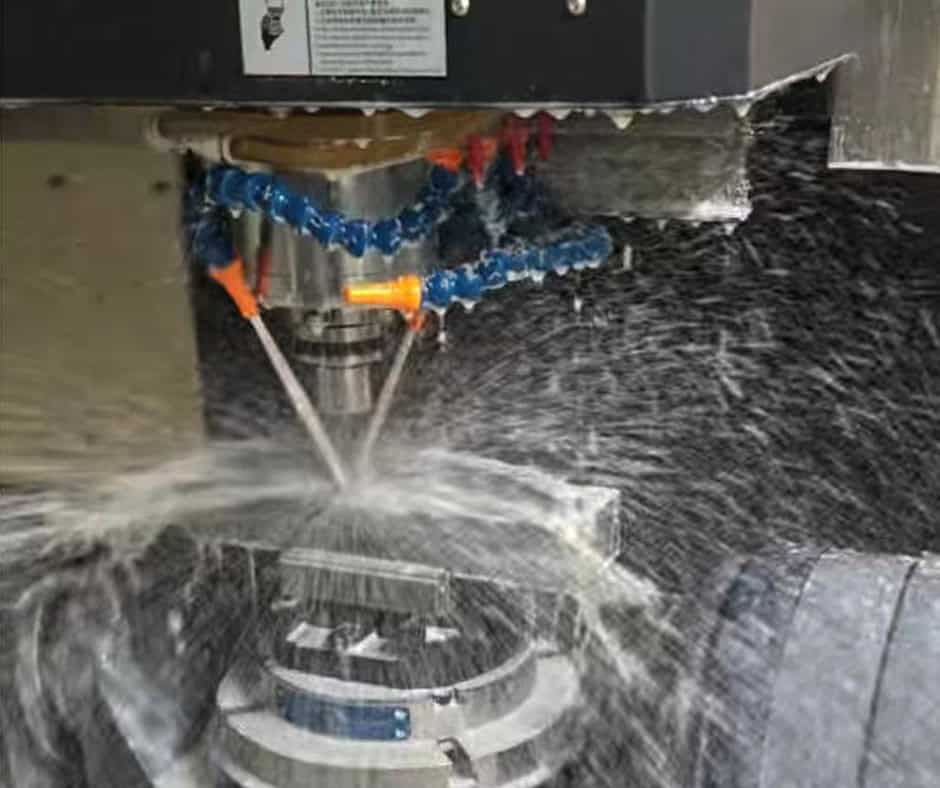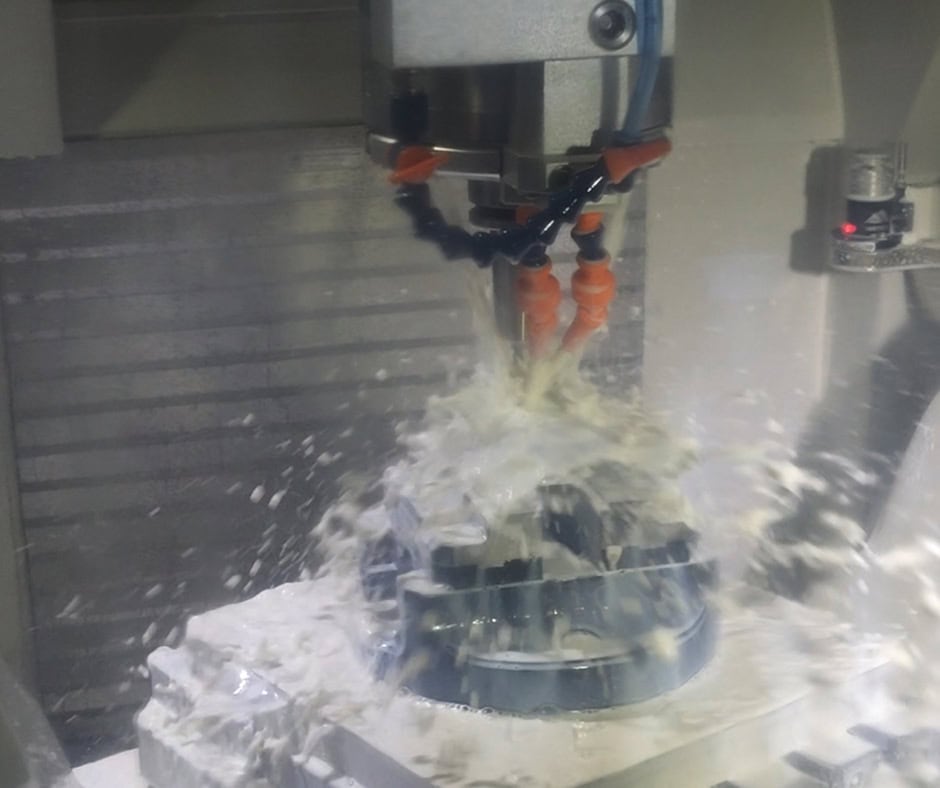
For manufacturing engineers and product managers, the transition from CNC machining to die casting is one of the most critical financial and operational decisions in a product’s lifecycle. While CNC offers unparalleled flexibility and precision for prototypes and low volumes, it becomes economically inefficient as production scales. Determining the exact CNC to die casting transition point requires a clear understanding of the die casting break even point, where the high upfront cost of tooling is offset by the significantly lower per-unit cost of mass production. This guide analyzes the cost dynamics, technical trade-offs, and strategic timing for making this switch.
Table of Contents
The Economic Tipping Point: Understanding the Cost Curves
The decision to switch is fundamentally an economic calculation based on volume. CNC machining is a subtractive process with low initial setup costs but high variable costs; every part requires machine time, labor, and generates material waste. Consequently, the cost per unit remains relatively flat regardless of volume. In contrast, die casting involves a substantial upfront investment in hardened steel molds (tooling) and significant setup time. However, once the mold is created, the marginal cost per part drops dramatically because the cycle time is seconds, and material utilization is near 100%. The CNC machining vs die casting cost comparison essentially plots two intersecting lines: the flat, higher line of CNC and the steep-start, low-slope line of die casting. The intersection is your die casting break even point.
Calculating the Break-Even Volume
In practice, this means if a die casting mold costs $15,000 and saves you $8 per part compared to CNC, your break-even point is roughly 1,875 units. Below this number, CNC is cheaper. Above it, die casting yields savings. However, this calculation must also factor in “hidden” costs: CNC often requires secondary deburring and finishing, while die casting may require trimming, shot blasting, and impregnation for porosity. Generally, for small aluminum or zinc parts, the transition typically occurs between 500 and 2,000 units, depending on part complexity. For larger or more complex components requiring multi-slide dies, the break-even point may push to 5,000+ units.
Technical Trade-Offs: Precision vs. Production Speed
Beyond cost, the CNC to die casting transition involves accepting certain technical compromises. CNC machining offers superior dimensional accuracy (often ±0.005 mm) and can handle a wider range of materials, including high-strength alloys that are difficult to cast. It is ideal for parts with thick walls, intricate internal features that defy draft angles, and applications requiring absolute isotropy.
Die casting, while fast, introduces constraints. Parts must have draft angles for ejection, and wall thickness must be uniform to prevent shrinkage and porosity. While modern high-pressure die casting (HPDC) achieves impressive tolerances (±0.05 mm to ±0.1 mm), it rarely matches the precision of CNC without secondary machining. Furthermore, cast parts can suffer from internal porosity, making them unsuitable for high-vacuum applications or extreme pressure containment unless specifically impregnated or designed for it. Therefore, the switch is not just about volume; it is about whether the design can be optimized for castability without sacrificing functional performance.
Strategic Timing: When to Make the Move
Timing the CNC to die casting transition is as important as the volume calculation itself. Switching too early risks locking in a design that hasn’t been fully validated, leading to expensive mold modifications (steel safe cuts can only go so far). Switching too late burns cash on unnecessary CNC machining costs.
The Ideal Transition Scenario:
1.Design Freeze: The part design has been thoroughly prototyped via CNC and tested in the field. No major functional changes are anticipated.
2.Forecasted Volume: Sales forecasts confidently predict exceeding the die casting break even point within 12–18 months.
3.Lead Time Buffer: You have accounted for the 8–12 week lead time required for mold fabrication. A common strategy is to run the final pre-production batch on CNC while the die casting mold is being built, ensuring no gap in supply.
If your product is still iterating, or if the market demand is volatile, staying with CNC (or exploring sheet metal fabrication) is often the safer bet despite the higher unit cost.
Optimizing Design for the Switch (DFM)
Successfully moving from CNC to die casting requires a mindset shift in Design for Manufacturing (DFM). A part designed for CNC often fails in die casting due to a lack of draft angles, inconsistent wall thickness, or undercuts that require expensive side-actions.
•Draft Angles: Unlike CNC, where tools can approach from any angle, die casting requires 1° to 3° draft on all vertical walls to eject the part.
•Wall Thickness: CNC can machine thick bosses and thin ribs easily. Die casting requires uniform wall thickness (typically 2–3 mm for zinc, 3–4 mm for aluminum) to ensure proper metal flow and minimize sink marks.
•Undercuts: Features that prevent ejection require “slides” or “lifters” in the mold, drastically increasing tooling cost and maintenance. Redesigning to eliminate undercuts is a primary goal before switching.
Engaging a die casting engineer during the final CNC prototyping phase to “cast-optimize” the CAD model is crucial. This often involves adding slight radii, adjusting rib structures, and relocating parting lines to ensure the CNC machining vs die casting cost benefits are realized without quality issues.
Material Considerations and Limitations
The choice of material often dictates the feasibility of the switch. CNC machining can process almost any solid material, from soft plastics to hardened steels and titanium. Die casting is primarily limited to non-ferrous metals with lower melting points, predominantly Zinc, Aluminum, and Magnesium alloys.
•Zinc Alloys (e.g., Zamak): Excellent for small, intricate parts with thin walls. They offer high strength and ductility, often allowing for snap-fits that replace assembly steps.
•Aluminum Alloys (e.g., A380, ADC12): The most common choice for automotive and consumer electronics due to their light weight and good thermal conductivity. However, they are less strong than some wrought aluminum alloys used in CNC (like 6061-T6).
If your application requires stainless steel, brass, or specific high-temp superalloys, die casting is generally not an option (except for specialized semi-solid molding), and you may need to consider investment casting or stay with CNC.
Long-Term Cost Implications and ROI
While the die casting break even point highlights the initial crossover, the long-term Return on Investment (ROI) of switching to die casting grows exponentially with volume. Over a production run of 100,000 units, the savings per part can amount to hundreds of thousands of dollars. Additionally, die casting reduces assembly costs by allowing the integration of multiple CNC-machined components into a single cast part (part consolidation). It also minimizes supply chain variability; once the mold is qualified, the process is highly repeatable with minimal human intervention, unlike CNC which relies heavily on operator skill and machine availability. However, buyers must remember that die casting molds have a finite life (typically 100k to 500k shots depending on the alloy) and will eventually need refurbishment or replacement, a cost that should be amortized into the long-term financial model.
FAQs: Making the Transition
1. How do I calculate the exact break-even point for my specific part?
You need quotes for both processes. Take the total cost of the die casting mold minus the CNC setup cost, then divide that by the difference in per-unit price (CNC price minus Die Cast price). This gives you the unit count where costs equalize.
2. Can I use my existing CNC prototype design directly for die casting?
Rarely. CNC designs often lack draft angles, have inconsistent wall thicknesses, or feature undercuts that are too expensive for casting. A DFM (Design for Manufacturing) review and CAD modification are almost always required before cutting the die casting mold.
3. What happens if I switch to die casting and need to change the design later?
Changes to die casting molds are difficult and costly. Minor changes can sometimes be made by welding and re-machining the steel (“safe steel” strategy), but major geometry changes often require building a new mold insert or an entirely new tool. This is why design freeze is critical before switching.
4. Is die casting always cheaper than CNC for high volumes?
Generally yes, for non-ferrous metals. However, if the part is very large (requiring massive, expensive machines) or requires extensive secondary machining (to meet tight tolerances), the cost advantage may diminish. Always run a detailed cost model including post-processing.
5. How long does it take to transition from CNC to die casting production?
The mold fabrication process typically takes 8 to 12 weeks. During this time, you should continue producing parts via CNC to maintain inventory. Once the mold is ready, expect another 2–3 weeks for sampling, validation, and process tuning before full-rate production begins.