Introduction: Why PTFE GF Matters in High-Pressure Sealing
Table of Contents
What Is PTFE GF and Why It Performs Better
PTFE GF is a composite material where glass fibers are uniformly distributed within the PTFE matrix. This seemingly simple modification leads to significant improvements:
Key Performance Enhancements
•Higher compressive strength → Resists deformation under pressure
•Reduced creep (cold flow) → Maintains sealing geometry over time
•Improved wear resistance → Extends service life in dynamic sealing
•Better dimensional stability → Critical for tight tolerance sealing systems
However, this comes with trade-offs:
•Slightly higher friction compared to virgin PTFE
•Reduced chemical resistance in certain extreme environments
•Increased brittleness under impact
In high-pressure sealing, these trade-offs are often acceptable—and necessary.

Field Performance: Real Applications of PTFE GF
1. Chemical Pump Seals
In chemical processing, seals are exposed to:
•Continuous pressure cycles
•Corrosive fluids
•Elevated temperatures
Problem with virgin PTFE:
Seal deformation after prolonged pressure leads to leakage and frequent replacement.
PTFE GF solution:
•Maintains shape under load
•Resists extrusion into clearance gaps
•Provides longer maintenance intervals
Field result:
Service life increased by 2–4× compared to virgin PTFE seals.
2. High-Pressure Hydraulic Systems
Hydraulic systems operate under extreme pressures (often 20–40 MPa or higher).
Challenges:
•Seal extrusion
•Rapid wear due to reciprocating motion
•Heat buildup from friction
PTFE GF advantages:
•High modulus reduces deformation
•Glass fibers improve wear resistance
•Maintains sealing integrity under cyclic loads
Observed outcome:
•Reduced seal failure rates
•More stable system pressure
•Lower downtime costs
3. Industrial Valve Seats
Valve seats require:
•Tight sealing under pressure
•Resistance to media erosion
•Long-term dimensional stability
Virgin PTFE issue:
Cold flow causes seat deformation, leading to leakage.
PTFE GF improvement:
•Holds geometry under load
•Better resistance to abrasive particles
•More consistent sealing performance
Field feedback:
Operators report more predictable sealing behavior and fewer adjustments.
PTFE GF vs Virgin PTFE: Performance Comparison
| Property | Virgin PTFE | PTFE GF |
| Compressive Strength | Low | High |
| Creep Resistance | Poor | Excellent |
| Wear Resistance | Moderate | High |
| Friction Coefficient | Very Low | Slightly Higher |
| Dimensional Stability | Poor under load | Strong |
| Service Life (High Pressure) | Short | Long |
Conclusion:
Virgin PTFE is suitable for low-load, chemically aggressive environments.
PTFE GF is the better choice when mechanical performance matters more than pure chemical inertness.
Failure Modes in High-Pressure Sealing (And How PTFE GF Solves Them)
Understanding failure is key to material selection.
1. Creep Deformation (Cold Flow)
Cause: Continuous pressure causes PTFE to deform permanently.
Impact: Loss of sealing force → leakage.
PTFE GF solution:
Glass fibers restrict molecular movement, significantly reducing creep.
2. Extrusion Failure
Cause: Material flows into clearance gaps under pressure.
Impact: Seal damage and system failure.
PTFE GF solution:
Higher stiffness prevents extrusion even under high pressure.
3. Wear and Abrasion
Cause: Friction and particle contamination.
Impact: Surface degradation → leakage paths.
PTFE GF solution:
Glass fibers act as reinforcement, improving wear resistance.
4. Thermal Deformation
Cause: Combined effect of heat and pressure.
Impact: Dimensional instability.
PTFE GF solution:
Better thermal stability under load.
Machining PTFE GF: What Most Buyers Overlook
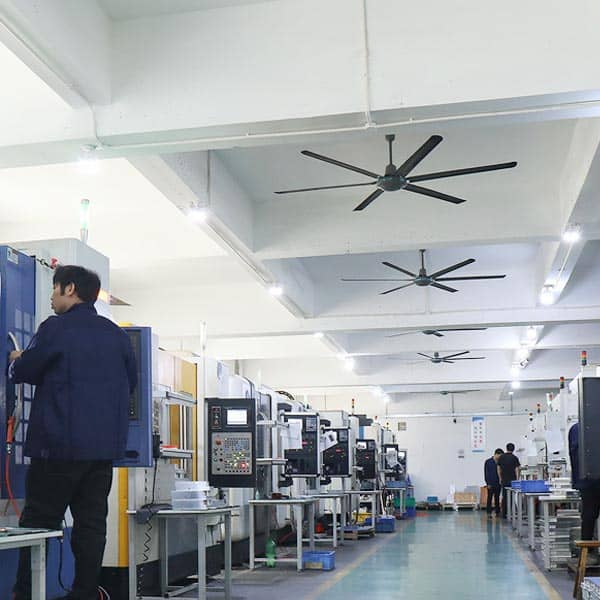
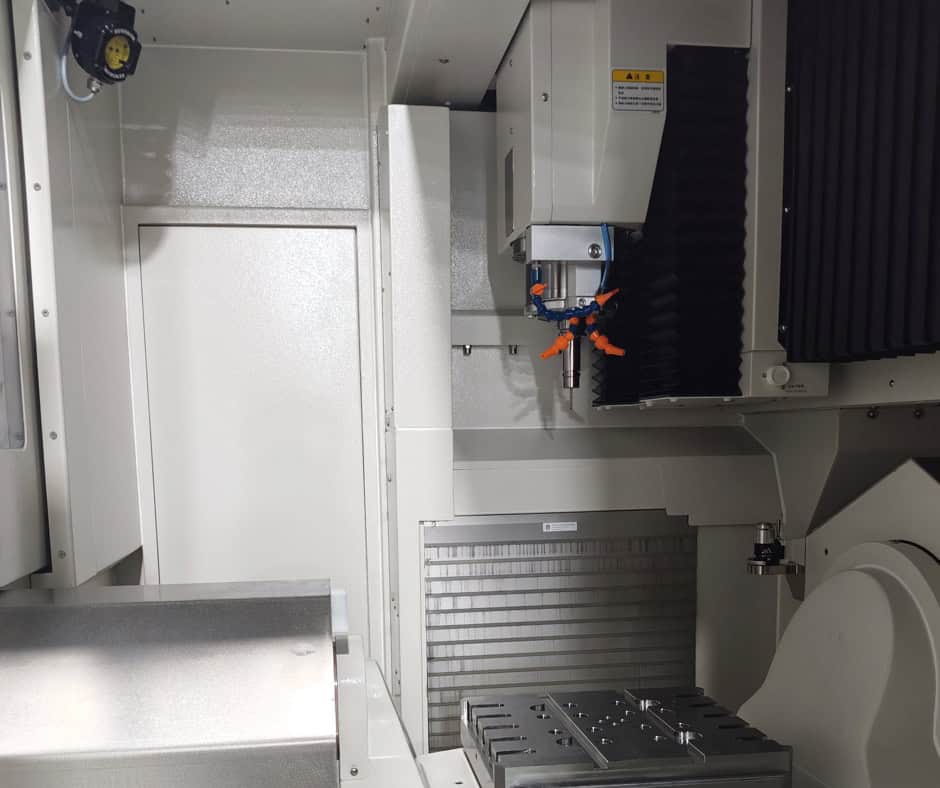
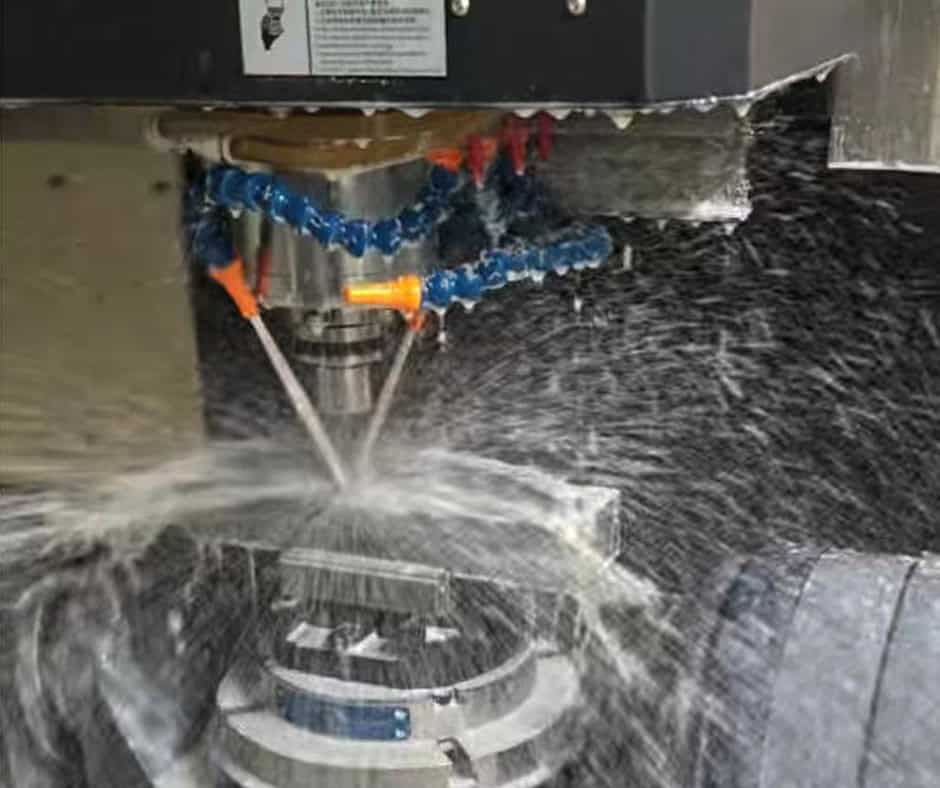
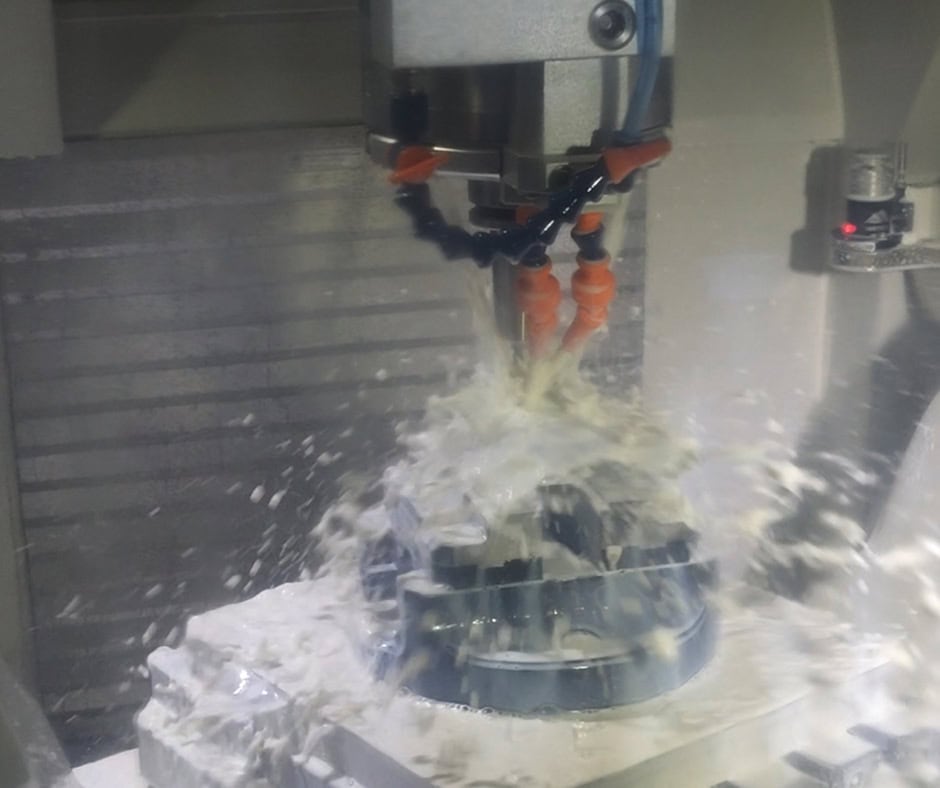
Material selection is only half the story. Machining quality directly impacts sealing performance.
Key Machining Considerations
1. Tool Wear
Glass fibers are abrasive.
•Requires carbide or diamond tools
•Tool life is shorter than machining virgin PTFE
2. Surface Finish
Sealing performance depends on surface quality.
•Too rough → leakage
•Too smooth → insufficient lubrication
Optimal range: Controlled, application-specific finish
3. Tolerance Control
High-pressure seals require tight tolerances.
•PTFE GF has less deformation → easier to maintain precision
•However, improper machining can introduce stress points
4. Stress Relief
Post-machining stress can affect performance.
•Annealing may be required for critical components
Design Tips for Using PTFE GF in Sealing Applications
1. Optimize Fiber Content
•15% GF: Better machinability, moderate strength
•25% GF: Balanced performance (most common)
•40% GF: Maximum strength, but more brittle
Tip: Don’t blindly choose the highest percentage.
2. Control Clearance Gaps
Even with PTFE GF:
•Excessive clearance → risk of extrusion
•Use backup rings if needed
3. Consider Counterface Material
Glass fibers can be abrasive.
•Use hardened metals or coated surfaces
•Avoid soft mating materials
4. Evaluate Chemical Compatibility
While PTFE is chemically inert:
•Glass fibers may react in certain environments
•Always verify for strong acids/alkalis
5. Balance Friction vs Durability
PTFE GF has higher friction than virgin PTFE.
•For dynamic seals, lubrication may be necessary
•For static seals, this is usually not an issue
When NOT to Use PTFE GF
PTFE GF is not a universal solution.
Avoid it when:
•Extreme chemical purity is required
•Ultra-low friction is critical
•Mating surfaces are soft and easily worn
•Impact resistance is important
In these cases, alternatives like filled PTFE with carbon or bronze, or even engineering plastics like PEEK, may be more suitable.
Cost vs Value: Is PTFE GF Worth It?
PTFE GF is more expensive than virgin PTFE—but focusing only on material cost is a mistake.
Real Cost Factors
•Downtime due to seal failure
•Maintenance frequency
•Replacement labor
•System efficiency loss
Field Reality
Companies that switch to PTFE GF typically see:
•Lower total cost of ownership
•Fewer unexpected failures
•More stable system performance
Final Insight: Performance Is Not Just Material—It’s System Thinking
PTFE GF delivers strong performance in high-pressure sealing—but only when:
•The right grade is selected
•The design is optimized
•The machining is precise
Most sealing failures are not caused by material alone—but by a mismatch between material, design, and operating conditions.
If you treat PTFE GF as a drop-in replacement, you’ll get average results.
If you integrate it into a well-engineered system, you unlock its real value.
Conclusion
PTFE GF is not just an upgraded version of PTFE—it is a fundamentally different material engineered for load-bearing sealing applications.
In high-pressure environments, where failure is expensive and reliability is critical, PTFE GF proves its value through:
•Superior mechanical strength
•Reduced deformation
•Extended service life
For engineers and buyers, the key is simple:
Don’t choose PTFE GF because it’s stronger—
Choose it because your application demands it.
If you’re evaluating PTFE GF for a specific sealing project, the next step isn’t just material selection—it’s matching the right grade, process, and design to your actual working conditions.