What Is a Lens Mount Plate?
A Lens Mount Plate is a precision-machined mechanical plate used to support, position, and secure lenses or other optical components within an optical or imaging assembly. Depending on the design, the plate may include mounting holes, threaded holes, counterbores, locating features, slots, or precision apertures for connecting the optical assembly to a larger system.
The primary purpose of a lens mount plate is to maintain the position, orientation, and mechanical stability of an optical component. Small dimensional errors or excessive movement can affect optical alignment, so the plate must provide sufficient rigidity and dimensional consistency during assembly and operation.
Common materials include:
Aluminum – lightweight, easy to machine, and suitable for many optical and laboratory systems.
Stainless steel – provides higher strength, good wear resistance, and corrosion resistance.
Brass – useful where machinability and dimensional stability are important.
Engineering plastics – suitable for lightweight applications where electrical insulation or low weight is required.
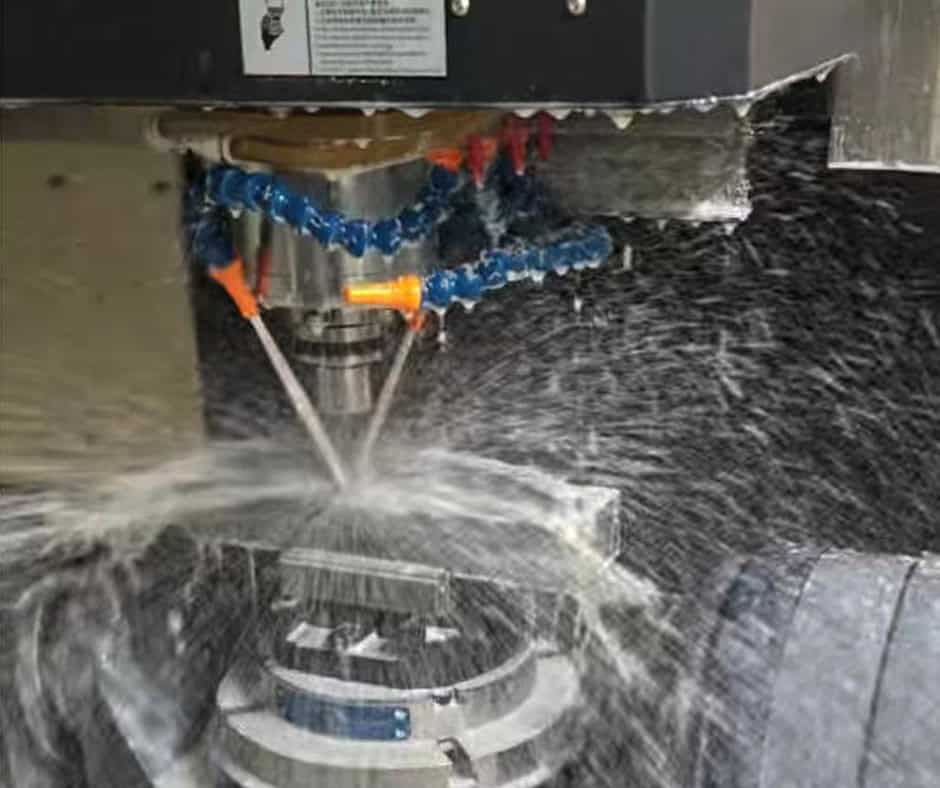
For custom lens mount plates, CNC machining is commonly used because it can produce accurate mounting holes, threaded features, flat surfaces, and complex contours directly from CAD drawings. Proper machining and inspection also help maintain the dimensional relationships required for optical assembly.
Table of Contents
Common Names & Industry Terminology
A lens mount plate may be described using different names depending on its design and application:
Lens Mount Plate – a general term for a plate used to mount or support a lens.
Lens Mounting Plate – emphasizes the mounting function.
Optical Mounting Plate – a broader term that may accommodate lenses, mirrors, sensors, or other optical components.
Optical Mount Plate – commonly used for mechanical components in optical systems.
Lens Holder Plate – generally emphasizes the support or retention function.
Optical Adapter Plate – typically refers to a plate used to connect components with different mounting patterns or interfaces.
Lens Support Plate – may refer to a plate that primarily supports an optical element rather than directly retaining it.
These terms are not always interchangeable. For example, an adapter plate may be designed primarily to convert one mounting interface to another, while a lens mount plate may contain features specifically intended to locate and secure a lens assembly.
Relevant Manufacturing Standards
Lens mount plates are generally custom mechanical components rather than standardized products. Their dimensions, hole patterns, tolerances, and interfaces are normally defined by the customer’s engineering drawings.
Depending on the project, relevant standards may include:
ISO 2768 – general dimensional tolerances where specified.
ISO 1101 – geometrical tolerancing and GD&T principles.
ISO 9001 – quality management systems used by manufacturers.
ASTM material standards – applicable to the specified metal or material grade.
The actual manufacturing requirements should always follow the customer’s drawings, specifications, material standards, and inspection requirements.
Key Performance Characteristics
1. Structural Strength
A lens mount plate needs enough rigidity to support the optical assembly without excessive deformation. Aluminum provides a good balance between weight and stiffness, while stainless steel can be selected when greater mechanical strength or resistance to wear is required.
2. Corrosion Resistance
Material selection affects how the component performs in different environments. Aluminum can be anodized for improved surface protection, while stainless steel grades such as 304 and 316 provide inherent corrosion resistance. Grade 316 is generally considered when exposure to more demanding environments is expected.
3. Dimensional Accuracy
Mounting holes, locating features, threaded holes, and reference surfaces may need to maintain close dimensional relationships. CNC machining allows these features to be produced directly from CAD data with controlled tolerances.
For optical assemblies, feature-to-feature accuracy and positional relationships can be just as important as individual dimensional tolerances.
4. Mounting Stability
A properly designed plate should maintain the position of the lens assembly during installation and operation. Accurate hole locations, flat mounting surfaces, and appropriate fastener interfaces help reduce unwanted movement.
5. Wear Resistance
Repeated assembly and adjustment can cause wear around threaded holes, locating surfaces, or mounting interfaces. Stainless steel or suitable surface treatments may be selected for applications involving frequent installation or adjustment.
6. Surface Quality
Machined surfaces may require additional finishing depending on the optical system. Anodizing, passivation, bead blasting, polishing, or other treatments can improve appearance, corrosion resistance, or surface durability.
The required surface finish should be specified according to the actual function of the surface rather than applied uniformly to every feature.
7. Long-Term Reliability
A reliable lens mount plate should maintain its dimensional and mechanical characteristics throughout its intended service life. Appropriate material selection, machining, surface treatment, inspection, and controlled assembly all contribute to long-term performance.
Lens Mount Plate vs. Optical Adapter Plate
A lens mount plate and an optical adapter plate can have similar physical forms, but their design objectives are often different.
| Factor | Lens Mount Plate | Optical Adapter Plate |
| Application | Supports or secures a lens or optical assembly | Connects components with different mounting interfaces |
| Performance Focus | Positioning, stability, rigidity, and alignment | Interface compatibility and hole-pattern conversion |
| Manufacturing | CNC milling, drilling, tapping, boring, and precision finishing | CNC milling, drilling, tapping, and sometimes counterboring |
| Cost | Depends strongly on tolerances, features, and material | Usually influenced by the number of interfaces and hole features |
Which One Should You Choose?
Choose a lens mount plate when the primary requirement is to position and secure a lens or optical component.
Choose an optical adapter plate when the main requirement is to connect two components that have different mounting patterns, dimensions, or interfaces.
In some systems, one component may effectively perform both functions, so the final definition should be based on the mechanical design and intended application.
CNC Machining & Production Considerations
Typical Manufacturing Process
A custom lens mount plate is commonly manufactured through several stages.
1. Engineering Review
The manufacturer reviews the CAD model or drawing to identify:
Material requirements
Critical dimensions
Hole locations
Thread specifications
Flatness requirements
Surface finish
Quantity
Inspection requirements
2. CNC Milling
CNC milling is commonly used to create the plate’s external profile, pockets, steps, mounting surfaces, and other three-dimensional features.
For more complex geometries, 4-axis or 5-axis machining may reduce the number of setups and help maintain the relationship between different features.
3. Drilling and Threading
Mounting and fastening holes are drilled according to the drawing. Threaded holes may then be tapped or thread-milled.
Accurate hole positioning is particularly important when the plate interfaces with other optical or mechanical components.
4. Secondary Operations
Depending on the design, additional operations may include:
Counterboring
Countersinking
Reaming
Slot machining
Surface grinding
Deburring
5. Surface Treatment
Common finishing options include:
Anodizing for aluminum
Passivation for stainless steel
Powder coating
Plating
Bead blasting
Polishing
6. Inspection
Final inspection may include dimensional measurement, thread inspection, flatness verification, visual inspection, and CMM measurement for critical features.
Material Selection: Stainless Steel 304 vs. 316
Both 304 and 316 stainless steel are widely used engineering materials, but their characteristics differ.
Stainless Steel 304
304 is commonly selected for general-purpose applications because it provides:
Good corrosion resistance
Good mechanical strength
Good machinability
Broad availability
Relatively moderate material cost
Stainless Steel 316
316 contains molybdenum, which provides improved resistance to certain corrosive environments.
It may be considered when the component is exposed to:
Higher humidity
Saline environments
Certain chemicals
More demanding industrial conditions
For many indoor optical systems, 304 may already provide sufficient performance. The more expensive 316 grade should be selected when its additional corrosion resistance provides a practical benefit.
Common Manufacturing Challenges
Hole Position Accuracy
Multiple mounting holes often need to align with mating components. Incorrect hole locations can make assembly difficult or affect the positioning of the optical system.
Flatness Control
The mounting surface may need controlled flatness to ensure stable contact with another component. Material removal and machining sequence can influence residual stress and deformation.
Thin-Wall or Thin-Plate Deformation
Thin plates can move during clamping or machining. Appropriate workholding and machining strategies are therefore important.
Stainless Steel Work Hardening
Stainless steel can work-harden when machined incorrectly. Proper cutting parameters, tooling, coolant, and machining strategy help avoid unnecessary tool wear and dimensional problems.
Burr Control
Burrs around holes, slots, and machined edges can interfere with assembly or potentially damage adjacent components. Controlled deburring is therefore an important finishing step.
Applications of Lens Mount Plates
1. Optical Equipment
Lens mount plates are used to position lenses, optical modules, and related components within optical instruments.
2. Industrial Cameras and Machine Vision
They can support lenses and camera assemblies while maintaining the required mechanical relationship between the imaging components and equipment frame.
3. Laser Equipment
Lens mount plates may be used to secure optical components such as focusing or beam-conditioning assemblies within laser systems.
4. Laboratory and Research Equipment
Custom mounting plates are useful when researchers need to integrate optical components into specialized experimental equipment.
5. Medical and Diagnostic Equipment
Precision-machined mounting components can be used in optical paths, imaging modules, and other mechanical assemblies in medical equipment.
6. Automation and Robotics
Lens mount plates can support cameras, sensors, and optical modules used for inspection, positioning, and machine vision applications.
What Influences the Cost of a Lens Mount Plate?
The price of a custom lens mount plate depends on more than the material and overall dimensions.
Material Grade
Aluminum is generally easier and faster to machine than stainless steel, while specialty alloys and engineering plastics can have different material and processing costs.
Machining Complexity
The number of setups, pockets, holes, threads, angled features, and complex contours directly affects machining time.
Quantity
Prototype quantities generally have a higher unit cost because setup and programming costs are distributed over fewer parts. Larger quantities can reduce the machining cost per piece.
Tolerance Requirements
Tighter dimensional and geometrical tolerances can require additional machining, inspection, tooling, and process control.
Surface Treatment
Anodizing, passivation, plating, painting, and other finishes add processing costs and may also affect lead time.
Inspection Requirements
Standard dimensional inspection is different from projects requiring CMM reports, material certificates, full inspection reports, or other documentation.
Common Supply Formats
Custom lens mount plates are commonly supplied as:
One-off prototypes
Engineering samples
Small-batch production
Repeat production
OEM components
Frequently Asked Questions
What is a lens mount plate used for?
A lens mount plate is used to support, position, and secure a lens or optical assembly within a larger mechanical or optical system.
What material is best for a lens mount plate?
There is no single best material. Aluminum is often suitable when low weight and machinability are important, while stainless steel may be preferred when higher strength, wear resistance, or corrosion resistance is required.
Can a lens mount plate be custom manufactured?
Yes. Most lens mount plates are custom components manufactured according to customer drawings or CAD models. Hole patterns, dimensions, threads, pockets, finishes, and tolerances can be customized.
What manufacturing process is normally used?
CNC milling is the primary process for many lens mount plates. Drilling, tapping, reaming, counterboring, deburring, surface treatment, and precision inspection may be added according to the design.
What information is needed for a quotation?
A manufacturer will typically need a 2D drawing or 3D CAD file, material specification, quantity, required tolerances, surface finish, and any inspection or certification requirements.
Can prototypes and production quantities be manufactured?
Yes. CNC machining is suitable for prototypes, functional samples, small-batch production, and repeat orders. The appropriate process and production method depend on the part geometry and required quantity.