A solenoid valve is a compact electromechanical device that controls the flow of liquids or gases by converting electrical energy into mechanical movement. It is widely used in pneumatic systems, hydraulic equipment, process automation, medical instruments, industrial machinery, water treatment systems, HVAC equipment, and fluid-control assemblies.
Although a solenoid valve may appear to be a relatively simple component, reliable performance depends on much more than the electromagnetic coil. The valve body, plunger, spring, sealing elements, orifice geometry, internal passages, material selection, and manufacturing accuracy all influence how the valve responds under real operating conditions.
For equipment designers and industrial buyers, understanding these factors is important when selecting or manufacturing a solenoid valve. A valve that works well in a clean-water application may perform poorly with aggressive chemicals, high-temperature fluids, contaminated media, or frequent switching cycles.
This article examines solenoid valves from the perspective of function, design logic, materials, manufacturing processes, applications, and purchasing decisions, with particular attention to the mechanical components that determine valve reliability.
Table of Contents
What Is a Solenoid Valve?
A solenoid valve uses an electromagnetic actuator to open, close, or redirect fluid flow.
The basic operating principle is straightforward. When electrical current passes through the solenoid coil, it generates a magnetic field. This magnetic force moves a ferromagnetic plunger or armature. The movement changes the position of an internal sealing element, allowing or restricting fluid flow.
When the electrical signal is removed, a spring or other mechanical mechanism typically returns the plunger to its original position.
A typical solenoid valve consists of several functional components:
Solenoid coil
Magnetic armature or plunger
Spring
Valve body
Orifice
Seat
Seal or diaphragm
Guide tube
Electrical connector
Inlet and outlet ports
The exact configuration depends on the valve design.
For example, a direct-acting valve uses electromagnetic force to move the sealing element directly. A pilot-operated valve uses the solenoid to control a smaller pilot passage, while fluid pressure helps operate the main valve.
The distinction is important because it affects pressure requirements, response time, flow capacity, power consumption, and overall valve size.
How Does a Solenoid Valve Work?
The design logic of a solenoid valve can be understood through three stages: electrical actuation, mechanical movement, and fluid control.
1. Electrical Actuation
When voltage is applied to the coil, current flows through the winding. The resulting electromagnetic field creates a force that attracts the internal armature.
The strength of this force depends on factors such as:
Coil voltage
Current
Number of winding turns
Magnetic circuit design
Air gap
Core material
Coil temperature
The electromagnetic system must generate enough force to overcome spring resistance, friction, fluid pressure, and other mechanical loads.
2. Mechanical Movement
The magnetic force moves the plunger along a controlled path.
This is where precision manufacturing becomes important. Excessive clearance between the plunger and guide tube can increase leakage or reduce magnetic efficiency, while insufficient clearance can cause sticking.
The spring then provides the restoring force when the electrical signal disappears.
3. Fluid Control
Once the plunger reaches its operating position, it opens or closes the fluid passage.
The valve’s internal geometry determines how efficiently fluid can pass through the orifice. Port diameter, seat design, flow path, surface finish, and internal transitions all influence pressure loss and flow performance.
Therefore, a solenoid valve is not simply an electrical component. It is a coordinated system involving electromagnetic design, precision mechanics, sealing technology, and fluid dynamics.
Common Types of Solenoid Valves
Different applications require different operating principles.
Normally Closed Solenoid Valves
A normally closed valve remains closed when the coil is not energized. Applying power opens the valve.
This configuration is common when the default condition should prevent fluid flow.
Normally Open Solenoid Valves
A normally open valve allows flow when the coil is not energized and closes when power is applied.
It can be useful when continuous flow is preferred during a power failure or when the system’s safety logic requires this configuration.
Direct-Acting Solenoid Valves
Direct-acting valves use electromagnetic force to move the sealing element directly.
They are relatively simple and can operate without a minimum pressure differential. However, their flow capacity is generally limited by the force available from the solenoid.
Pilot-Operated Solenoid Valves
Pilot-operated valves use differential fluid pressure to assist the opening and closing process.
This allows larger flow passages to be controlled with a relatively compact electromagnetic actuator. However, pilot-operated designs normally require appropriate pressure conditions to function correctly.
Two-Way and Three-Way Valves
Two-way valves generally have one inlet and one outlet and are used for basic on/off flow control.
Three-way valves have three ports and can be used to switch, divert, or control fluid paths. They are frequently found in pneumatic control systems and automated equipment.
Solenoid Valve Design Considerations
The most important design parameters should be established before selecting or manufacturing a valve.
Pressure
Operating pressure is one of the first specifications to determine.
The valve must withstand both normal working pressure and potential pressure spikes. The body, seat, seals, threaded connections, and internal components must all be suitable for the pressure range.
Pilot-operated designs are particularly sensitive to minimum pressure differential.
Temperature
Temperature affects almost every component.
The valve body must maintain mechanical integrity at operating temperature, while seals must remain flexible enough to prevent leakage. Coil temperature is also important because electrical resistance and insulation performance change as temperature increases.
For high-temperature applications, conventional elastomers may not be appropriate.
Flow Rate
Flow requirements influence the size of the valve orifice and internal passages.
A larger orifice generally allows greater flow but may require greater electromagnetic force or a larger valve structure. Designers therefore need to balance flow capacity, response time, physical size, and energy consumption.
Response Time
Fast switching may be critical in automation, dispensing equipment, robotics, and precision fluid-control systems.
A lightweight armature, optimized magnetic circuit, low-friction guide system, and properly designed spring can improve response characteristics.
Duty Cycle
Not every solenoid valve is designed for continuous energization.
A coil operating continuously may generate significant heat. For applications involving frequent or prolonged activation, the coil’s rated duty cycle and thermal performance should be carefully evaluated.
Material Selection for Solenoid Valves
Material selection should be based on the fluid, temperature, pressure, corrosion environment, and required service life rather than simply material cost.
Stainless Steel
Stainless steel is widely used for valve bodies and internal components where corrosion resistance is important.
Common grades include 304 and 316 stainless steel. 316 stainless steel is particularly attractive for applications involving more aggressive environments or exposure to certain chemicals.
Stainless steel can also provide good mechanical strength and dimensional stability.
Brass
Brass is commonly used for general-purpose valve bodies because it offers good machinability, corrosion resistance, and cost efficiency.
It is often suitable for water, air, and many general industrial applications, although compatibility with the specific fluid must always be verified.
Aluminum
Aluminum can be selected when weight reduction is important.
It is relatively easy to machine and can provide a useful combination of strength and low density. Surface treatment may be applied when additional corrosion resistance or improved appearance is required.
Engineering Plastics
Certain engineering plastics can be used for valve bodies, housings, guides, or other components.
Materials such as nylon, POM, PTFE, and PEEK can provide useful combinations of chemical resistance, low friction, insulation, or high-temperature performance.
The correct grade depends heavily on the application.
Seal Materials
Seals are often one of the most application-sensitive components.
Common choices include:
NBR for many general-purpose applications
EPDM for selected water and steam applications
FKM for elevated temperatures and chemical resistance
PTFE for demanding chemical environments
The seal must be compatible with the controlled medium. A chemically resistant valve body does not guarantee chemical compatibility if the internal seal is unsuitable.
Precision Manufacturing of Solenoid Valve Components
The performance of a solenoid valve depends heavily on the dimensional accuracy of its mechanical components.
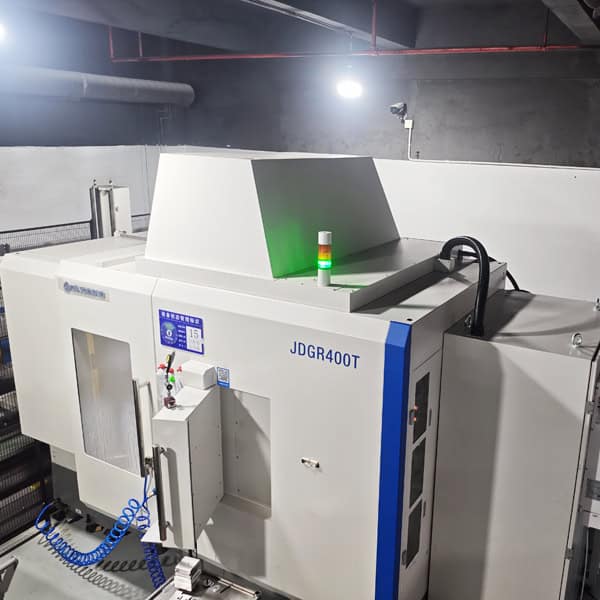
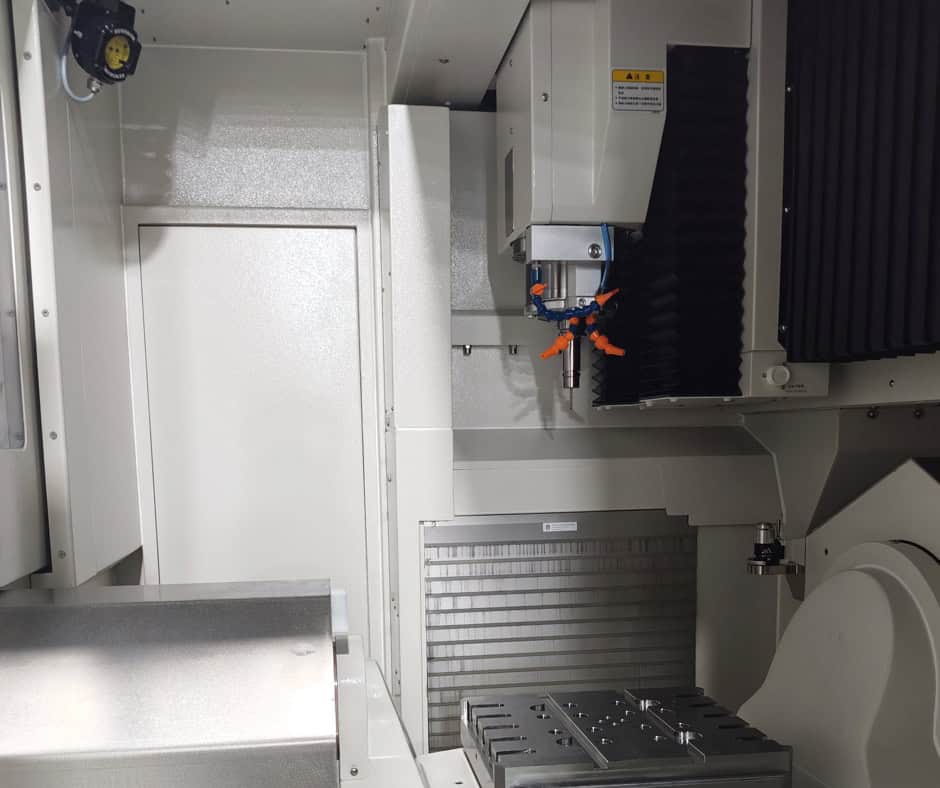
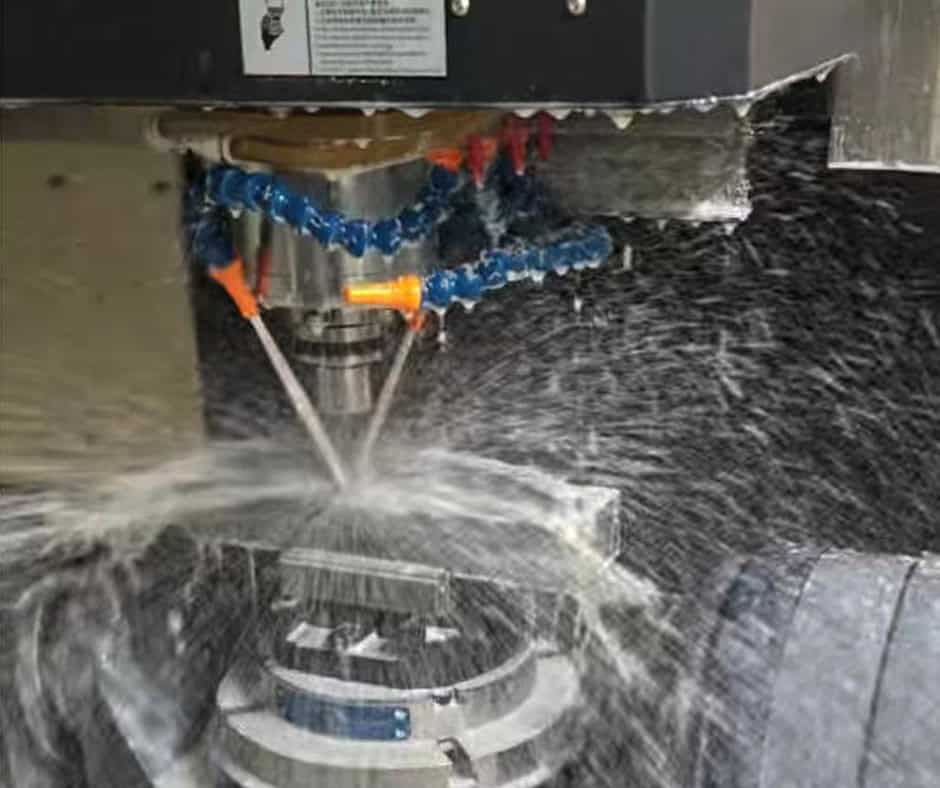
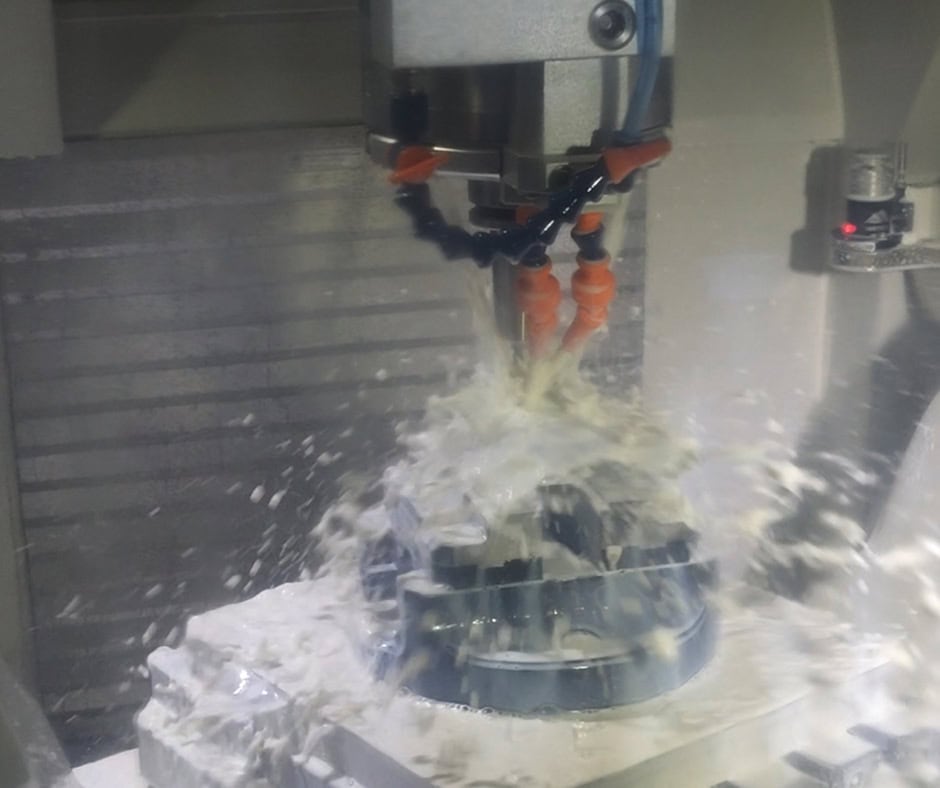
Several parts may require CNC machining, including:
Valve bodies
Plunger housings
Guide tubes
Magnetic cores
End caps
Connector housings
Mounting brackets
Threaded fittings
Precision seats
Custom manifolds
CNC Turning
CNC turning is suitable for cylindrical components such as plungers, cores, guide sleeves, threaded fittings, and valve stems.
Critical diameters can be machined to controlled tolerances to maintain consistent movement and proper assembly.
For components with multiple diameters, grooves, threads, and sealing surfaces, CNC turning can consolidate several operations into one machining setup.
CNC Milling
CNC milling is useful for valve bodies and components with complex external geometries, mounting holes, slots, ports, and non-cylindrical features.
Multi-axis machining can reduce the number of setups required for complicated valve bodies.
This can improve positional accuracy between intersecting holes and fluid passages.
Internal Passages and Orifices
The internal flow path is particularly important.
Small changes in an orifice diameter can affect flow characteristics. Burrs or machining debris can also interfere with the plunger or sealing surface.
After machining, internal cleaning and deburring are therefore critical.
Surface Finish
Surface finish is not merely an aesthetic consideration.
A smoother sealing surface can help reduce leakage and wear, while an appropriate finish on sliding components can reduce friction and improve movement.
However, the ideal surface finish depends on the function of the surface. Excessive polishing is not automatically better; the surface must be designed according to its sealing, sliding, or fluid-flow role.
Quality Control in Solenoid Valve Manufacturing
Quality inspection should focus on functional requirements rather than dimensional inspection alone.
Typical inspection procedures may include:
Dimensional Inspection
Critical dimensions can be checked using:
Calipers
Micrometers
Height gauges
CMM equipment
Thread gauges
Bore gauges
Dimensions such as plunger diameter, bore diameter, seat geometry, port dimensions, and mounting-hole positions may require controlled inspection.
Leak Testing
Leak testing is essential because a valve can meet dimensional requirements and still fail to provide adequate sealing.
Depending on the application, manufacturers may perform pressure, vacuum, air, or fluid leak tests.
Functional Testing
A completed solenoid valve may be tested for:
Opening and closing
Response behavior
Coil activation
Flow performance
Pressure resistance
Leakage
Repeated cycling
For high-volume applications, automated testing can help maintain consistent production quality.
Where Are Solenoid Valves Used?
Solenoid valves are found in a wide range of industrial and commercial systems.
Pneumatic Equipment
In pneumatic systems, solenoid valves control compressed air supplied to cylinders, actuators, grippers, and other components.
They are fundamental to automated manufacturing equipment.
Hydraulic Systems
Hydraulic solenoid valves control pressurized oil and can be used for directional control, pressure control, or switching functions.
Because hydraulic systems operate under high pressure, material strength, sealing performance, and contamination control become especially important.
Medical Equipment
Solenoid valves can be used in medical and laboratory equipment to control gases, liquids, vacuum, or dosing systems.
In these applications, cleanliness, material compatibility, repeatability, and compact dimensions may be more important than simply maximizing flow rate.
Water and Fluid Treatment
Water treatment equipment uses solenoid valves to control water, chemicals, and other process fluids.
Corrosion resistance and seal compatibility are critical considerations.
HVAC Systems
Solenoid valves can regulate refrigerants, water, air, and other fluids in heating, ventilation, and air-conditioning systems.
Temperature range and media compatibility must be considered carefully.
Industrial Automation
Automated machines frequently use solenoid valves because electrical control can be integrated directly with PLCs, sensors, and control systems.
The ability to switch fluid flow quickly makes them particularly useful for automated sequences.
What Should Buyers Consider When Purchasing Solenoid Valves?
Choosing a solenoid valve based only on port size and price is risky.
A better purchasing process begins with the operating environment.
1. Define the Fluid
Identify exactly what the valve will control.
Water, compressed air, hydraulic oil, steam, solvents, refrigerants, and corrosive chemicals can require completely different materials and seal systems.
2. Specify Pressure and Temperature
Provide both normal and maximum operating pressure, as well as minimum and maximum temperature.
Do not select a valve based solely on average operating conditions.
3. Determine Flow Requirements
Specify the required flow rate and pressure drop.
A valve that is physically compatible with the system may still be unsuitable if its effective flow capacity is too low.
4. Select the Electrical Configuration
Important electrical parameters include:
Voltage
AC or DC
Power consumption
Connector type
Duty cycle
Switching frequency
The coil must be compatible with the control system.
5. Consider Installation
Check port size, thread standard, mounting dimensions, overall envelope, connector orientation, and available maintenance space.
A valve that meets performance requirements but cannot be installed easily can create unnecessary redesign costs.
6. Evaluate Service Life
For automated equipment, cycle life may be more important than initial purchase price.
If a valve is expected to switch thousands or millions of times, the buyer should evaluate wear-resistant materials, spring life, seal durability, coil thermal performance, and test data.
Custom Solenoid Valve Components and CNC Machining
Many industrial applications require solenoid valve components that differ from standard catalog designs.
Custom valve bodies may need special port configurations, mounting features, internal passages, compact dimensions, or unusual materials.
In these cases, CNC machining can provide an efficient solution for prototypes, replacement components, engineering samples, and low- to medium-volume production.
A typical manufacturing workflow may include:
Engineering drawing → Material selection → CNC programming → Machining → Deburring → Surface treatment → Cleaning → Dimensional inspection → Functional testing → Packaging
For precision components, manufacturing should begin with a clear understanding of the critical dimensions and functional interfaces.
Instead of treating every dimension on a drawing equally, manufacturers can identify critical-to-function features such as sealing diameters, concentricity, bore dimensions, thread locations, and mating surfaces.
This approach helps control manufacturing costs without compromising valve performance.
Standard vs. Custom Solenoid Valves
Standard valves are usually the better choice when the application fits an existing specification.
They can reduce engineering time, purchasing complexity, and validation costs.
Custom valves become attractive when standard products create limitations involving:
Unusual dimensions
Special materials
Unique flow paths
Non-standard mounting
Specialized electrical requirements
Restricted installation space
High-volume cost optimization
For custom projects, buyers should provide as much technical information as possible, including drawings, 3D models, fluid type, pressure, temperature, flow requirements, operating voltage, quantity, and expected service life.
The more clearly the operating requirements are defined, the easier it is to identify the correct manufacturing process and material.
Conclusion
A solenoid valve is a relatively small component, but its design combines electromagnetic actuation, precision mechanical movement, fluid control, sealing, and material engineering.
Reliable performance depends on the interaction between the valve body, plunger, spring, orifice, seat, seals, coil, and fluid path. Manufacturing accuracy is particularly important for sliding surfaces, sealing interfaces, internal passages, and mounting features.
For buyers, the right selection should be based on fluid compatibility, pressure, temperature, flow rate, electrical requirements, response time, installation constraints, and expected service life rather than price alone.
For manufacturers and engineering teams, CNC machining provides a practical way to produce precision solenoid valve bodies and components for prototypes, customized designs, and production applications. When material selection, machining accuracy, surface finish, inspection, and functional testing are considered together, solenoid valve components can achieve the consistency required for demanding industrial systems.
Ultimately, the best solenoid valve is not necessarily the largest, fastest, or cheapest option. It is the one whose mechanical design, materials, manufacturing process, and operating specifications are properly matched to the application.