Butterfly valves are widely used to control or isolate fluid flow in piping systems. Their relatively simple construction—a circular disc mounted on a rotating shaft—allows them to provide reliable shutoff and flow regulation while requiring less space and material than many other valve types.
However, choosing or manufacturing a butterfly valve is not simply a matter of selecting the correct nominal diameter. The valve must work as part of a larger system, where pressure, temperature, fluid characteristics, sealing requirements, actuation, installation space, and operating frequency all affect its performance.
For equipment manufacturers and industrial buyers, understanding how a butterfly valve is designed and manufactured can therefore be more useful than looking at a catalog specification alone.
This article examines butterfly valves from an engineering perspective, covering their operating principle, major design considerations, material selection, manufacturing processes, applications, and key factors to evaluate when sourcing them.
Table of Contents
What Is a Butterfly Valve?
A butterfly valve is a quarter-turn valve that uses a disc to control the passage of fluid through a pipe. The disc is mounted on a central or offset shaft and rotates approximately 90 degrees between the fully open and fully closed positions.
When the disc is aligned with the direction of flow, the valve offers a relatively open passage. When the disc rotates across the flow path, it blocks the passage and restricts or stops fluid movement.
The basic construction normally includes:
Valve body
Disc
Stem or shaft
Seat
Bushings or bearings
Sealing elements
Actuation mechanism
Compared with a globe valve or gate valve, a butterfly valve generally has fewer major components and a shorter overall installation length. The disc, however, remains inside the flow path, so its geometry directly influences pressure loss, flow characteristics, and operating torque.
This makes disc design and sealing geometry particularly important in engineering applications.
How Does a Butterfly Valve Work?
The operating principle is straightforward, but the forces acting on the valve can become significant as diameter and pressure increase.
In a typical configuration, the stem transfers rotational movement from a manual handle, gearbox, pneumatic actuator, or electric actuator to the disc. The disc then rotates around the stem axis.
Three operating positions are particularly important.
Fully Open
The disc is positioned approximately parallel to the fluid flow. This minimizes obstruction and allows fluid to pass through the valve.
The valve is not completely invisible to the flow, however. The disc and shaft still occupy part of the passage, creating some pressure drop.
Partially Open
The disc rotates to an intermediate position. This changes the effective flow area and allows the valve to regulate flow.
The relationship between valve angle and flow rate is not necessarily linear. This is important when a butterfly valve is used for throttling rather than simple isolation.
Fully Closed
The disc rotates against the valve seat, creating a sealing interface that prevents or significantly restricts flow.
The required closing torque depends on several factors, including pressure differential, seat friction, disc geometry, shaft configuration, and material pairing.
For automated systems, these parameters must be considered when selecting the actuator.
Butterfly Valve Design: More Than a Simple Disc
Although the basic concept is simple, butterfly valve performance depends heavily on the details of its mechanical design.
Disc Geometry
The disc must be strong enough to withstand pressure loading while maintaining an efficient flow profile.
A thicker disc can improve structural strength but may increase flow resistance. A thinner or more aerodynamically shaped disc can reduce obstruction but may require more sophisticated manufacturing and structural analysis.
For larger valves, engineers must also consider deformation under pressure. Even small changes in disc position can affect the sealing relationship between the disc and seat.
Shaft Configuration
Butterfly valves can use different shaft arrangements, including centered and offset designs.
In a concentric butterfly valve, the shaft generally passes through the center of the disc and sealing geometry. This configuration is relatively simple and economical and is commonly used in general-purpose applications.
Offset designs move the shaft away from the sealing centerline. Depending on the configuration, this can reduce contact between the disc and seat during rotation, lowering friction and wear.
For demanding applications, double-offset or triple-offset designs can provide more controlled sealing and reduced rubbing during operation.
Seat Design
The seat is one of the most important components because it determines how the valve seals when closed.
Seat materials may include elastomers, engineering plastics, or metal depending on the operating environment.
A soft seat can provide excellent sealing performance under suitable pressure and temperature conditions. A metal seat may be more appropriate when high temperature, fire resistance, abrasive media, or severe operating conditions are involved.
The seat design must also account for thermal expansion, chemical compatibility, compression, and long-term wear.
Material Selection for Butterfly Valves
Material selection should begin with the operating medium rather than simply the valve’s purchase price.
A material that performs well in clean water may not be suitable for corrosive chemicals, seawater, steam, or abrasive slurry.
Stainless Steel
Stainless steel is widely used for discs, stems, valve bodies, and other components where corrosion resistance is important.
Common grades include 304 and 316 stainless steel. Grade 316 is particularly useful in environments where improved resistance to chlorides and corrosive media is required.
The exact grade should still be selected according to the chemical composition, temperature, concentration, and operating conditions of the fluid.
Carbon and Alloy Steel
Steel valve bodies can provide high mechanical strength and are suitable for many industrial systems.
Carbon steel is often considered when strength and cost are important, while alloy steels may be selected for elevated temperatures, higher mechanical demands, or specialized service conditions.
Surface treatment or coating may be used to improve corrosion resistance where appropriate.
Aluminum
Aluminum can be useful when weight reduction is important. It is easier to handle during installation and can be attractive for certain low-pressure equipment or specialized systems.
Its use must be evaluated carefully against pressure, temperature, chemical compatibility, and mechanical requirements.
Plastics and Engineering Polymers
Plastic valve components can provide useful chemical resistance and low weight.
Materials such as PVC, CPVC, PTFE, and other engineering polymers may be used for bodies, seats, liners, or sealing components depending on the valve design.
The critical consideration is temperature. Polymer properties can change significantly as temperature increases, affecting strength, dimensional stability, and sealing performance.
Seat and Seal Materials
The seat may be manufactured from elastomers such as EPDM, NBR, or FKM, depending on the application.
For example, EPDM is commonly considered for water and certain chemical environments, while NBR can be useful in applications involving oils and hydrocarbons. FKM is often selected where higher temperature or chemical resistance is required.
Material compatibility should always be checked against the actual operating medium rather than assumed from the material name alone.
Manufacturing Processes for Butterfly Valves
The manufacturing process depends on the valve size, material, design complexity, production volume, and required performance.
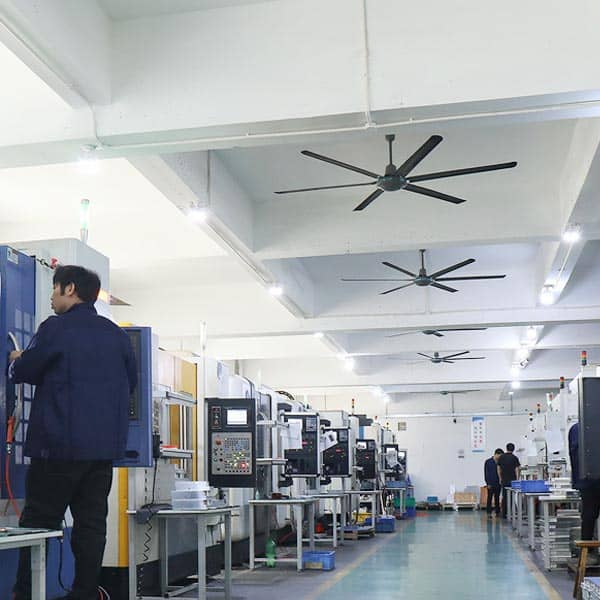
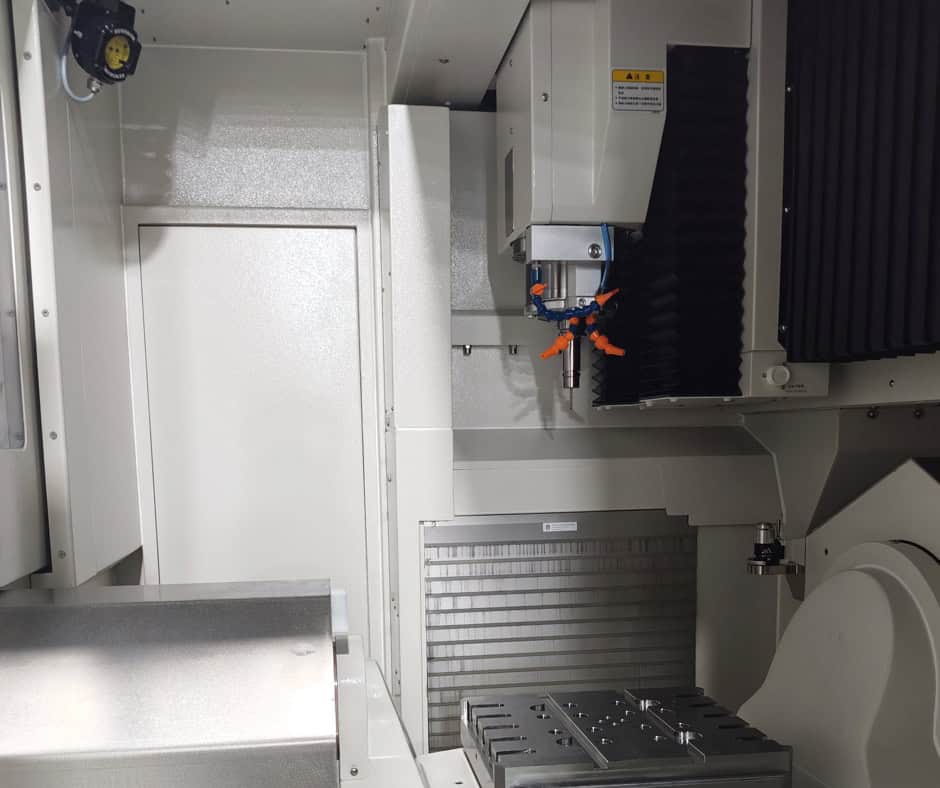
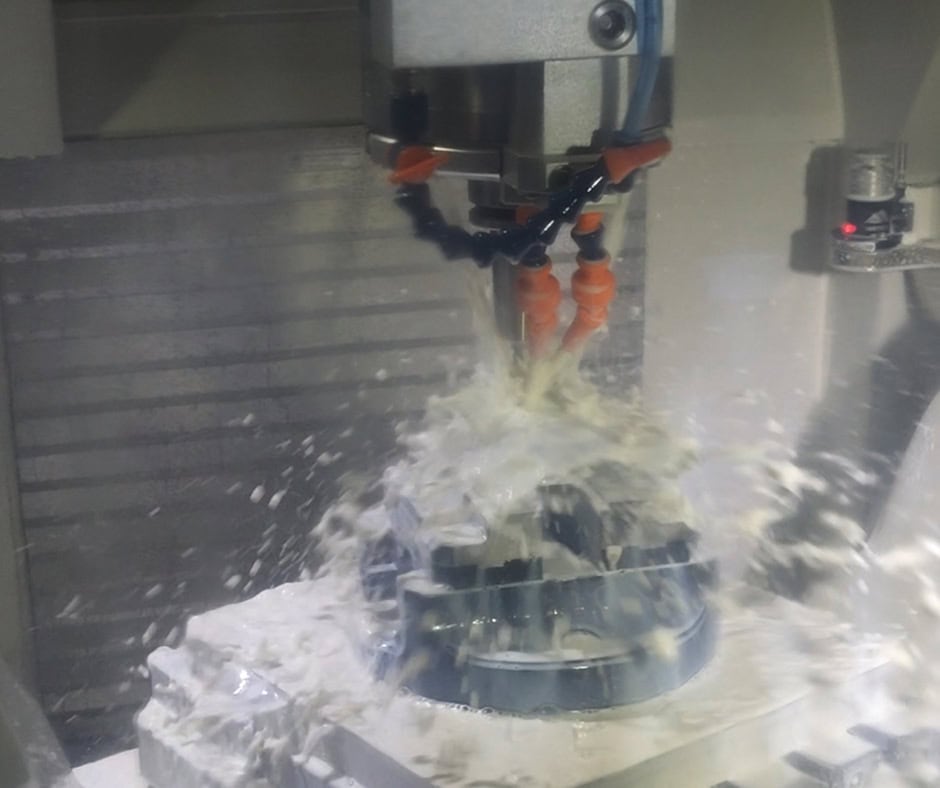
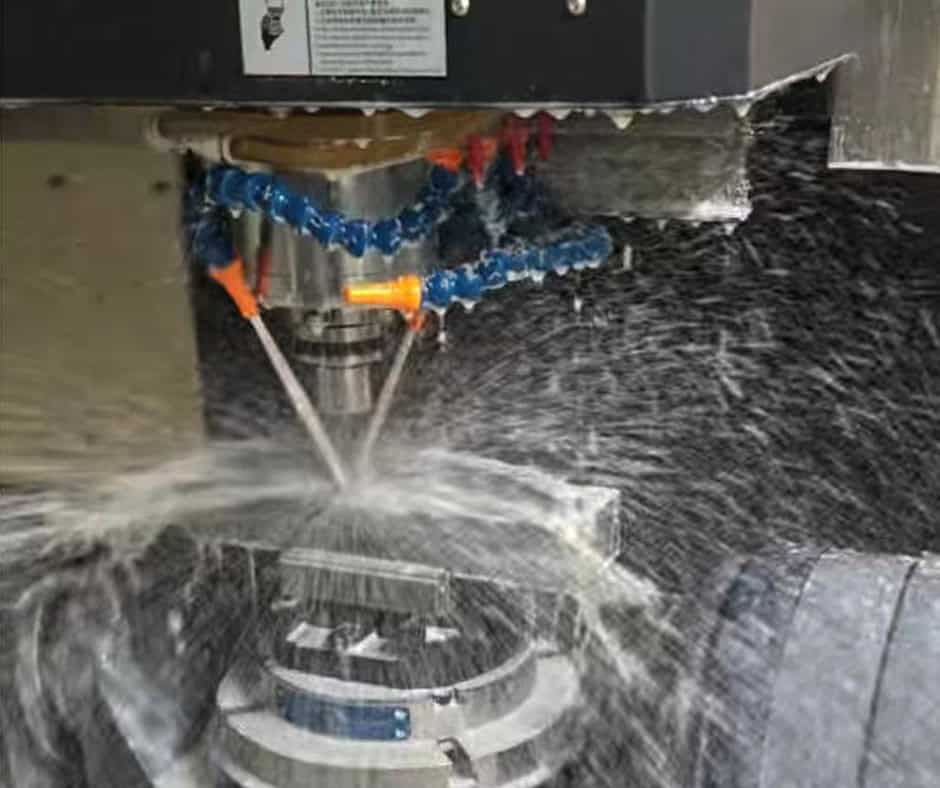
CNC Machining
CNC machining is particularly important for precision components such as valve stems, discs, shafts, bushings, mounting interfaces, and sealing surfaces.
CNC turning can produce cylindrical shafts, stems, and precision diameters with controlled dimensional accuracy.
CNC milling can be used for mounting holes, keyways, slots, actuator interfaces, and complex disc features.
For complex components, multi-axis machining can reduce the number of setups and improve positional consistency between critical surfaces.
The objective is not simply to achieve a good-looking machined surface. Critical dimensions must remain within the functional tolerance required by the sealing and assembly system.
Casting
Valve bodies and discs are often suitable for casting, especially when relatively complex shapes must be produced economically at medium or high volumes.
Casting can reduce the amount of material removed during subsequent machining.
However, cast components may require machining of critical interfaces such as flange faces, bearing locations, stem bores, and sealing surfaces.
Casting quality is therefore an important part of overall valve reliability.
Forging
Forging can provide strong and relatively uniform material properties and may be preferred for certain high-pressure or demanding components.
Forged valve parts can subsequently undergo CNC machining to achieve the required geometry and dimensional accuracy.
Grinding and Finishing
Sealing surfaces may require grinding, polishing, or other finishing processes.
Surface roughness can affect sealing performance, friction, wear, and leakage. A surface that is dimensionally correct may still perform poorly if its surface condition is unsuitable for the sealing system.
Surface Treatment
Depending on the material and operating environment, components may receive surface treatments such as passivation, plating, coating, anodizing, or painting.
The treatment should be selected according to the intended service environment. For example, corrosion protection may be more important in outdoor installations, marine environments, or chemical processing equipment.
Quality Control in Butterfly Valve Manufacturing
Quality control should focus on functional characteristics rather than inspection of dimensions alone.
Important inspection points can include:
Dimensional inspection
Shaft and bore alignment
Disc geometry
Surface roughness
Seat dimensions
Valve body integrity
Pressure testing
Leakage testing
Operating torque
Actuator interface dimensions
Material verification
For CNC-machined components, coordinate measuring machines (CMMs), optical inspection systems, micrometers, gauges, and other measuring equipment can be used depending on the tolerance requirements.
Pressure and leakage tests are particularly important because a valve can meet dimensional drawings while still failing to achieve the required sealing performance.
A robust inspection plan should therefore identify critical-to-function characteristics before production begins.
Where Are Butterfly Valves Used?
Butterfly valves are used across many industries because their compact design makes them suitable for relatively large pipelines and equipment systems.
Water and Wastewater
Water treatment and wastewater systems frequently use butterfly valves for isolation and flow control.
Their compact structure is advantageous in large-diameter piping, where heavier valve designs can increase installation requirements.
HVAC Systems
Heating, ventilation, and air-conditioning systems commonly use butterfly valves to control water or other fluids within building systems.
Compact dimensions and relatively low operating requirements make them attractive for many HVAC installations.
Chemical Processing
Chemical systems can impose much more demanding material requirements.
Valve body, disc, shaft, seat, and sealing materials must be selected based on chemical compatibility, temperature, pressure, and concentration.
In such applications, the valve should be treated as a complete material system rather than evaluated according to the body material alone.
Food and Pharmaceutical Equipment
Hygienic applications place additional emphasis on cleanability, surface quality, material compatibility, and contamination control.
The internal geometry should avoid unnecessary dead zones where process material could accumulate.
Depending on the application, specialized hygienic valve designs and finishing requirements may be necessary.
Marine and Offshore Equipment
Marine systems can expose valve components to saltwater, humidity, and corrosive environments.
Material selection and corrosion protection therefore become major considerations. Stainless steel components and suitable coatings or treatments may be used depending on the application.
Industrial Equipment
Butterfly valves are also integrated into pumps, compressors, process equipment, dust collection systems, industrial piping, and custom machinery.
For OEM equipment manufacturers, the valve is often not purchased as an isolated component. It becomes part of a larger assembly that must match existing pipe dimensions, actuators, sensors, mounting systems, and control logic.
Butterfly Valve vs. Other Valve Types
The best valve depends on the application rather than the valve type itself.
A gate valve is generally intended for isolation and provides a relatively unobstructed passage when fully open. It is usually less suitable for continuous throttling.
A globe valve can provide effective flow regulation but often has a more complex flow path and greater pressure loss.
A ball valve can provide excellent shutoff and relatively low flow resistance, but large-diameter ball valves can become heavier and more expensive.
Butterfly valves offer a useful combination of compactness, relatively low weight, fast quarter-turn operation, and suitability for larger pipe sizes.
This makes them especially attractive when installation space and overall system cost are important.
Key Factors When Purchasing Butterfly Valves
Procurement decisions should start with technical requirements rather than price comparisons.
1. Define the Operating Medium
Identify exactly what will pass through the valve.
Consider whether it is water, air, steam, oil, chemicals, slurry, gas, or another medium.
The medium determines material compatibility and sealing requirements.
2. Check Pressure and Temperature
Nominal pipe size alone is insufficient.
The valve must be rated for the actual operating pressure and temperature, including potential peaks.
Temperature can also change the behavior of seat and sealing materials.
3. Determine Isolation or Throttling Requirements
If the valve will primarily isolate a line, the design priorities may differ from a valve expected to regulate flow continuously.
Throttling applications require careful consideration of flow characteristics, cavitation risk, pressure drop, and wear.
4. Consider Operating Frequency
A valve opened and closed several times per year has very different requirements from one that cycles hundreds or thousands of times per day.
High-cycle applications place greater demands on the shaft, bearings, seat, actuator, and sealing system.
5. Select the Actuation Method
Manual handles are suitable for smaller or infrequently operated valves.
Gear operators can make larger valves easier to operate manually.
Pneumatic and electric actuators are commonly used where automatic control is required.
The actuator should be sized according to the actual torque requirement, including an appropriate safety margin.
6. Review Connection Dimensions
The valve must match the piping system.
Important parameters include nominal diameter, flange dimensions, bolt-hole pattern, face-to-face dimensions, shaft orientation, and actuator mounting interface.
A technically excellent valve is still unsuitable if it cannot integrate with the existing equipment.
7. Evaluate Manufacturing and Inspection Capability
For OEMs and industrial buyers, supplier capability matters as much as the valve specification.
Ask how critical components are manufactured, how dimensions are inspected, how materials are verified, and how pressure or leakage testing is performed.
For custom or modified valve components, CNC machining capability can also be important because sealing surfaces, shaft interfaces, and mounting features may require tighter dimensional control than standard catalog parts.
Custom Butterfly Valve Components and CNC Machining
Not every butterfly valve application can be solved with an off-the-shelf configuration.
OEM equipment manufacturers may require customized discs, shafts, mounting plates, actuator adapters, bushings, or other valve-related components.
This is where CNC machining becomes valuable.
A production partner can manufacture components directly from engineering drawings or 3D CAD models, allowing dimensions, materials, surface finishes, and functional interfaces to be controlled according to the equipment design.
For example, a custom valve shaft may require multiple precision diameters, keyways, threads, sealing grooves, and actuator interfaces. Producing these features in a controlled CNC process can help maintain dimensional consistency between components.
For low-volume projects, CNC machining can also avoid the tooling investment associated with specialized high-volume manufacturing processes.
The most effective approach is to review the complete application before manufacturing begins. Engineers can then determine which surfaces are functionally critical and which tolerances can be relaxed to reduce unnecessary manufacturing costs.
Final Considerations
Butterfly valves are mechanically simple compared with many other valve types, but their performance depends on a combination of factors: disc geometry, shaft design, sealing technology, material compatibility, manufacturing accuracy, surface condition, operating torque, and application requirements.
For standard piping systems, selecting the correct valve size and pressure rating may be sufficient. For OEM machinery and specialized industrial equipment, however, the selection process should go further.
The right valve should fit the fluid, pressure, temperature, operating cycle, installation space, actuator, and maintenance strategy of the complete system.
From the manufacturing side, precision machining also plays an important role in producing shafts, discs, sealing interfaces, and customized components that must work together reliably.
For buyers, the goal should therefore not be to find the cheapest butterfly valve. It is to find a design and manufacturing solution that provides the required sealing, durability, compatibility, and lifecycle performance at a reasonable total cost.
When these factors are considered together, butterfly valves can provide a practical and efficient solution for a wide range of fluid-control systems.