Introduction: What Is a Laser Crystal Holder?
A Laser Crystal Holder is a precision mechanical component designed to securely support, position, and align a laser crystal within a laser, optical, or photonic system. Laser crystals—such as Nd, Nd₄, Yb, and other gain media—must remain accurately positioned relative to the optical axis and other components to achieve stable laser performance.
The holder typically provides several functions:
Crystal fixation: Keeps the laser crystal securely in its designed position.
Positioning and alignment: Maintains the crystal’s location and orientation relative to the optical path.
Mechanical protection: Reduces the risk of damage from vibration, handling, or accidental contact.
Thermal management: Depending on the design, provides a thermal path from the crystal or its mounting interface to the surrounding structure.
System integration: Allows the crystal assembly to be installed into a larger laser or optical module.
Common materials include aluminum alloys, stainless steel, copper, and copper alloys. Aluminum is widely used when low weight, good machinability, and adequate thermal conductivity are required. Stainless steel is preferred when higher mechanical strength, corrosion resistance, dimensional stability, or a more robust structure is needed. Copper and copper alloys may be selected where thermal conductivity is a major consideration.
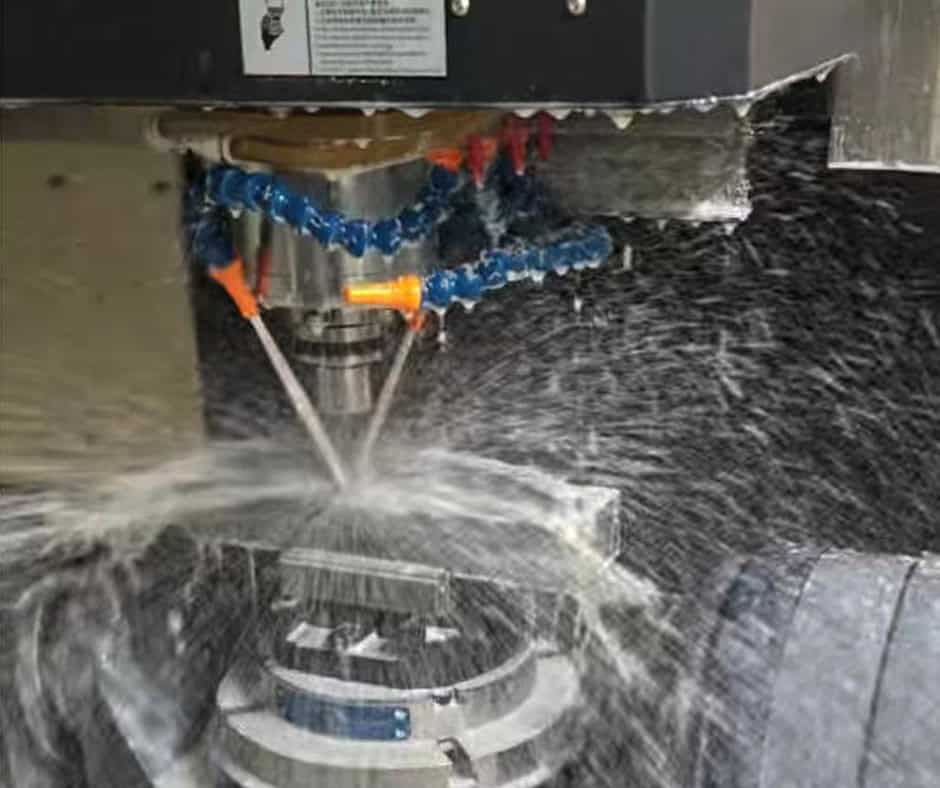
For custom laser crystal holders, precision CNC machining is commonly used because it can produce accurate pockets, mounting holes, threaded features, locating surfaces, and alignment interfaces. CNC machining also provides consistent dimensional control and good surface quality for integration into precision optical assemblies.
Table of Contents
Terminology & Standards: Common Names and Industry Terminology
Depending on its geometry and application, a laser crystal holder may be described using several different terms:
Laser Crystal Holder – A general term for a component that supports and retains a laser crystal.
Laser Crystal Mount – Often used interchangeably with laser crystal holder, particularly in optical system design.
Crystal Mount – A shorter industry term for mounting a laser or nonlinear optical crystal.
Laser Crystal Fixture – Usually emphasizes temporary positioning, testing, or assembly rather than permanent integration.
Optical Crystal Mount – A broader term that can include mounts for laser, nonlinear, or other optical crystals.
Crystal Retainer – Usually refers specifically to the feature that mechanically retains the crystal.
Laser Gain Medium Mount – Used when the crystal is specifically treated as the gain medium in a laser system.
These terms are not always technically identical. For example, a crystal retainer may be only one component of an assembly, while a crystal mount can include the complete mechanical structure surrounding the crystal. A fixture may also be designed for temporary assembly or testing rather than continuous operation.
Relevant Manufacturing Standards
There is generally no single universal ISO or ASTM standard that defines the complete geometry of a laser crystal holder. Custom holders are normally manufactured according to the customer’s engineering drawings, specifications, and application requirements.
Depending on the project, relevant standards may include:
ISO 2768 – General tolerances for dimensions without individual tolerances.
ISO 1101 – Geometrical tolerancing, including form, orientation, and location requirements.
ISO 10110 – Technical drawings for optical elements and optical systems where applicable.
ASTM material standards – Used to specify material grades and properties.
ISO 9001 – Quality management requirements applicable to the manufacturing supplier.
The exact standards should be confirmed from the customer’s drawing, quality specification, and application requirements rather than assumed from the component name alone.
Performance Characteristics: Key Features of a Laser Crystal Holder
1. High Structural Stability
A laser crystal holder must maintain its geometry during operation and assembly. Excessive deformation or vibration can change the crystal’s position relative to the optical axis.
A properly designed holder provides sufficient stiffness while avoiding unnecessary material and weight. Ribbing, optimized wall thickness, and appropriate material selection can improve structural stability without making the component unnecessarily large.
2. Corrosion Resistance
Laser systems may operate in controlled environments, but the mechanical components can still be exposed to humidity, cleaning agents, or handling.
Stainless steel, anodized aluminum, and other appropriately treated materials can provide good corrosion resistance. Material and surface treatment should be selected according to the operating environment and cleaning requirements.
3. Dimensional and Positional Accuracy
The location of the crystal relative to other optical components can directly affect system alignment.
Critical features may include:
Crystal pockets
Locating shoulders
Mounting holes
Threaded holes
Reference surfaces
Optical-axis positioning features
CNC machining allows these features to be produced with controlled tolerances and repeatability. For demanding applications, dimensional inspection using CMM equipment may be required.
4. Stable Crystal Retention
The holder must retain the crystal without applying excessive or uneven mechanical force.
This is particularly important because optical crystals can be sensitive to mechanical stress. Poorly designed clamping can introduce unwanted stress, damage delicate surfaces, or contribute to alignment changes.
Depending on the design, retention may use:
Mechanical clamps
Retaining rings
Precision pockets
Threaded retainers
Set screws
Custom clamping interfaces
The appropriate retention method depends on the crystal geometry and the thermal and mechanical requirements of the laser system.
5. Wear Resistance
Repeated assembly and adjustment can cause wear around threaded holes, locating surfaces, and clamping interfaces.
Material selection and surface treatment can improve durability. For example, anodized aluminum may provide improved surface hardness and wear resistance compared with untreated aluminum, while stainless steel naturally provides good mechanical durability.
6. Controlled Surface Quality
Surface finish is important around mounting, locating, and contacting surfaces.
A controlled machined finish can improve:
Component seating
Repeatable assembly
Contact consistency
Cleanability
Appearance
Resistance to burrs and surface defects
The required roughness should be specified according to function rather than applying an unnecessarily tight surface-finish requirement to every surface.
7. Long-Term Reliability
A laser crystal holder may remain inside an optical assembly for extended periods. Its dimensions and clamping force therefore need to remain stable during repeated thermal cycles, vibration, and normal service.
Long-term reliability depends on the combination of material, geometry, machining accuracy, surface treatment, assembly method, and operating temperature.
Comparison: Laser Crystal Holder vs. General Optical Lens Mount
A laser crystal holder and a general optical lens mount may both position optical components, but their engineering priorities can be quite different.
| Comparison | Laser Crystal Holder | General Optical Lens Mount |
| Application Scenario | Laser crystals, gain media, nonlinear crystals, laser modules | Lenses, filters, windows, and general optical elements |
| Performance Focus | Crystal retention, optical alignment, thermal management, mechanical stability | Lens positioning, optical-axis alignment, adjustability, and accessibility |
| Manufacturing Process | Precision CNC milling, drilling, tapping, pocket machining, precision inspection | CNC machining, turning, threading, drilling, and sometimes adjustable mechanisms |
| Cost | Highly dependent on crystal pocket geometry, tolerances, material, and thermal requirements | Often influenced by adjustment mechanisms, threads, size, and optical aperture |
Which One Should You Choose?
Choose a laser crystal holder when the component is specifically designed around a laser crystal and its requirements for positioning, retention, thermal management, and integration.
Choose a general optical lens mount when the application primarily involves mounting lenses or other optical elements and requires features such as adjustable positioning or standard optical interfaces.
The two components should not automatically be considered interchangeable simply because both are used in optical assemblies.
Manufacturing Considerations: CNC Machining and Production
Custom laser crystal holders are commonly manufactured through a combination of CNC milling, drilling, tapping, turning, and precision inspection.
Typical CNC Manufacturing Process
1. Engineering Drawing Review
The manufacturer first reviews:
Material specification
Overall dimensions
Critical tolerances
Crystal pocket dimensions
Hole locations
Thread specifications
Surface-finish requirements
Flatness and parallelism requirements
Surface-treatment requirements
This stage is particularly important because a small change in the crystal interface can affect the final optical assembly.
2. Material Preparation
The selected material is cut to an appropriate stock size. Common choices include aluminum alloys, stainless steel, copper, and copper alloys.
Material selection should consider mechanical strength, thermal conductivity, corrosion resistance, weight, machinability, and operating temperature.
3. CNC Milling
CNC milling creates the primary body and precision features, including:
Crystal pockets
Mounting surfaces
Steps and shoulders
Recesses
Slots
Alignment features
Multi-axis machining can be useful when the component contains complex surfaces or features on multiple sides.
4. Drilling and Tapping
Mounting holes and threaded features are produced according to the engineering drawing.
Hole-position accuracy can be particularly important when the holder interfaces with other precision optical components.
5. Secondary Operations
Depending on the design, additional processes may include:
CNC turning
Reaming
Thread finishing
Precision grinding
EDM
Laser marking
Not every component requires these processes; they should be used only where the design demands them.
Material Selection: Stainless Steel 304 vs. 316
304 stainless steel is a common general-purpose choice because it offers good corrosion resistance, mechanical strength, availability, and machinability.
316 stainless steel provides improved corrosion resistance, particularly in environments where greater resistance to chlorides or aggressive conditions is required.
For a typical indoor optical assembly, 304 may be sufficient. For more demanding environments, 316 can be considered.
However, stainless steel is not automatically the best choice. Aluminum may be more appropriate when low mass and thermal conductivity are important, while copper alloys may be considered for high thermal-transfer applications.
Common Manufacturing Challenges
Several issues require particular attention when machining laser crystal holders:
Crystal pocket accuracy: The pocket must match the specified crystal dimensions without creating excessive interference or clearance.
Hole-position accuracy: Mislocated mounting holes can affect overall assembly alignment.
Flatness control: Mounting and reference surfaces may require tight flatness specifications.
Parallelism and perpendicularity: These geometric tolerances can affect the relationship between the holder and optical axis.
Burr control: Burrs around pockets and holes can interfere with assembly or potentially damage sensitive components.
Machining deformation: Thin-wall structures can deform during clamping or machining.
Work hardening: Stainless steels may work-harden if inappropriate cutting conditions are used.
Thermal considerations: Material selection and interface geometry can influence heat dissipation from the crystal.
Post-Processing and Inspection
Typical post-machining operations include:
1.Deburring
2.Ultrasonic or precision cleaning
3.Surface treatment
4.Passivation for applicable stainless-steel components
5.Anodizing for applicable aluminum components
6.Dimensional inspection
7.Surface-finish inspection
8.Final visual inspection
9.Packaging in a clean and protected condition
For precision optical applications, cleanliness is especially important because machining residues, particles, or fingerprints can contaminate nearby optical surfaces.
Applications: Where Is a Laser Crystal Holder Used?
1. Laser Manufacturing Equipment
Laser crystal holders are used to position gain crystals inside laser sources and laser modules.
They help maintain the crystal’s designed relationship with mirrors, lenses, pump sources, and other optical components.
2. Photonics and Optical Equipment
Research and commercial photonics systems may require custom crystal mounts for experimental or production optical assemblies.
The holder can provide a repeatable mechanical interface between the optical crystal and the supporting structure.
3. Medical Laser Equipment
Medical and aesthetic laser systems can incorporate laser crystals as part of their optical architecture.
In these applications, mechanical stability, cleanliness, material compatibility, and repeatable assembly can be important considerations.
4. Industrial Laser Systems
Industrial laser equipment used for cutting, marking, welding, engraving, and other processes can require precision mechanical components for optical modules.
The holder must withstand the relevant mechanical and thermal conditions of the equipment.
5. Scientific and Research Instruments
Universities, laboratories, and research organizations often develop customized laser systems.
These applications may require low-volume or prototype crystal holders with specialized dimensions, materials, and mounting arrangements.
6. Optical Test and Alignment Equipment
Specialized test fixtures may use crystal holders to position optical crystals during system development, characterization, or alignment.
Prototype machining is particularly useful when the final design is still being evaluated.
Cost Factors: What Influences the Price?
The price of a custom laser crystal holder is determined by much more than its overall size.
1. Material Grade
Material cost varies between aluminum, 304/316 stainless steel, copper alloys, titanium, and other engineering materials.
Specialty materials can significantly increase both material and machining costs.
2. Machining Complexity
A simple milled bracket with several holes is relatively straightforward.
A holder containing multiple pockets, thin walls, compound surfaces, internal threads, and tight positional tolerances requires more machining time and potentially multiple setups.
3. Order Quantity
Prototype production generally has a higher unit cost because programming, tooling, setup, and inspection costs are distributed over fewer parts.
Small-batch and volume production can reduce the cost per component once the process has been optimized.
4. Tolerance Requirements
Tighter tolerances require more careful machining, measurement, process control, and potentially additional finishing operations.
It is usually more economical to apply tight tolerances only to functionally critical dimensions rather than unnecessarily specifying them throughout the entire drawing.
5. Surface Treatment
Anodizing, passivation, plating, polishing, coating, or other finishing requirements add processing and quality-control costs.
The treatment should be selected according to the component’s functional requirements.
6. Inspection and Certification
Requirements such as:
CMM inspection
Full dimensional reports
Material certificates
Certificate of Conformance
Surface-roughness reports
Special process documentation
can increase procurement costs but may be necessary for regulated or high-precision applications.
Common Supply Forms
Laser crystal holders can be supplied as:
Custom prototypes
Low-volume production parts
OEM components
Small-batch assemblies
Production components
Custom optical mounting components
For custom manufacturing, providing a 3D CAD model and 2D engineering drawing usually gives the supplier enough information to evaluate manufacturability and prepare an accurate quotation.
Frequently Asked Questions
1. What is the main purpose of a laser crystal holder?
Its primary purpose is to securely locate and retain a laser crystal while maintaining its required position and orientation within an optical or laser system. Depending on the design, it may also provide thermal management and mechanical protection.
2. What materials are commonly used for laser crystal holders?
Aluminum, stainless steel, and copper alloys are common choices. Aluminum is useful for lightweight structures and thermal applications, stainless steel provides strength and corrosion resistance, while copper alloys may be selected when thermal conductivity is particularly important.
3. Can a laser crystal holder be custom manufactured?
Yes. Most laser crystal holders are application-specific components. A manufacturer can produce custom pockets, mounting holes, threads, locating features, dimensions, and surface finishes according to engineering drawings.
4. What manufacturing process is normally used?
Precision CNC machining is one of the most common processes. CNC milling can produce the holder body, crystal pocket, mounting surfaces, holes, slots, and other precision features. Drilling, tapping, turning, deburring, surface treatment, and dimensional inspection may be added according to the design.
5. What information is needed for a quotation?
For an accurate quotation, suppliers normally need:
2D engineering drawing
3D CAD model, preferably STEP or similar format
Material specification
Required quantity
Critical tolerances
Surface-finish requirements
Surface-treatment requirements
Inspection requirements
Delivery requirements
If no drawing is available, basic dimensions, crystal specifications, application information, and reference images can help determine whether the design can be developed from an initial concept.
6. What should be considered when designing a crystal holder?
The most important factors include crystal dimensions, mounting method, thermal expansion, clamping force, optical alignment, material compatibility, cleanliness, machining tolerances, and accessibility for assembly.
For precision laser systems, the holder should be designed as part of the complete optical-mechanical assembly rather than treated as an isolated mechanical bracket.
Conclusion
A Laser Crystal Holder is a relatively small but functionally important component in laser and photonics equipment. Its performance depends on the interaction between mechanical accuracy, crystal retention, thermal behavior, material selection, surface quality, and overall optical alignment.
For custom applications, precision CNC machining provides the flexibility needed to manufacture complex crystal pockets, mounting interfaces, threaded features, and alignment surfaces in prototype and production quantities. The most effective manufacturing approach is to define critical tolerances according to the actual optical and mechanical requirements, rather than applying unnecessarily tight specifications to every feature.
For OEM and custom applications, providing complete engineering drawings, material requirements, critical tolerances, surface-treatment specifications, and inspection requirements allows the manufacturer to evaluate manufacturability and provide a more reliable quotation.