Cooling fans are widely used to control heat in industrial equipment, electronics, automation systems, communication devices, and power supplies. While the fan itself attracts most of the attention, the fixing plate plays an equally important role by ensuring accurate positioning, stable installation, and long-term structural reliability.
A poorly designed fixing plate can lead to vibration, increased noise, premature component wear, or reduced cooling efficiency. For this reason, engineers carefully consider material selection, machining accuracy, surface treatment, and dimensional tolerances during the design process.
This guide explains what a cooling fan fixing plate is, the terminology used across different industries, common material choices, design considerations, and how CNC machining produces precision mounting components for demanding applications.
Table of Contents
What Is a Cooling Fan Fixing Plate?
A cooling fan fixing plate is a precision-manufactured structural component used to mount and secure a cooling fan within a mechanical or electronic assembly. It provides accurately machined mounting holes, maintains the correct alignment between the fan and surrounding components, and ensures the fan operates safely throughout its service life.
Although its appearance is relatively simple, the fixing plate directly affects assembly accuracy and cooling performance. Even small deviations in hole position or flatness can create installation difficulties, increase vibration, or reduce airflow efficiency.
Most industrial cooling fan fixing plates are manufactured from aluminum alloys, stainless steel, or carbon steel using CNC machining processes. Aluminum alloys such as 6061-T651 are particularly popular because they combine excellent machinability, low weight, good corrosion resistance, and compatibility with anodizing treatments.
Depending on the application, a cooling fan fixing plate may also include features such as threaded holes, counterbores, locating pockets, precision slots, engraved identification marks, or lightweight machining pockets. These features allow the component to serve both mechanical and functional purposes within larger assemblies.
Common Names, Drawing Standards and Technical Specifications
Cooling fan fixing plates are referred to by several different names depending on the industry, product design, or regional terminology. Although these names often describe similar components, their exact functions may vary slightly.
Common industry terms include:
* Cooling Fan Fixing Plate
* Cooling Fan Mounting Plate
* Fan Mount Plate
* Fan Mounting Bracket
* Cooling Fan Support Plate
* Fan Retaining Plate
* Fan Installation Plate
In many engineering drawings, the distinction between a plate and a bracket is important. A plate is generally a flat machined component designed to provide a stable mounting surface, while a bracket typically includes bent sections or three-dimensional features that support additional structural loads.
Engineering Drawing Standards
Cooling fan fixing plates are usually manufactured according to customer drawings rather than universal product standards. Engineering drawings typically specify:
* Material grade
* Surface finish
* Critical dimensions
* Hole positions
* Geometric tolerances
* Surface roughness
* Thread specifications
* Inspection requirements
For example, a typical CNC drawing may include requirements such as:
* Material: AL6061-T651
* Surface Finish: Black Anodizing
* General Dimensional Tolerance: GB/T 1804-M
* General Geometrical Tolerance: GB/T 1804-K
* Sharp edges to be chamfered and deburred
International customers may also specify standards such as:
* ISO 2768 for general tolerances
* ISO 1101 for geometric dimensioning and tolerancing (GD&T)
* ISO 1302 for surface texture
* ASTM B221 for aluminum extrusions
* ASTM B209 for aluminum plates and sheets
Understanding these specifications ensures that manufacturers interpret drawings consistently and produce parts that meet assembly requirements.
Choosing the Right Material for Cooling Fan Fixing Plates
Material selection has a significant impact on the performance, manufacturing cost, and service life of a cooling fan fixing plate. Engineers typically evaluate weight, mechanical strength, corrosion resistance, thermal conductivity, and machining efficiency before selecting a material.
AL6061-T651
6061-T651 is one of the most widely used aluminum alloys for precision-machined fixing plates.
Its advantages include:
* Excellent CNC machinability
* High strength-to-weight ratio
* Good corrosion resistance
* Stable dimensional performance
* Suitable for anodizing
* Competitive material cost
Because of its balanced properties, 6061-T651 is commonly used in industrial automation, communication equipment, electronic enclosures, robotics, and precision machinery.
AL5052
5052 aluminum offers better corrosion resistance than 6061, particularly in humid or marine environments. However, it has lower mechanical strength and is less suitable for components requiring high structural rigidity.
It is commonly selected for lightweight covers, sheet metal parts, and corrosion-resistant assemblies.
AL7075
7075 aluminum provides significantly higher strength than 6061, making it suitable for applications where structural performance is critical.
However, engineers should also consider:
* Higher material cost
* More difficult machining
* Reduced corrosion resistance
* Increased tooling wear
It is generally reserved for aerospace, high-performance automation, and specialized industrial equipment.
Stainless Steel
Stainless steels such as SUS304 and SUS316 are chosen when excellent corrosion resistance, hygiene, or high-temperature performance is required.
Compared with aluminum, stainless steel offers:
* Greater structural strength
* Higher wear resistance
* Better chemical resistance
However, it is considerably heavier, more difficult to machine, and usually more expensive.
Material Selection Summary
For most industrial cooling fan fixing plates, **AL6061-T651** provides the best overall balance of machining efficiency, structural performance, weight, and cost. Other materials become more appropriate only when specific environmental or mechanical requirements justify the additional expense.
Cooling Fan Fixing Plate vs. Fan Bracket
Although the terms are sometimes used interchangeably, a cooling fan fixing plate and a fan bracket are not always the same component. Understanding the difference helps engineers select the appropriate design for their application.
A cooling fan fixing plate is primarily a flat structural component that provides accurate mounting locations for the fan. Its main functions include positioning, fastening, maintaining flatness, and ensuring dimensional accuracy during assembly. Most fixing plates are manufactured by CNC milling from aluminum or steel plates.
A fan bracket, on the other hand, is designed to support the fan in three-dimensional space. Brackets often include bent sections, reinforcing ribs, welded assemblies, or additional structural features that carry mechanical loads beyond simple mounting.
For example:
* A CNC-machined aluminum plate installed directly onto an equipment housing is typically considered a fixing plate.
* An L-shaped sheet metal component supporting a fan away from the main structure is generally referred to as a fan bracket.
In practice, the terminology may vary among manufacturers and industries. Some suppliers use “mounting plate” and “bracket” interchangeably, especially when the component performs both positioning and supporting functions. Therefore, engineering drawings and functional requirements are always more reliable than the part name alone.
When deciding between the two designs:
* Choose a cooling fan fixing plate when precise positioning, flatness, and machining accuracy are the primary requirements.
* Choose a fan bracket when the fan requires additional structural support, offset mounting, or installation in a confined space.
Understanding these differences allows engineers to optimize manufacturing methods, reduce assembly complexity, and improve the long-term reliability of cooling systems.
Design Considerations for Reliable Cooling Fan Fixing Plates
A cooling fan fixing plate may appear to be a simple component, but its design has a direct impact on assembly efficiency, cooling performance, and long-term equipment reliability. During product development, engineers must balance structural strength, weight, manufacturability, and cost while ensuring the plate integrates seamlessly with the surrounding assembly.
Structural Strength and Rigidity
The fixing plate must withstand the weight of the fan, installation forces, and continuous vibration during operation. If the plate is too thin or lacks sufficient rigidity, it may deform over time, causing fan misalignment or increased noise.
Designers often increase stiffness by optimizing the plate thickness, adding reinforcing features, or selecting a stronger material rather than simply making the component larger or heavier.
Mounting Hole Accuracy
The position of mounting holes is one of the most critical dimensions. Even a small positional deviation can prevent the fan from fitting correctly or create stress during assembly.
For precision equipment, CNC machining is commonly used to maintain consistent hole locations and ensure interchangeability across production batches.
Flatness and Surface Contact
A flat mounting surface helps distribute clamping forces evenly and minimizes vibration. Poor flatness may create gaps between the fan housing and the fixing plate, reducing assembly stability and potentially affecting airflow.
When machining aluminum plates, maintaining proper fixturing and selecting suitable cutting parameters helps achieve better flatness.
Weight Optimization
Many industrial products require lightweight components without sacrificing strength. Engineers often machine pockets or remove unnecessary material to reduce weight while maintaining structural integrity.
This approach is especially common in automation equipment, communication devices, aerospace assemblies, and portable electronic systems.
Thermal Considerations
Although the fixing plate is not a heat sink, aluminum plates can assist in transferring heat away from surrounding components. Selecting materials with good thermal conductivity can improve overall cooling efficiency in compact equipment.
Ease of Assembly
Good design also considers manufacturing and assembly efficiency. Features such as chamfers, locating holes, threaded holes, and clearance slots simplify installation and reduce the risk of assembly errors.
For high-volume production, designs that minimize machining operations while maintaining functionality can significantly reduce manufacturing costs.
CNC Machining Process for Cooling Fan Fixing Plates
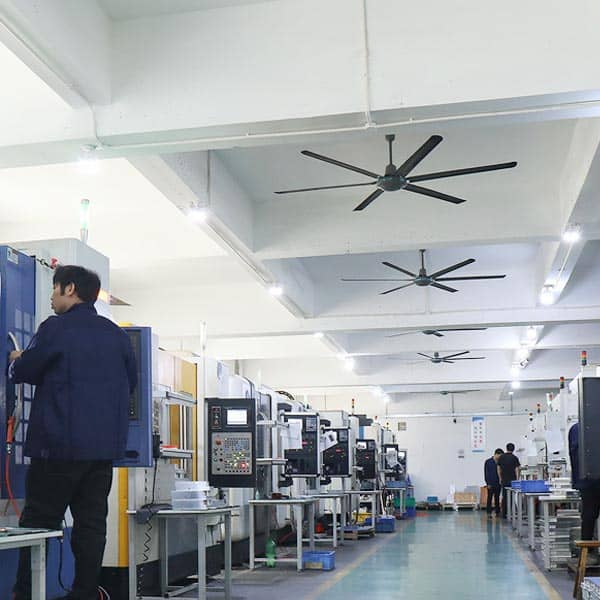
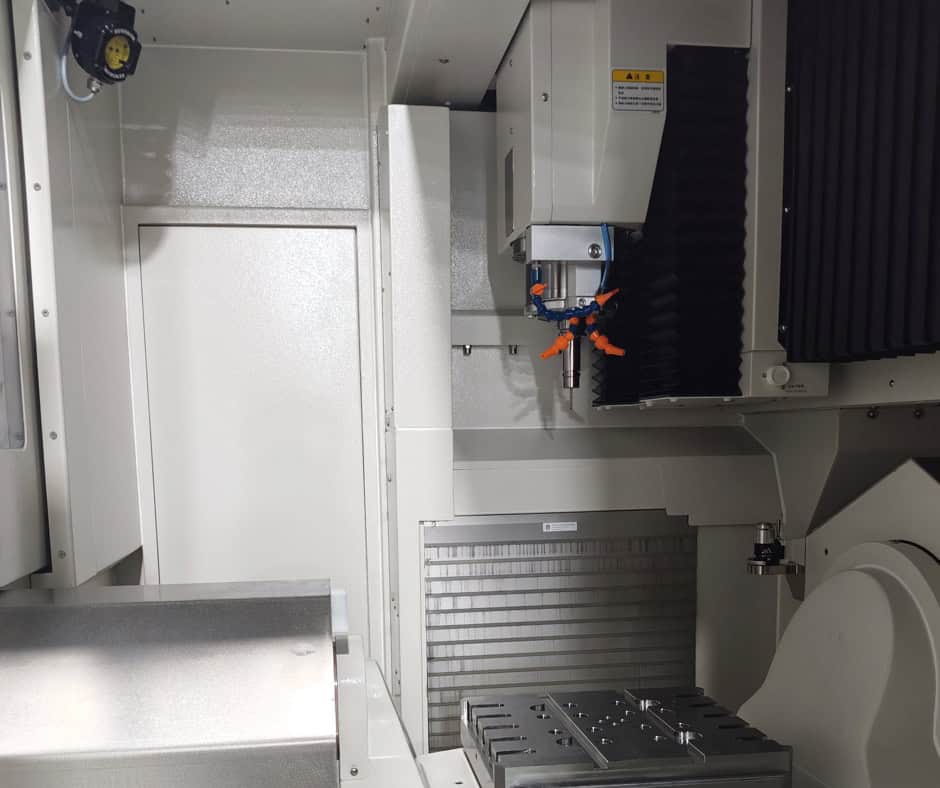
Most high-precision cooling fan fixing plates are manufactured using CNC machining because it offers excellent dimensional accuracy, repeatability, and flexibility for both prototypes and production runs.
Although each design is unique, the manufacturing process generally follows several key stages.
Material Preparation
Production typically begins with aluminum plate stock, such as AL6061-T651, cut to the required dimensions. Selecting stress-relieved material helps improve dimensional stability during machining.
Material certification may also be required for applications in medical, aerospace, or industrial equipment.
CNC Milling
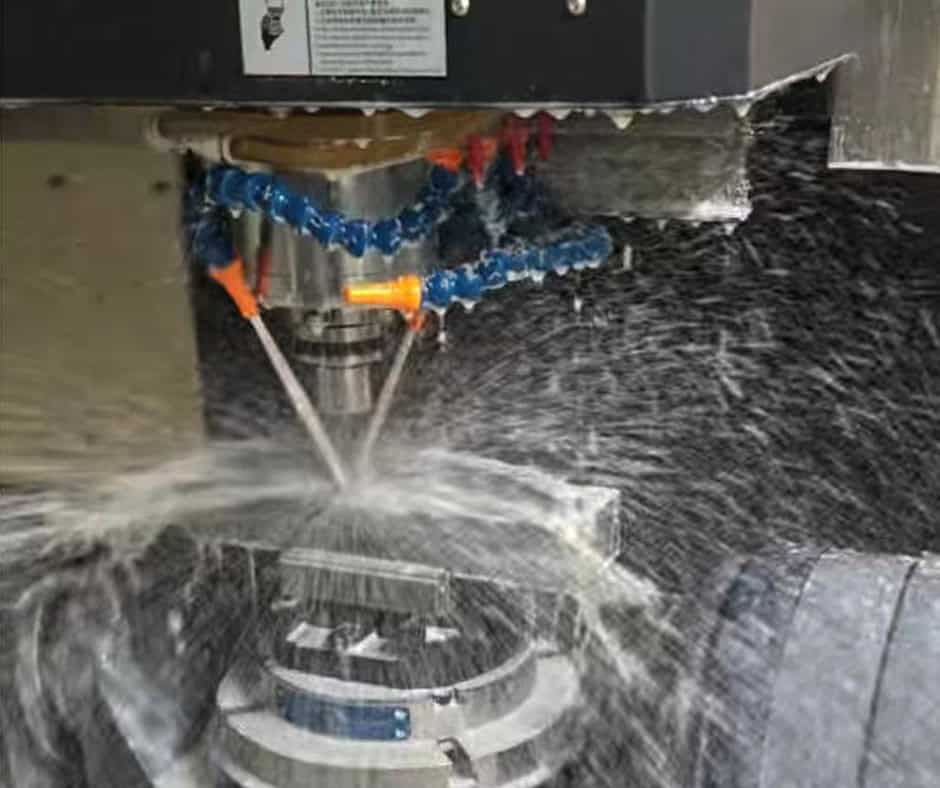
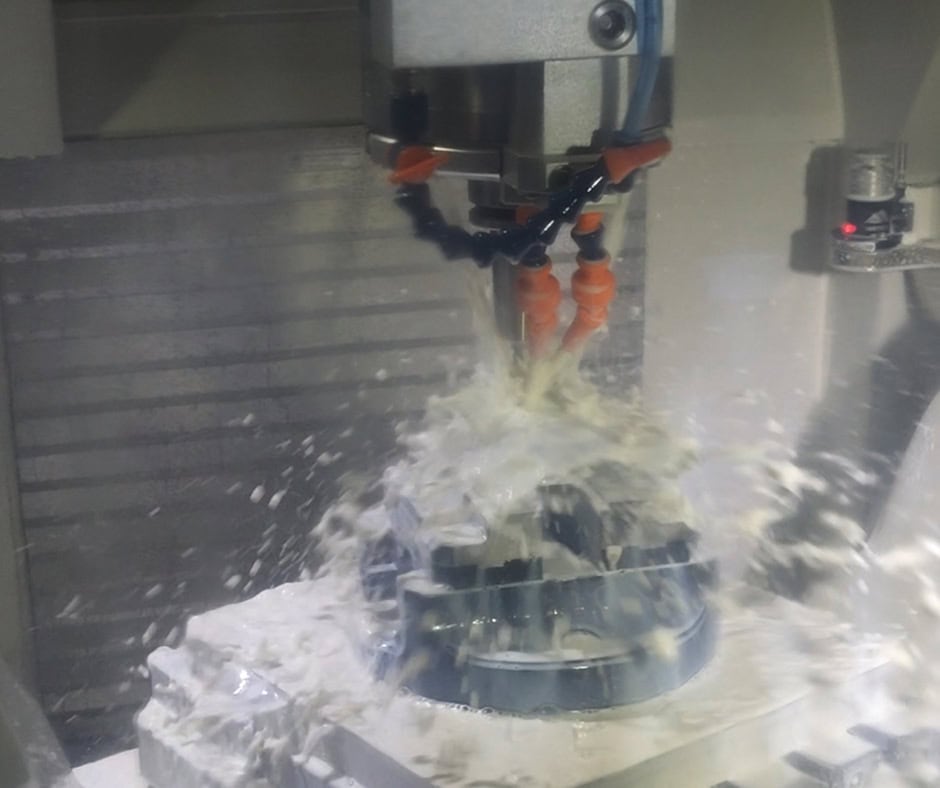
CNC milling forms the primary machining process. It is used to produce the outer profile, mounting surfaces, pockets, slots, and precision features according to the engineering drawing.
Modern multi-axis machining centers allow multiple operations to be completed in a single setup, improving accuracy while reducing production time.
Drilling and Thread Machining
Cooling fan fixing plates usually contain multiple mounting holes.
Depending on the design, these may include:
* Through holes
* Blind holes
* Threaded holes
* Counterbored holes
* Countersunk holes
* Precision locating holes
Accurate hole positioning is essential to ensure smooth assembly and proper fan alignment.
Deburring and Edge Finishing
After machining, all sharp edges should be removed.
Typical drawing requirements include:
* Deburring all machined edges
* Applying uniform chamfers
* Removing machining burrs around drilled holes
* Eliminating sharp corners that may interfere with assembly
Proper deburring also improves operator safety and surface finish quality.
Inspection and Quality Control
Dimensional inspection verifies that the finished part conforms to drawing requirements.
Depending on the tolerance requirements, inspection equipment may include:
* Coordinate Measuring Machine (CMM)
* Height gauges
* Digital calipers
* Micrometers
* Thread gauges
* Surface roughness testers
Critical characteristics such as hole position, flatness, thickness, and overall dimensions are typically inspected before surface finishing.
Surface Finishing Options for Cooling Fan Fixing Plates
Surface treatment improves both the appearance and functional performance of machined components. The appropriate finish depends on the operating environment, corrosion requirements, and cosmetic expectations.
Black Anodizing
Black anodizing is one of the most common finishes for aluminum cooling fan fixing plates.
Its benefits include:
* Improved corrosion resistance
* Increased surface hardness
* Attractive matte appearance
* Better wear resistance
* Electrical insulation
* Enhanced durability
Because of these advantages, black anodizing is widely used in industrial equipment, communication systems, and consumer electronics.
Clear Anodizing
Clear anodizing preserves the natural metallic appearance of aluminum while providing corrosion protection. It is commonly selected when appearance or part identification is important.
Hard Anodizing
Hard anodizing creates a thicker oxide layer than conventional anodizing.
It offers:
* Higher wear resistance
* Improved abrasion resistance
* Better performance in demanding environments
Hard anodizing is often used for components exposed to repeated mechanical contact.
Powder Coating
Powder coating provides excellent decorative finishes and good corrosion protection. However, its thicker coating makes it less suitable for precision-machined mounting surfaces or tight tolerance features.
Chemical Conversion Coating
For applications requiring electrical conductivity while maintaining corrosion resistance, chemical conversion coatings may be preferred over anodizing.
The appropriate finish depends on the functional requirements of the final assembly rather than appearance alone.
Typical Applications Across Industries
Cooling fan fixing plates are used in a wide range of industries wherever forced-air cooling is required. Although their geometry varies, their primary function remains the same: providing a secure and accurately positioned mounting interface for cooling fans.
Industrial Automation
Automation equipment often operates continuously under demanding conditions. Precision-machined fixing plates ensure stable fan installation, helping maintain reliable cooling for motors, controllers, and electrical cabinets.
Electronics and Communication Equipment
Servers, communication systems, networking devices, and electronic control units generate significant heat during operation.
Aluminum fixing plates provide lightweight, corrosion-resistant mounting solutions while supporting efficient assembly.
Medical Equipment
Medical devices require high dimensional accuracy, reliable assembly, and clean surface finishes.
CNC-machined aluminum fixing plates are commonly used in diagnostic instruments, laboratory equipment, and imaging systems where consistent quality is essential.
Power Supplies and Electrical Cabinets
Industrial power systems rely on cooling fans to maintain safe operating temperatures.
Accurately machined fixing plates help position airflow correctly while reducing vibration and improving equipment reliability.
Robotics and Intelligent Manufacturing
Modern robotic systems integrate compact cooling solutions to protect motors, drives, and electronic components.
Lightweight aluminum fixing plates reduce overall equipment weight while maintaining sufficient structural strength.
Transportation Equipment
Cooling fan mounting components are also found in railway systems, electric vehicles, charging equipment, and specialized transportation electronics where durability and corrosion resistance are important.
Cost Factors and Procurement Considerations
The cost of a cooling fan fixing plate is influenced by much more than the raw material price. Understanding the main cost drivers helps buyers make informed sourcing decisions and balance performance with budget.
Material Selection
Material grade has a significant impact on overall cost. Standard aluminum alloys such as AL6061-T651 are generally more economical than high-strength aluminum or stainless steel, while still meeting the requirements of many industrial applications.
Machining Complexity
Simple flat plates with standard holes require relatively little machining time. Components that include deep pockets, complex contours, precision slots, or multiple threaded features require additional machine time and tooling, increasing production costs.
Dimensional Tolerances
Tighter tolerances often require more precise machining strategies, additional inspection, and greater process control. Unless critical to the application, specifying unnecessarily tight tolerances can increase manufacturing costs without providing practical benefits.
Surface Treatment
Finishing processes such as anodizing, hard anodizing, powder coating, or chemical conversion coating add both processing time and cost. The selected finish should match the operating environment and functional requirements rather than being chosen solely for appearance.
Production Volume
Prototype quantities generally have a higher unit cost because machine setup and programming are spread across fewer parts. As production volume increases, these setup costs are distributed over more components, reducing the average cost per part.
Documentation and Quality Requirements
Applications requiring material certificates, first article inspections (FAI), inspection reports, or additional quality documentation typically involve more manufacturing and administrative work. Buyers should specify these requirements during the quotation stage to avoid delays and ensure accurate pricing.
How to Choose the Right Manufacturing Partner
Selecting the right manufacturing partner is just as important as choosing the right material or design. A well-made cooling fan fixing plate requires consistent machining quality, reliable communication, and effective quality control throughout the production process.
Rather than focusing only on unit price, buyers should evaluate a supplier’s technical capabilities, manufacturing experience, and ability to support the project from prototype development to volume production.
Evaluate Engineering Capability
An experienced manufacturer should be able to review drawings before production and identify potential manufacturing or assembly issues.
For example, engineers may suggest:
* Optimizing tolerances to reduce machining costs
* Modifying hole dimensions to match standard tooling
* Improving edge designs for easier assembly
* Recommending alternative materials when appropriate
Early engineering feedback can prevent production delays and reduce unnecessary manufacturing costs.
Verify Machining Capabilities
Cooling fan fixing plates often require precise hole locations, flat mounting surfaces, and high dimensional consistency. Before placing an order, confirm that the supplier has suitable CNC machining equipment and inspection capabilities.
Typical questions to ask include:
* What machining tolerance can be consistently achieved?
* Can both prototypes and production quantities be supported?
* What inspection equipment is used?
* Are machining and surface finishing managed in-house or outsourced?
Understanding these capabilities helps reduce technical risks during production.
Review Quality Control Procedures
Reliable quality control should cover the entire manufacturing process rather than relying only on final inspection.
A mature quality system typically includes:
* Incoming material verification
* First article inspection (FAI)
* In-process dimensional checks
* Final inspection before shipment
* Traceability for materials and production batches
For projects with strict quality requirements, buyers may also request inspection reports, material certificates, or PPAP documentation where applicable.
Assess Communication and Project Support
Efficient communication is especially important for custom-machined components.
A responsive manufacturing partner should provide timely feedback on technical questions, quotation revisions, production schedules, and engineering changes. Clear communication minimizes misunderstandings and helps projects progress more smoothly.
Consider Long-Term Supply Capability
Many projects begin with prototypes but later transition to low-volume or mass production.
Working with a supplier that can support every stage of the product lifecycle reduces the need to qualify additional vendors and helps maintain consistent quality across future orders.
Frequently Asked Questions
1. What material is best for a cooling fan fixing plate?
For most industrial applications, AL6061-T651 is one of the best choices because it offers an excellent balance of strength, weight, corrosion resistance, and machinability. Other materials, such as AL5052, AL7075, or stainless steel, may be preferred when specific environmental or mechanical requirements apply.
2. Why are cooling fan fixing plates commonly CNC machined?
CNC machining provides high dimensional accuracy, excellent repeatability, and flexibility for custom designs. It is particularly suitable for components with precision mounting holes, threaded features, pockets, and tight tolerances that cannot be produced consistently with conventional machining methods.
3. Is black anodizing necessary?
Not always. Black anodizing improves corrosion resistance, increases surface hardness, and provides an attractive appearance. However, depending on the application, clear anodizing, hard anodizing, chemical conversion coating, or even an unfinished surface may be more appropriate.
4. What tolerances are typically required?
General industrial components often use standards such as GB/T 1804 or ISO 2768 for unspecified tolerances. Critical dimensions—including mounting hole locations, flatness, and thickness—may require tighter tolerances based on the product’s functional requirements.
5. Can cooling fan fixing plates be customized?
Yes. Most cooling fan fixing plates are manufactured according to customer drawings. Dimensions, material grades, hole patterns, surface finishes, engraving, and inspection requirements can all be customized to match the intended application.
6. What information should be included when requesting a quotation?
Providing complete engineering information helps manufacturers prepare accurate quotations more efficiently. Typical documents include 2D drawings, 3D CAD models, material specifications, surface finish requirements, quantity, tolerance requirements, and any necessary inspection or certification requirements.
7. How does production quantity affect cost?
Prototype orders usually have a higher unit cost because machine setup and programming are distributed over fewer parts. As production volume increases, setup costs are shared across more components, resulting in a lower average cost per part.
Conclusion
Although a cooling fan fixing plate is often considered a simple mechanical component, its design and manufacturing quality have a significant influence on the reliability of the entire cooling system. Material selection, dimensional accuracy, machining processes, and surface treatment all contribute to stable installation, reduced vibration, and long-term equipment performance.
For most industrial applications, aluminum alloys such as AL6061-T651 combined with precision CNC machining provide an effective balance of strength, weight, corrosion resistance, and manufacturing efficiency. Selecting appropriate tolerances, suitable surface finishes, and experienced manufacturing support further improves product quality while helping control overall production costs.
Whether the requirement is a single prototype or large-scale production, understanding these engineering considerations enables buyers and designers to make informed decisions and achieve more reliable, cost-effective results.