Building a Simple CNC Website That Actually Generates RFQs
This guide explains how to build a straightforward CNC website focused on one goal: turning visitors into qualified RFQs.
Table of Contents
1. Start With a Clear Services Overview
Your services page is not a list—it is a decision shortcut for buyers.
Instead of saying “We provide CNC machining services”, clearly show what problems you solve and at which stage you support customers.
A strong services overview should answer:
Do you support prototypes, low-volume, or mass production?
What machining processes do you specialize in?
Which industries do you regularly serve?
Keep the structure simple:
Prototype CNC Machining
Low-Volume Production
High-Volume Manufacturing
Secondary processes and assembly
When buyers can immediately see that you match their project stage, they stay. If they need to guess, they leave.
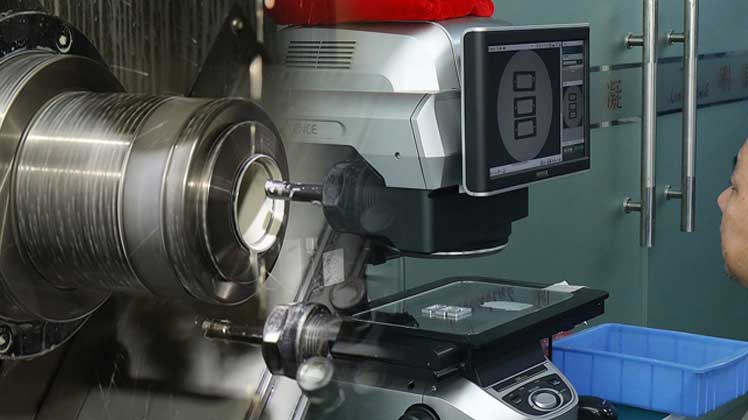
2. Explain Materials and Capabilities in Buyer Language
Most CNC websites fail here by listing machine models instead of results.
Buyers care about:
What materials you can machine reliably
Tolerance range you can consistently hold
Maximum part size
Surface finishing options
Quality control level
Organize this section clearly:
Metals: Aluminum, stainless steel, brass, copper, steel, titanium
Plastics: ABS, POM, Nylon, PC, PEEK
Capabilities:
Tolerance: ±0.005 mm
3-axis to 5-axis machining
Complex geometry and tight assemblies
This section builds technical trust. Precision buyers read this carefully before submitting an RFQ.
3. Use Case Studies to Reduce Buyer Risk
Case studies are not marketing decoration—they are risk-reduction tools.
Even two or three well-written case studies are enough if they clearly show:
Customer industry
Machining challenge
Solution approach
Final result
A simple case study structure:
Project background
Key technical challenge
Machining solution
Outcome and customer benefit
Buyers want proof that you have solved similar problems before. Generic claims cannot replace this.
4. Design an RFQ Form That Filters, Not Just Collects
A good RFQ form saves time for both buyers and sales teams.
Avoid a basic “contact us” form. Instead, guide the buyer to provide useful information:
Industry
Material
Quantity
Tolerance requirements
Drawing upload
This does two things:
Filters low-intent inquiries
Allows faster, more accurate quotations
The easier it is for buyers to submit complete RFQs, the higher your conversion rate.
5. Keep the Website Simple—but Purpose-Driven
A CNC website does not need animations or long company stories. It needs clarity.
If a buyer can answer these three questions within 60 seconds, your website is working:
Can this supplier handle my type of part?
Are they technically capable and reliable?
How fast can I request a quote?
Anything that does not support these answers is optional.
6.Final Thought
A simple CNC website is not about doing less—it is about doing the right things. Clear services, transparent capabilities, real case studies, and a practical RFQ form will outperform complex designs every time.
If your website supports the way engineers and buyers think, inquiries will follow.