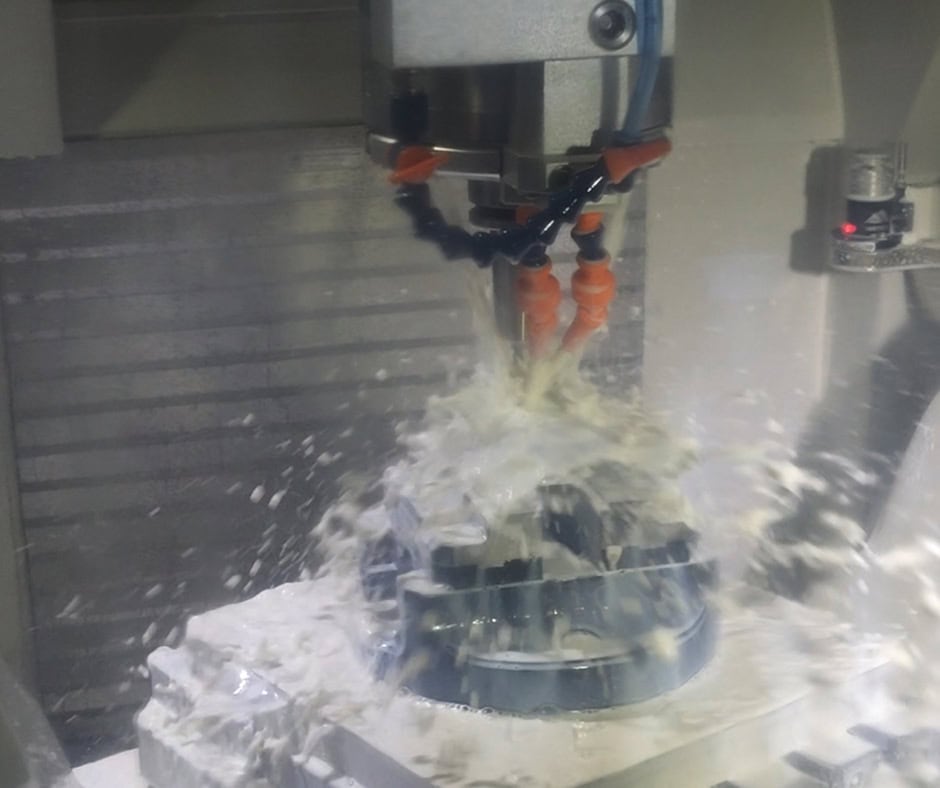
Detailed Guide to Aluminum Alloy Anodizing Process - A comprehensive guide from principles to drawing annotations.
Today we’ll dive into this specialized guide on aluminum alloy anodizing processes.
We’ll cover dimensions, materials, structures, and key pitfalls in labeling—all explained clearly in one go.
This helps you eliminate rework risks right from the design phase.
Table of Contents
1.Core Concept: Anodizing Is Not an “Additive” Process
Let’s start with the most fundamental distinction.
Please understand that anodizing is not “electroplating” or “paint spraying.” The latter two processes involve coating the part’s surface with a new material – an “additive” approach.
Anodizing, however, involves electrochemically converting the aluminum on the part’s surface into an aluminum oxide ceramic layer (Al₂O₃).
So you can think of it this way: it’s not painting aluminum, but directly “upgrading the aluminum skin into ceramic armor.”
Understanding this “conversion” is the foundation for grasping all subsequent technical details. This “conversion” directly affects part dimensions.
2.Regarding the Size Effect: The 50/50 Rule
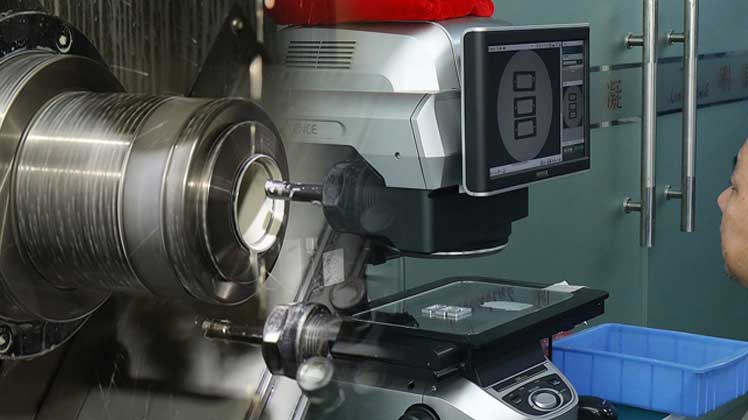
Consider the“50/50”rule: oxide film growth occurs bilaterally. Roughly half the thickness is derived from consuming the substrate aluminum, while the other half grows outward.
Here, I must add a crucial note: 50/50 is an engineering estimate. Actual inward/outward growth ratios will vary depending on alloy grade, film type (standard/hard), electrolyte, and process parameters.
However, designers must account for this mechanism when allowing for dimensional tolerances, otherwise fit issues are likely to occur.
Example: To achieve a total film thickness of 20 microns, approximately 10 microns of aluminum will be consumed, and 10 microns will grow outward.
The result is a 10-micron increase in each dimension. The total change in shaft diameter/hole diameter is 20 microns.
This is the variable that must be calculated during precision dimensional design. Therefore, for precision fits like H7/g6, machining must allow for oxidation allowance. Alternatively, the more reliable but costlier“post-oxidation precision grinding process” should be adopted. Relying solely on film thickness control to guarantee precision tolerances carries significant risk.
*Remember this most practical rule: holes shrink, shafts expand; mating surfaces experience bilateral accumulation, making them the most sensitive and prone to failure.
3.Process Classification: Conventional Anodizing vs. Hard Anodizing
Industrial applications primarily fall into two categories. Their core differences determine their respective use cases:
Conventional anodizing produces a thinner oxide layer, typically 5–25 microns thick, with 10–15 microns being the most common. It emphasizes decorative finishes, basic corrosion resistance, and electrical insulation, and is easily dyed.
Hard Anodizing:
Significantly thicker coatings, ranging from 25 to 150 microns, with 30–50 microns being the typical range for the most wear-resistant applications. It aims to achieve high hardness (HV 350–550), excellent wear resistance, and heat resistance.
Simply put, selecting film thickness means prioritizing specific functions:
10–15 microns for protection and appearance; 30–50 microns and above for withstanding wear.
One more point to avoid misunderstanding:
Thicker isn’t always better – especially for standard anodizing. Excessive thickness may actually increase powdering and complicate color consistency control.
Design should prioritize requirements over blindly pursuing thickness, selecting based on corresponding properties.
4.Recommended Process Applications
Standard Anodizing: Suitable for components requiring appearance and general protection, such as equipment panels, structural brackets, and electronic product housings.
Hard Anodizing: Suitable for functional surfaces subjected to friction and requiring high durability, such as the inner walls of aluminum cylinder barrels, guide surfaces of aluminum slides, synchronous pulleys, and wear-resistant bushings.
Here I emphasize that when I say“cylinder inner wall”, I am referring specifically to the inner wall of the aluminum barrel in pneumatic cylinders, not hydraulic cylinders. This clarification is to avoid confusion.
5.Material Selection: Not all aluminum alloys achieve optimal anodizing results.
Material serves as the foundation, with alloying elements in aluminum significantly impacting anodizing performance.
Series 5, e.g., 5052: Produces a clear, translucent natural finish after oxidation with excellent results.
Series 6, e.g., 6001, 6063: Yields high-quality oxide layers, easy to dye, preferred for mechanical design.
Series 7, e.g., 7075: Can be anodized, but zinc/copper content causes yellowish layers; hard anodizing requires specialized control.
In summary:
For stability, prioritize 6000 series.
For translucent appearance, 5000 series is excellent.
For high strength and hard anodizing, 7000 series requires strict process control.
Materials requiring caution or avoidance:
2000 series (e.g., 2024): High copper content leads to porous, poor-quality oxide films. Avoid for hard anodizing whenever possible.
6.Material Pitfalls: Die-Cast Aluminum
After oxidation, the surface develops mottled gray-black spots, and the coating quality is poor.
Here’s a crucial clarification: The failure of die-cast aluminum parts is often not due to poor manufacturing techniques, but inherent limitations caused by the material’s high-silicon microstructure. Therefore, unless special processes are employed, die-cast aluminum parts should not be subjected to anodizing. Instead, alternative surface treatments like baking paint or powder coating are recommended. The anodized film is ceramic in nature and highly brittle.
7.Structural Design Guidelines: Sharp Edge Effect
At sharp edges, growth stresses can cause cracking. Therefore, all parts requiring hard anodizing must have their edges rounded with a radius of at least R0.3.
To put it more technically: The core objective is to eliminate sharp edges – R-rounded corners are the most reliable method. If space is limited, C-chamfers can be used. However, never leave sharp corners, as the anodized coating is highly prone to cracking and peeling along these edges.
8.Structural Design Guidelines: Blind Holes and Threads
Two key characteristics require attention.
Blind Holes: Residual acid solution can lead to subsequent corrosion failure. Avoid designing excessively deep blind holes whenever possible. Many field instances of“parts leaking yellow liquid from blind holes during use”are likely caused by incomplete residual liquid removal.
Threaded holes: Oxidation causes hole diameter shrinkage, potentially preventing screw insertion.
For precision threads, specify“enlarge before tapping”or“mask during oxidation.”
Just remember: Threads are highly sensitive features. Failure to clarify upfront will inevitably lead to rework later.
9.Process Limitations: Fixture Marks and Insulation
Fixture Marks: Electroplating cannot form a film at clamping points, leaving white marks.
Drawings must specify “Permitted Clamping Locations” (typically on non-visible surfaces). Note: Fixture marks are not quality defects but a physical inevitability of electrically clamping. The key is to designate locations in advance.
Insulation: The oxide film acts as an excellent insulator. If a part requires electrical grounding, it must be specified as “contact surface shielded” or “film layer removed at this location after oxidation.” Failure to do so will result in grounding failure during assembly, shielding failure, and may ultimately be misjudged as a “structural issue” when the root cause is actually an undefined surface treatment.
10.Absolute Prohibition: Anodizing of Assemblies
It is strictly prohibited to perform overall anodizing on aluminum alloys that have been pressed into steel sleeves, copper sleeves, or other dissimilar metals.
This will cause severe corrosion of the dissimilar metals, resulting in part failure and contamination of the bath solution.
To clarify the correct procedure: the proper sequence is to anodize first, then press in the steel sleeves or copper sleeves. Never reverse this order.
11.Drawing Annotation Specification Examples
Drawing annotations must be clear and unambiguous.
Here are two typical scenarios:
Appearance Parts: Sulfuric acid anodizing, black matte finish, coating thickness 10–15 microns, sealed, fixture marks must not appear on visible surfaces.
Wear-Resistant Functional Parts: Hard anodizing, natural color, coating thickness 40±5 microns, hardness ≥400HV. Drawing dimensions represent post-anodizing finished sizes (with 20 micron allowance per side for machining).
Let me stress this again: The most critical element is the dimensional reference—you must explicitly state whether you require “dimensions before oxidation” or “dimensions after oxidation.” This ambiguity is the root cause of many disputes.
12.Concepts Prone to Confusion: Anodizing vs. Conductive Oxidation
Please note the distinction from “conductive oxidation (chemical conversion coating).”
To be more precise, what many refer to as “conductive oxidation” is more accurately described as a chemical conversion coating rather than conventional anodizing.
Anodizing: Thick coating, hard, insulating, wear-resistant, with surface strengthening and decorative properties.
Conductive Chemical Conversion Coating: Extremely thin coating, soft, conductive, minimal dimensional change, used for grounding shielding or as a primer for painting.
Mnemonic: For wear resistance and appearance, choose anodizing; for conductivity and grounding, avoid anodizing.
The above outlines the key points of this document. The crucial aspect lies in understanding the “essence of conversion” and systematically addressing dimensions, materials, structure, and annotations.
We hope this provides clear guidance for your design work. Feel free to leave a comment or contact us for further discussion.