Understanding ABS CNC Machining Services
ABS CNC machining services refer to the precision manufacturing of parts made from Acrylonitrile Butadiene Styrene (ABS) using computer-controlled machining processes such as milling, drilling, and turning. These services allow engineers to produce durable plastic components with tight tolerances and complex geometries.
ABS is widely used in CNC machining because it offers a balanced combination of strength, impact resistance, and ease of machining. For many engineering applications, CNC machining ABS provides a fast and reliable way to create prototypes and functional parts without the need for expensive tooling.
Table of Contents
Material Naming, Industry Standards, and Related Terms
ABS is commonly known by its full chemical name Acrylonitrile Butadiene Styrene, but in manufacturing environments it is typically referred to simply as ABS plastic. In CNC machining documentation, terms such as machined ABS parts, ABS plastic machining, or CNC ABS components are frequently used to describe the same material and process.
Several industry standards define the properties and testing methods for ABS materials. For example, ASTM D4673 covers the classification of ABS plastics, while ISO 2580 provides international guidelines for ABS thermoplastics used in industrial applications. Different grades of ABS may vary in impact strength, heat resistance, or flame retardant performance.
Some specialized variants include flame-retardant ABS, high-impact ABS, and glass-filled ABS, each designed for different engineering requirements. While these variations share the same base polymer, their performance characteristics can differ depending on additives and reinforcement.
Performance Characteristics of ABS in CNC Machining
ABS plastic offers several properties that make it suitable for precision machining and engineering applications.
High Impact Resistance
ABS is known for its toughness and ability to absorb impact without cracking. This makes it ideal for housings, protective covers, and mechanical components that may experience mechanical stress.
Good Machinability
Compared with many engineering plastics, ABS machines easily with CNC equipment. It produces stable chips and allows clean cutting, which helps maintain dimensional accuracy.
Moderate Heat Resistance
ABS can operate under moderate temperatures without deforming. While it is not suitable for high-temperature environments, it performs well in most consumer and industrial equipment.
Lightweight Structure
Being a thermoplastic, ABS is significantly lighter than metal alternatives, which helps reduce overall product weight.
Surface Finish Flexibility
ABS components can be sanded, painted, or chemically finished to achieve smooth and visually appealing surfaces.
These characteristics make ABS a practical material choice for both functional prototypes and production components.
ABS CNC Machining vs Injection Molding
When choosing between ABS CNC machining and ABS injection molding, the decision usually depends on production volume and development stage.
CNC machining is commonly used for prototyping and low-volume production. It does not require molds, which reduces setup time and allows rapid design changes. Engineers often use CNC machining during product development when parts may need frequent modifications.
Injection molding, on the other hand, becomes more cost-effective for large production runs. Although the tooling cost is high, the per-part cost decreases significantly when thousands of parts are produced.
In practical manufacturing environments, CNC machining is often used first to verify a design. Once the design is finalized and demand increases, injection molding may then be selected for mass production.
Machining and Processing Considerations for ABS
In practice, machining ABS requires attention to several processing details to achieve consistent results.
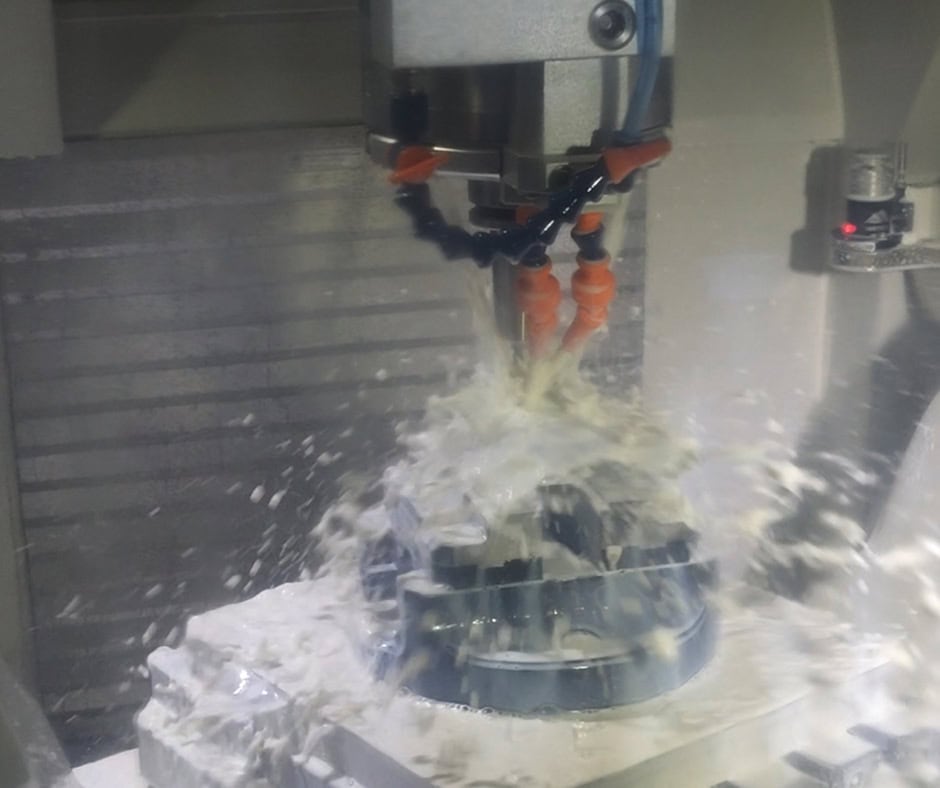
One common method is CNC milling, which allows flat surfaces, pockets, and complex geometries to be created with high precision. CNC turning is also used for cylindrical parts such as bushings or housings.
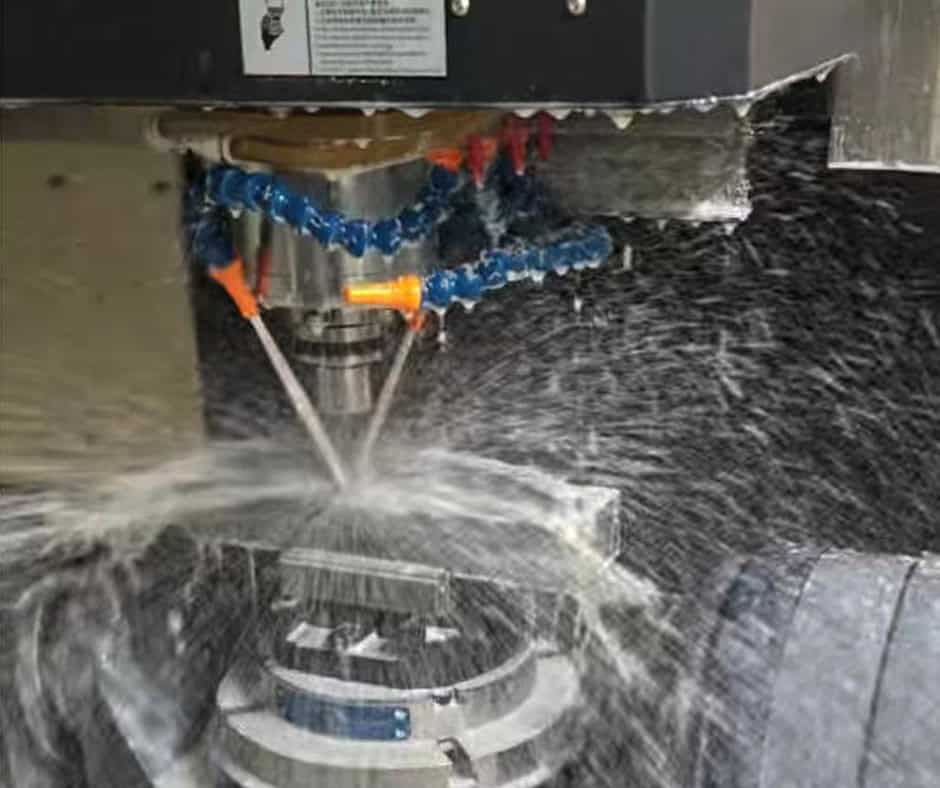
When working with ABS, maintaining proper cutting speeds is important. Excessive heat during machining may cause the material to soften or melt. For this reason, machinists often use sharp cutting tools and optimized feed rates to prevent heat buildup.
Another consideration is chip removal. ABS tends to produce long plastic chips, so effective chip evacuation helps maintain a stable machining process.
In many cases, ABS parts also undergo secondary finishing processes, such as sanding or vapor smoothing, to improve surface appearance and remove minor machining marks.
Common Uses and Industry Applications
ABS CNC machining services are used in a wide range of industries where lightweight, durable plastic components are required.
Electronics Industry
ABS is often used for electronic housings, protective covers, and device enclosures due to its durability and electrical insulation properties.
Automotive Components
In automotive applications, ABS is used for interior parts, brackets, and prototype components during vehicle development.
Consumer Products
Many consumer devices use ABS for casings, structural parts, and mechanical components because it offers good strength and an attractive finish.
Industrial Equipment
ABS parts are frequently used in machinery for guards, panels, and lightweight mechanical elements.
Medical Device Prototyping
ABS is commonly used during the prototype stage of medical devices where rapid machining and easy modification are required.
Cost Factors and Material Supply Considerations
The cost of ABS CNC machining services can vary depending on several factors.
Material Grade
Different grades of ABS may have varying prices depending on their mechanical properties or flame-retardant capabilities.
Part Complexity
Parts with intricate geometries, tight tolerances, or multiple machining operations typically require more machining time.
Production Volume
Low-volume production usually has higher per-part costs because setup time is distributed across fewer parts.
Surface Finishing Requirements
Additional finishing processes such as polishing, painting, or vapor smoothing may increase overall manufacturing cost.
ABS materials are typically available in several common forms, including plastic sheets, rods, and blocks, which are suitable for CNC machining operations.
Frequently Asked Questions About ABS CNC Machining Services
What is ABS CNC machining commonly used for?
ABS CNC machining is widely used to produce prototypes, functional parts, and lightweight plastic components. It is especially useful during product development when design changes may occur frequently.
Is ABS a good material for CNC machining?
Yes. ABS is considered one of the most machinable thermoplastics. It cuts cleanly, maintains dimensional stability, and produces good surface finishes when machined properly.
Can ABS CNC parts be used for functional products?
ABS parts are often used in both prototypes and end-use products. While it may not be suitable for high-temperature environments, it performs well in many mechanical and consumer applications.
What tolerance can be achieved when machining ABS?
CNC machining can achieve tight tolerances with ABS, typically around ±0.05 mm or better depending on part geometry and machining conditions.
What finishing options are available for ABS CNC parts?
ABS components can be sanded, painted, polished, or chemically smoothed to improve appearance and surface quality.